Community Resilience
You cannot build a nation on frightened ground.
I design governance, economies and institutions with communities rebuilding themselves. The hard problem was never the constitution. It was what had been installed underneath it.
What is in here
It starts with the neighbor.
A community is not a small nation. It is the other way around — communities become a nation, and many communities make the companies and the governance. So it starts with the family across the canyon, and it goes all the way up.
Start here
The floors
- A government that fitsGetting away from elections that produce winners and losers. There is no universal council.
- Ancestral EconomicsFour capitals. Wealth that stays home, honorable trade, and what comes after extraction.
- The Local Governance ActWhat it took, what it cost, and what forty-five communities did with it.
At any scale
- Organizing anythingThe same questions in the same order, for a community, a venture, or an organization.
- A business with soulDesigned from the bones out. Chartered by the community that lives with what it makes.
- The charterHow the soul gets written into a document that outlives the founder.
- The sanctuaryWhat a place builds before the hard season so its people stay steady inside it.
The argument
Most reforms fail for a reason nobody writes into the report.
What follows is the thinking underneath every governance and economic engagement I take. It is not a method. It is the reason the methods work.
Every reform I have watched fail had the same shape. The legal drafting was sound. The financing was arranged. The technical assistance arrived on schedule and the training was delivered to the people whose names were on the list. Two years later the new institution was a building with a photocopier in it.
The failure was never in the design. It was underneath the design.
A people cannot rebuild its outer systems — governance, economy, institutions — while its inner ground remains in permanent fear. That sentence sounds soft until you have watched it happen eleven times. A community that has spent a century being administered from somewhere else does not simply pick up authority when it is finally handed over. It flinches. It defers. It waits for the letter that says this was a mistake, please return the keys.
This is not a character flaw and it is not a deficiency of capacity. It is an installed condition. Colonization, occupation, forced relocation, an economy run from a head office two thousand miles away — whatever the local version was, it did the same work. It put a mindset in place. It taught people to be ashamed of their own language and their own ways of doing things. It opened wounds that were not there before and then billed the wounded for the treatment.
The medicine is not an imported clinical intervention. It is reconnection — to culture, to identity, to a community's own practices. I say that as a matter of engineering, not sentiment. A community that can name who it is can hold authority. A community that cannot will hand that authority back, politely, within a decade.
So I stopped treating culture as the closing ceremony and started treating it as the load-bearing wall. Every planning process I run now puts culture, respect and core values at the front — before the SWOT analysis, before the site selection, before anyone opens a spreadsheet. Not because it is nice. Because nothing built above it holds otherwise.
Why imported forms don't hold
A governing form is never neutral. It is an argument about what a person is.
The standard package — the ballot, the motion, the majority, the quarterly budget, the departmental org chart — arrived almost everywhere as a single import. It carries four assumptions with it. In a communal culture, all four are wrong.
-
01
That the individual is the unit of decision. One person, one vote, one preference, aggregated. But in most of the world the unit that actually decides is a household, a clan, a lineage, a valley. Force those units through an individual ballot and you have not measured the community's will. You have scrambled it and then reported the noise as a result.
-
02
That a contest reveals the best. Campaigning selects for the willingness to campaign. In a culture where naming your own worth out loud is a disqualifying act, the election does not surface the strongest leaders. It surfaces the people least constrained by the culture — which is a different group, and usually a worse one.
-
03
That the relevant horizon is one term. Budgets run on quarters, mandates on four years. The decisions that actually determine whether a people survives — water, land, language, who marries whom, what the young learn — run on eighty years. An institution that cannot see past its own re-election will trade the eighty for the four every single time, and will be praised for it.
-
04
That land is an asset on a balance sheet. Depreciable, tradable, collateralizable. Almost every culture that lasted treated land as a relative with standing — something you answer to, not something you hold. Write the first assumption into your statutes and you have legislated away the second, permanently, before anyone has voted on anything.
None of this is an argument against modern government. I have spent a working life building modern governments. It is an argument against installing one wholesale, as a kit, and then calling the resulting dysfunction a capacity problem.
A form that fights the people it governs will be worked around. Every day, quietly, by everyone. And the workaround becomes the real government while the official one holds meetings.
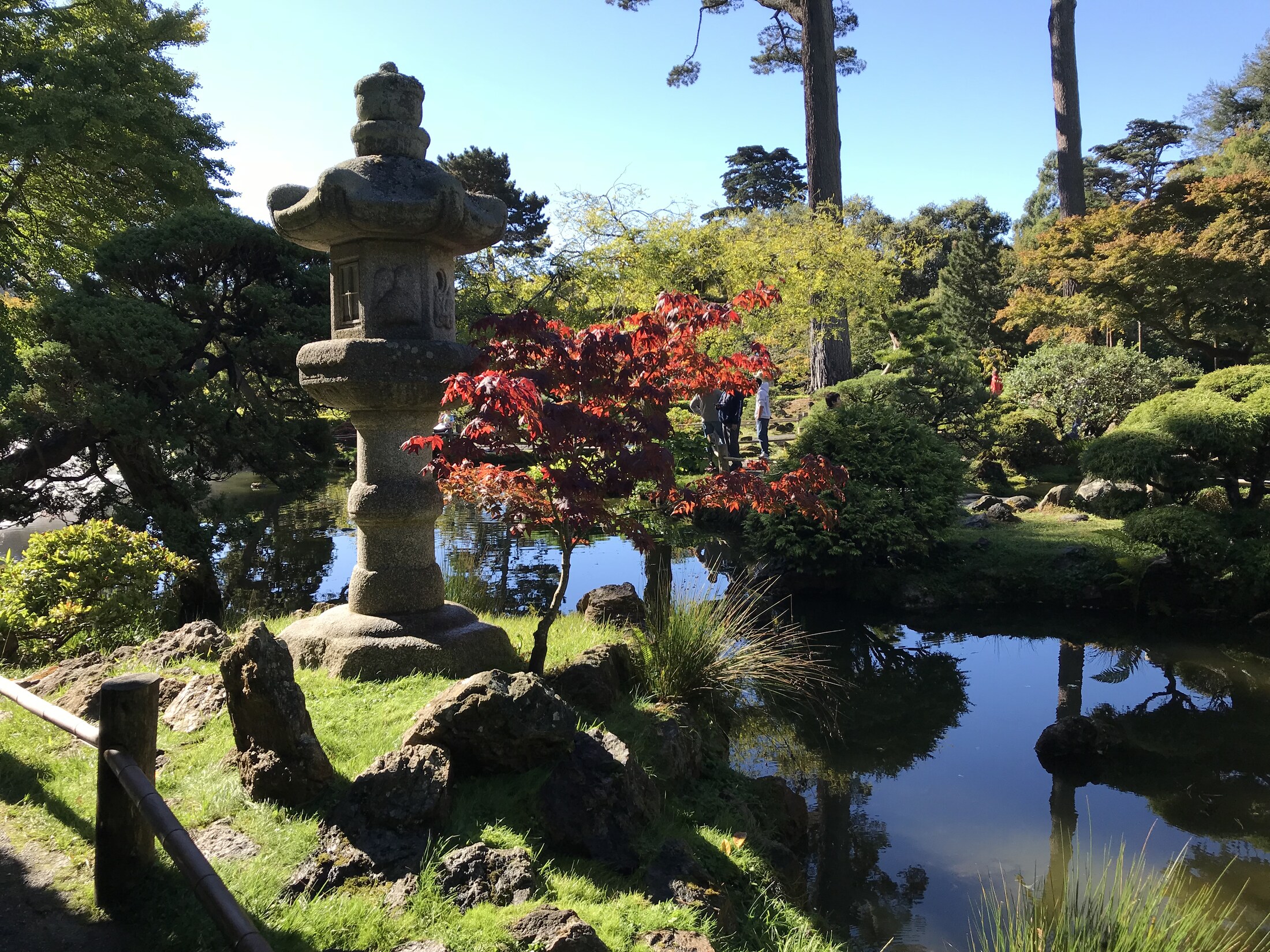
Ten thousand years of iteration is an evidence base. We call it folklore because nobody wrote it down.
On the field record of the old forms
The old patterns
Not primitive. Field-tested.
The word primitive describes the documentation, not the design. These systems were run at full scale, under real consequences, for longer than any modern institution has yet existed.
Consider what a trial actually costs in a pre-modern society. A governing pattern that produced bad decisions did not get a critical evaluation and a revised logic model. It produced famine, feud, a lost generation, a people absorbed by its neighbors. The failures were removed from the record along with the people running them.
What is left, then, is a set of forms that survived an extraordinarily brutal selection process. Nomination instead of self-promotion. Decision by exhaustion of objection rather than by counting. Speaking orders that put the least positioned first. Representation that follows kinship and terrain rather than population math. Councils that met in the presence of something older than the argument.
Every one of those is a specific engineering response to a specific failure mode — the loud man, the aggrieved minority, the captured chair, the decision nobody will implement. They are not charming. They are solutions, and we abandoned most of them without ever reading the problem statement.
My job is not to reinstall the past. It is to find which of these patterns is still doing work in a community — usually in the funeral, the harvest, the family dispute — and give it a legal form, a budget line and a filing cabinet.
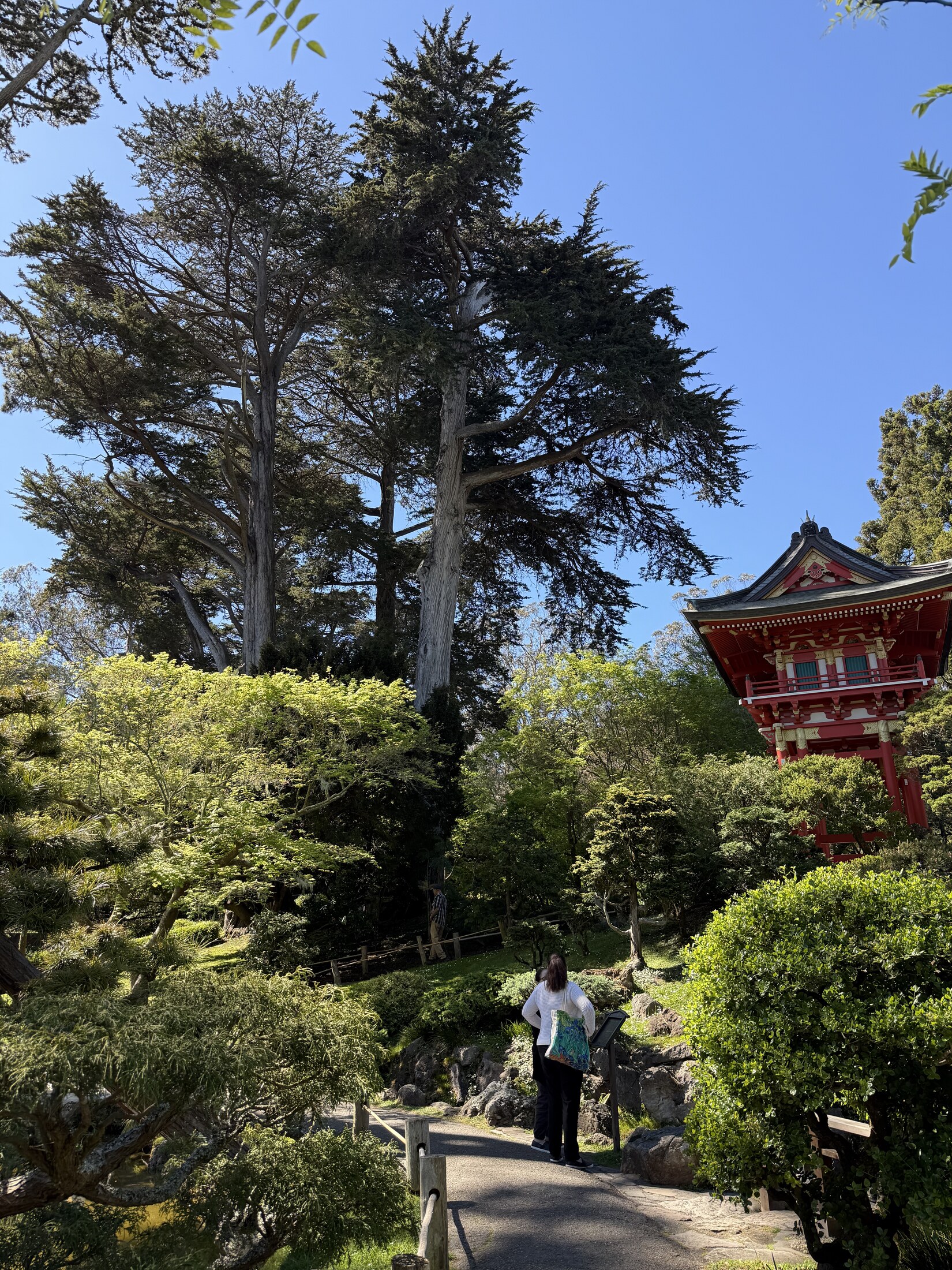
How it gets counted
Four capitals. Most governments count one.
Every decision spends from four accounts. Empty three of them and the fourth goes too — in a company, in a community, in a person. The whole body of thought I call Ancestral Economics begins here.
Financial
The account everyone already measures. It is real, it matters, and it holds far longer when the other three are full.
Relational
Trust, reciprocity, obligation, the people who show up when it is hard. The slowest to build and the fastest to spend.
Cultural
Story, language, ceremony, memory. What tells a people who they are when the conditions change — and they always change.
Ecological
Land, water, air, soil, the living systems underneath everything else. The one account nobody gets to leave out.

Cultural matchThe first question, before any structure
The form has to fit the people. There is no universal council.
The failure mode in this work is the template. Someone arrives with a constitution that worked somewhere else, the community adopts it, and within a decade it is a shell nobody believes in. We do not send templates. We send principles, and then we run the process where a community finds its own form.
A governing form is an argument about what a person is. Import the form and you have imported the argument — usually one your people never made and do not believe.
Where we startNot with a structure
We begin with a question: what has this community already used to decide things, settle things, and choose who speaks? There is always an answer. It is usually older than whatever is currently on paper, and it is usually still running quietly underneath — in the funeral, the harvest, the family dispute.
My job is not to reinstall the past. It is to find which of these patterns is still doing work in a community, and give it a legal form, a budget line and a filing cabinet.
The basic frameworkTen things every working form has — in every language it has ever been built in
- Recognition, not campaignNobody puts their own name forward. The community names who is ready, because the community has already watched them for twenty years. The office finds the person.
- The office is carried, not heldShort terms. Long enough to learn the work, short enough that the work never becomes the person — and short enough that outside money has nothing worth buying.
- A circle, not rowsThe ones who serve sit among the people, not above them. The room itself says who is above and who is below, which is no one.
- Elders in the room. Young in the room. Children at the edges.The elders hold ego and anger down when the discussion heats. The young are in the discussion, not in a separate program. The children learn what a council is by watching one.
- An opening that grounds, a close that releasesA prayer, a song, a silence, the naming of clans and relations. A meeting without ritual is a room without walls — anything enters, anything leaves, nothing is held.
- Rules of respect, written and on the wallListen when a young person speaks. No one speaks over another. Every voice is heard. Not decoration — the working agreement, read aloud when the room needs calling back to itself.
- The talking stick when the matter is hardThe one holding it speaks; the others listen; if you do not want to speak it passes on. It gives the quiet their voice and keeps the loud from taking the room.
- The seventh-generation test, spoken aloudNot a value on a poster. A question asked in the room before the decision: does this leave the great-grandchildren whole?
- No permanent adversarial machineryNo branch whose purpose is to fight another branch. No attorneys paid to make sure nothing gets done. Conflict is heard in the circle and woven, in days rather than years.
- The community is the source of authority, not a constituencyNobody throws bread at the community at nomination time and forgets it for a term. The one who was named answers to the ones who named them, at every meeting.
Peoples everywhere already solved this. A community chooses the one its own history recognizes.
Field-tested · some still running · older than most constitutions
The optionsA community reads these and says: that one — that is how we already are
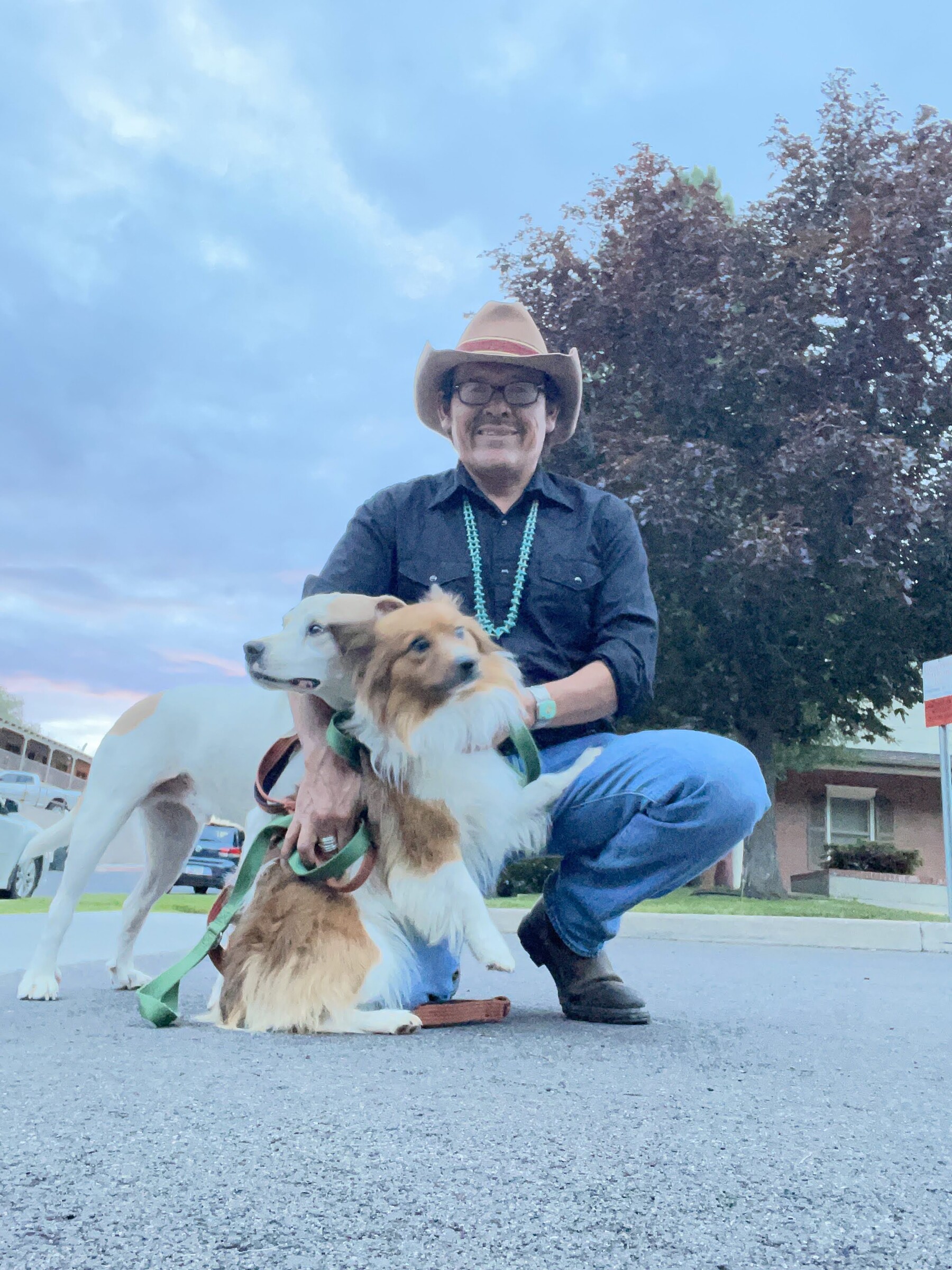
- The selection of the Naat'áaniiOne local example, from home. The leader is chosen because the community has already seen him — considered wise, a good citizen, of good family standing, knowledgeable in the life skills that matter. He does not put his name forward. Elections had produced winners and losers, and the ones who lost felt rejected by their own community; the communities elections were meant to build had broken instead.
- The Great Law of PeaceHaudenosaunee. Clan mothers name the chiefs and can un-name one who fails the people. A condolence ceremony opens every major meeting, because a person carrying grief cannot decide for the whole people. Every decision measured against the seventh generation — in the room, out loud.
- The aylluAndean. Authority rotates by turn. The office is carried and then set down, and the setting down is as ordinary as the taking up.
- The AllmendAlpine. The assembled village governs its own shared pasture and forest — hand raised beside hand — and has done so for seven hundred years. Older than any parliament in its own country, and still working.
- The subakBalinese. Temple-and-terrace councils move one mountain’s water through ten thousand fields, fairly, for a thousand years, with no bureaucracy and no police.
- The palaver under the treeAfrican. The talking is held until the talking is done, because a decision that leaves half the people unconvinced is not a decision but a wound. Its deepest law fits in one word — Ubuntu. I am because we are.
- The neighborhood assembliesKyoto. They held a city together through wars and fires at the exact moments the imperial systems failed.
- The cooperative councilGerman coal country. A town on the Ruhr governed itself for a hundred years without a single election — its council chosen the way an old family chooses an executor: by long acquaintance and demonstrated care.
- The assembly under the oakBasque. Sworn assemblies, and fishing guilds that have shared the catch and shared the risk for centuries.
- The village water committeeRice-terrace country. A thousand years of terraces worked and water flowing, without campaigns and without votes.
The founders of the modern republics were offered this and took only half. They kept the federal structure and left out the clan mothers who could remove a failing leader. They kept the deliberative bodies and left out the clearing of grief before decision. They kept representation and left out the seventh-generation test.
What was built then became what it became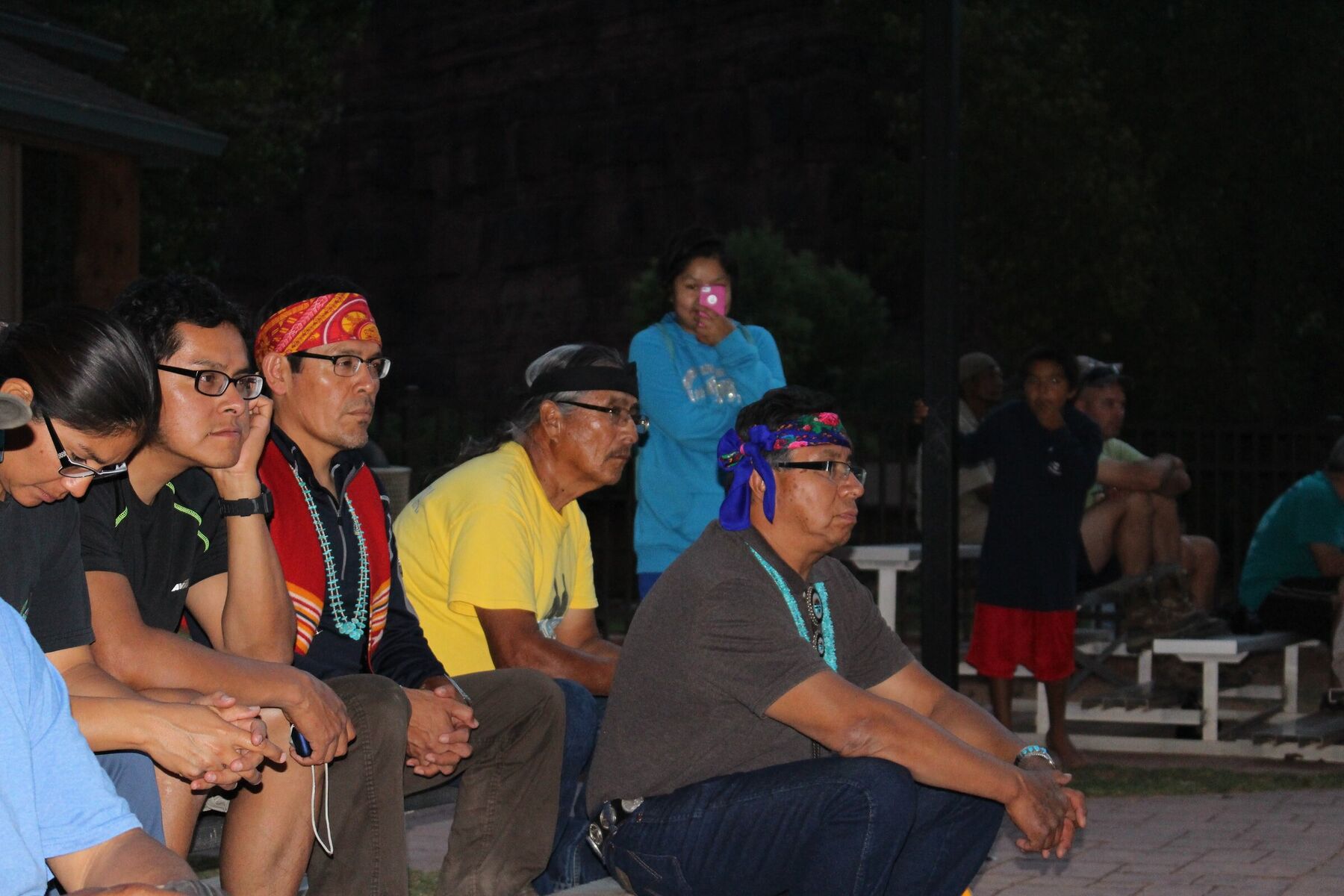
Pillar oneGovernance and economy are one subject
The self-sufficient community.
Every plan a community gets handed is about the one big project — the big plant, the big employer, the big deal that will save everybody. The big thing fails, and there is nothing underneath it.
You do not build a people’s wealth at the top. You build it in the middle.
Three scalesThe same shape, built three times
The circle
Not a committee. It holds the community together and decides what the community must decide — the water, the food, the land, the children, the elders. It names who will speak for the water at the region. It decides what gets traded and what gets kept. It notices when a family is struggling and moves food quietly to the door. Governance at its most fundamental: not law, but care, made systematic by meeting every week.
The regional council
Each community’s circle sends someone — not elected, sent, for a short term, then somebody else. The representative does not vote for the community. They carry the community’s voice into the larger circle and carry its questions home. The community decides; the region coordinates. Four times a year, in the round of the seasons.
The middle, built on purpose
A community bank holding patient money and doing the unglamorous work no large bank will. Underneath it, the oldest banking on earth — the rotating fund, the ayni, the susu, the tontine. Everyone puts in; each takes the whole pool in turn; no interest, no collateral, no credit score, only trust. A web of small enterprises instead of one large employer.
And it runs smaller than this. A person starting something on a Tuesday is answering the same questions in the same order. A community, a venture, an organization
Why the middleThe structural argument
A pyramid falls when you take out the top. A web, you cannot kill by cutting one thread.
And what one community works out, the region gets. A drought-resistant grain, a water catchment that holds — the seed goes, the plans go, and everything learned with them goes too. No patents, no licensing, no secrecy. Knowledge moves between communities the way water moves downhill, because no community gains from hoarding and every community gains from the region holding.
When you find water, you tell the others. Otherwise one day you will be the one thirsty, and no one will tell you.
What it looks like as workThe pieces
| The piece | What it actually does | |
|---|---|---|
| i | Baseline history | The record of what this community already is, gathered before anyone proposes anything. |
| ii | The public process | The community in the room, over months, until the form is theirs and not mine. |
| iii | Local governance design | The chosen form written into instruments that a court, a bank and a federal agency will all recognize. |
| iv | Leasing & taxing authority | The transfer that lets a community lease its own ground and keep its own revenue. |
| v | Certification to govern | The standard a community meets to be certified to govern, create and keep what it earns. |
| vi | Community bank & rotating fund | Patient money at the bottom, and the oldest fund on earth underneath it. |
| vii | Four-capital accounts | The books that show whether any of it is actually true. |
The end state is plain: a community that can lease, tax, decide, create and keep its own revenue — and does not have to ask a distant council for permission to look after its own children.
Pillar twoCompany design, done a different way
A business with soul. Redesigned from the bones out.
Not reformed. Not incentivised. Not persuaded to be less bad. Redesigned — so the shape of the thing, at every joint, produces something the community can live with.
The old business was a machine for making money, and was startlingly good at that one narrow task while being catastrophic at everything else. This is a different animal, not a kinder version of the same one.
In The Council Fire this one is called the Seventh Generation Company.
The bonesSix joints, each doing structural work
- Chartered by the community that lives with the consequencesNot by a state. Not by a distant regulator. By the community — written into the founding document where no future owner, manager or board can undo it. The stake is permanent and un-sellable. If the business grows, the stake grows. If it is sold, the buyer honours the stake — and if the buyer refuses, the sale does not happen.
- Owned by the people who do the workNot stock options that get diluted. A covenant of shared ownership that grows with tenure and grows with the business. Twenty years in, a person holds a real share, not a symbolic one.
- The land holds a share tooHeld in trust and spoken for by the ones whose work it is to speak for the land. If the business takes from the land, it gives back. If it cannot give back, it changes what it takes or it shrinks until it can.
- A board that includes the people the decisions land onA chief executive, yes. Operations, finance, design — yes. And elders seated with equal authority, and young people from the community as full members rather than interns, because they are the ones who will live inside the results.
- The Sacred VetoAny decision that would fundamentally alter the mission, the core values, or the relationship with the community and the land can be stopped by an elder council seated alongside the board — for a minimum of seven years past any change of ownership. The anti-drift principle, written into the bones instead of the values statement.
- Surplus that flows in three directionsTo the workers who made it. To the community that chartered it, through a Seventh Generation Fund that cannot be spent on operating costs and cannot be liquidated in a hard year — only on the school, the clinic, the land trust, the apprenticeships, the seed bank, the water. And to the land, through the restoration that returns what was drawn. Nothing flows to distant shareholders. Nothing buys back stock.
It makes money too — more than enough. But money is a byproduct, not a purpose. A business built around a real purpose has a resilience the old kind never had.
What I actually doStructural, not strategic
Most consultants arrive with a strategy and leave you with a deck. This is structural work: write the charter, design the ownership covenant, seat the board, install the veto, set up the fund, and build the four-capital accounts that keep score. What gets designed is the shape — because the shape is what survives the founder.
A bakery, a repair shop, a farm cooperative. An energy company, a food company, a builder of housing. A wellness village, a hospitality enterprise, a community-owned utility. The size has never mattered. The shape is what holds.
The record
Some of this has already been built.
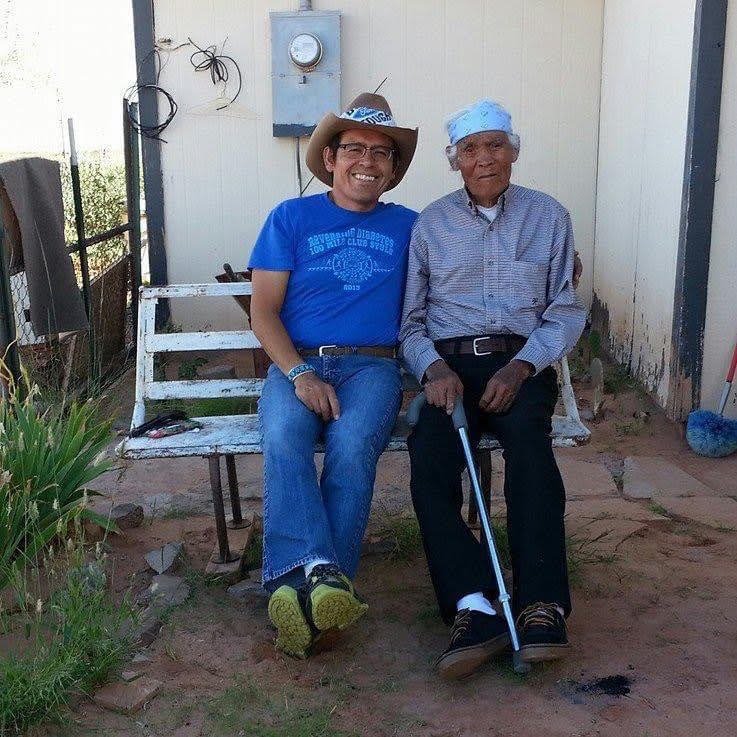
Working inside what he calls a still-deeply-cultural nation, Tony co-authored a Local Governance Act — the law that lets a community take back real decision-making authority over the ground it lives on. Communities have been certifying under it ever since.
Alongside it he reformed business site-leasing law and the tax code, so that communities gained the practical machinery to govern: local taxing and leasing authority transferred downward rather than promised. He designed the selection of representatives by far-flung precinct rather than by campaign election, rebuilt representation on old patterns of nomination and honor, redesigned how a meeting itself is held, and built the certification path by which a community qualifies to govern itself.
He wrote a baseline history book for a people, as the ground its policy would stand on. He ran a public policy process that gathered the vision of elders, youth and leaders, and directed a regional lands and communities program. He is still doing the work, with communities and with companies.
Three deep dives
The argument, taken all the way down.
Three essays. How decisions actually get made, how to build a government that fits, and what an economy is for. Each one is long, and each one is the real thinking.
How decisions get made
The meeting is a technology, and most communities are running one that was designed to produce a loser. What council form does instead — and a decade of evidence that it funds real projects.
Read the essay Deep dive twoA government that fits
Getting away from elections. Why campaigns misfire in a communal culture, and the alternatives that were actually built: nomination and honor, precinct representation, certification, real authority transferred down.
Read the essay Deep dive threeAncestral Economics
Four capitals in depth. Wealth that stays home versus wealth that leaves. Honorable trade, community ownership, tourism that strengthens culture, and the transition off an extraction economy.
Read the essayThe one question
Will this ensure our future generations live in harmony and resilience with each other and Mother Earth?
That is the bottom line of The Council Fire, and it is the last thing asked before a decision is made. Every provision, every account, every council on this page exists to make that question answerable by somebody other than the person who wants the answer to be yes.
The novel
The Council Fire
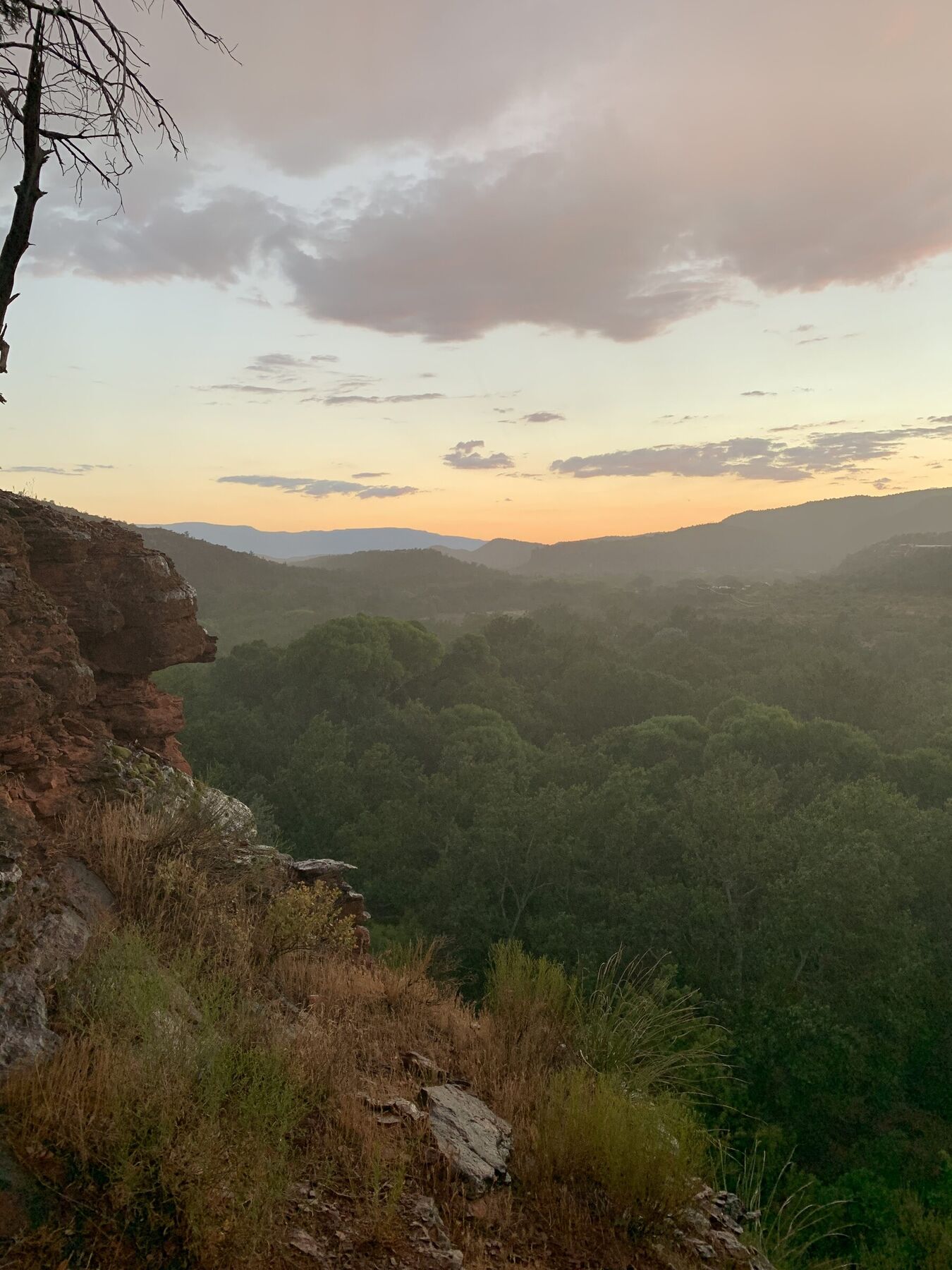
When the systems running the modern world reach their limits, the keepers of many peoples' oldest knowledge are drawn to one fire to remember what actually lasts.
Every culture facing a breaking world kept a council fire — elders in the circle, the young in the circle, the children at the edges. This is the fiction that sits underneath all of the work on this page.
On the last night of the book, a young woman stands up and asks the elders how she does this at home. They tell her the answer is a whole other book, and then they say what will be in it — the business, the community economy, the planning, property, the seeing of every person, and the story. That is the book being written next.
Work together
If your community is rebuilding something, write to me.
Governance design, economic strategy, community-based planning, or a conversation about whether any of this applies to where you are. It comes straight to Tony.
Contact