Keynotes & talks
The far messengers, told in the room.
What they were. What we lost when we stopped raising them. And what it means for the crossing we are in now. No slides.
The talks
Four shapes, depending on the room.
-
The keynote
The Far Messenger Forty-five to sixty minutes. The desert crossing, the ocean crossing, the honored roles a whole civilization was organized around, and the moment the well runs dry. Told as a story, because that is how it was always carried. The room usually does not want it to end.
-
The commencement
Honoring the Past, Building the Future For graduating classes, and the talk I am asked for most. I have given the commencement address to the Native American graduates of Northern Arizona University, and the PhD commencement address at Prescott College in 2025. It is a different talk from the keynote: shorter, and it ends by putting something in their hands rather than in their notes. The Prescott address is below in full; the NAU one is published here.
-
The organization
Calm is a built thing For leadership teams and corporate retreats. Why panic is a failure of preparation and not a personality, what the old carriers trained on the ordinary days, and how a team stores calm before the season that needs it.
-
The institution
Four capitals, and what comes after extraction For universities, conferences and boards. Governance that fits its people, economies that keep the wealth home, and the honest work of a transition off fossil fuels. This is the one that argues.
One of them, in full
Two commencement addresses, both here in full.
One to the Native American graduates of Northern Arizona University, published in full as an essay. One to the doctoral class at Prescott College in 2025, below. Different rooms, the same argument.
Read the NAU address — “30,000 Years, and a Formula That Still Works”
“Why measure wealth in dollars instead of in healthy grandchildren?” Honoring the Past, Building the Future · Prescott College, 2025
Yá’át’ééh. Esteemed faculty, fellow scholars, and graduates of Prescott College. Today I stand before you as a storyteller, a student of ancestral wisdom, and a bridge between worlds. My words are not mine alone — they carry the voices of my great-grandfather, the winds of Horse Lookout Point, and the resilient laughter of the Kaibab Paiute people.
The petroglyphs of Horse Lookout Point
Atop that windswept mesa, where the desert meets the sky, my great-grandfather taught me to read the land’s oldest language. His calloused finger traced the spirals and antelope herds carved into stone by ancestors who understood wealth as a covenant with the Earth. “These marks are not art. They are maps for survival — how to follow the elk to water, how to plant corn in drought, how to remember who you are.”
One evening, as the sun bled crimson into the horizon, he gave me a warning. “Long ago, a people built towers that scraped the sky but forgot the songs of the soil. Their wealth turned to dust. What will the land say about us two thousand years from now?”
The MBA and the pinstripe suit
Years later, as an MBA student, I arrived at the Kaibab Paiute Tribe near the Grand Canyon’s North Rim carrying a briefcase of spreadsheets. Clad in a pinstripe suit sharper than my understanding, I was ready to fix their economy after they had rejected a corporate waste incinerator.
Elder Vivian Jake met me with a raised eyebrow and a question that shattered my hubris. “Why measure wealth in dollars instead of in healthy grandchildren?” She gestured to the piñon groves behind us. “These trees fed my ancestors and will teach my great-grandchildren. What will your spreadsheets feed?”
Wealth as reciprocity
Under Elder Vivian’s guidance we built a framework that rejected extraction in favour of reciprocity. The thousand-year vision: “Planning for fifty years is shortsighted. We decide for seven generations. What good is a job today if it poisons the water our descendants will drink?” We mapped ancestral trails, medicinal plants, and springs that whispered survival strategies.
Ceremonial trade: we revived the piñon nut trade using lunar cycles and grandmothers’ wisdom. Prices reflected prayers sung during harvest, not market whims. Plastic packaging was banned outright — “the land cannot digest your trash.”
When I presented a five-year return projection, Vivian laughed. “Child, these trees have five-hundred-year business plans. Catch up.”
Thirty thousand years of trade
Long before Wall Street, peoples here perfected economies rooted in reverence. Hopi dry-land farmers and Diné herders meeting at the base of the mesas — wool for peaches, stories for songs. The great Shoshone gatherings that drew tribes from the Plains to the Columbia. Hohokam canals still irrigating Arizona a thousand years later. Obsidian, turquoise and shell moving continent-wide through hundreds of hands, each pair adding a story.
These were not markets. They were kinship systems in which honor was the currency, governed by one teaching: t’áadoo ách’ááh ádiilííł — don’t take more than you need.
The forgetting
Communities traded buckskins for coal mines and acorn groves for oil wells. There was a time when nearly every Diné person could build their own home and run their own store — an enormous body of practical skill now largely dormant. Meanwhile the modern economy rewards the already-wealthy and structurally blocks ordinary families from building anything to hand on. The elders’ warning was shorter than any of my slides: you cannot eat money.
What communities actually choose
Here is the central claim, and I have watched it hold every time: when local people are given real authority over their own planning, they choose sustainability.
Two proofs. A Diné sheep cooperative whose first act was not a business plan but a set of principles — use the old methods, don’t overuse the land, no greed, don’t boast, keep the conversation humble and honorable. And an intertribal gathering at Havasupai to recreate the old trade fairs, where the tribes barely bartered at all. They gifted. They watched each other’s delight. They sang songs from one another’s nations that had not been sung in generations.
A child’s lesson in 4023
Imagine a girl herding sheep near Horse Lookout Point in the year 4023. She pauses at petroglyphs now joined by new symbols — solar hogans, drought-resistant cornfields, and circles representing the Era of Repair. Her elder tells her: “Long ago, people chose to listen. They measured wealth in clean rivers and fluent storytellers. They built economies that healed, not harvested.”
The child asks, “How did they remember what to do?”
The elder smiles. “They found maps in the stones and courage in their bones.”
Ahéhee’
Ask not only whether this is profitable, but whether it is right. Measure success in legacies rather than logos. Treat the degree as a covenant, not a credential. Leave instructions in stone, not scars. Become ancestors worth honoring.
May your work ensure that two thousand years from now the land will whisper: they loved fiercely enough to change course.
Nizhónígo naasháa doo — may we walk in beauty, leaving trails of healing for those yet unborn.
PhD Commencement Address · Prescott College · 2025
The rooms
Thirty years of them.
Auditoriums and gymnasiums, boardrooms and chapter houses, conference halls and open ground at dusk. The talk changes shape for the room. The argument does not.
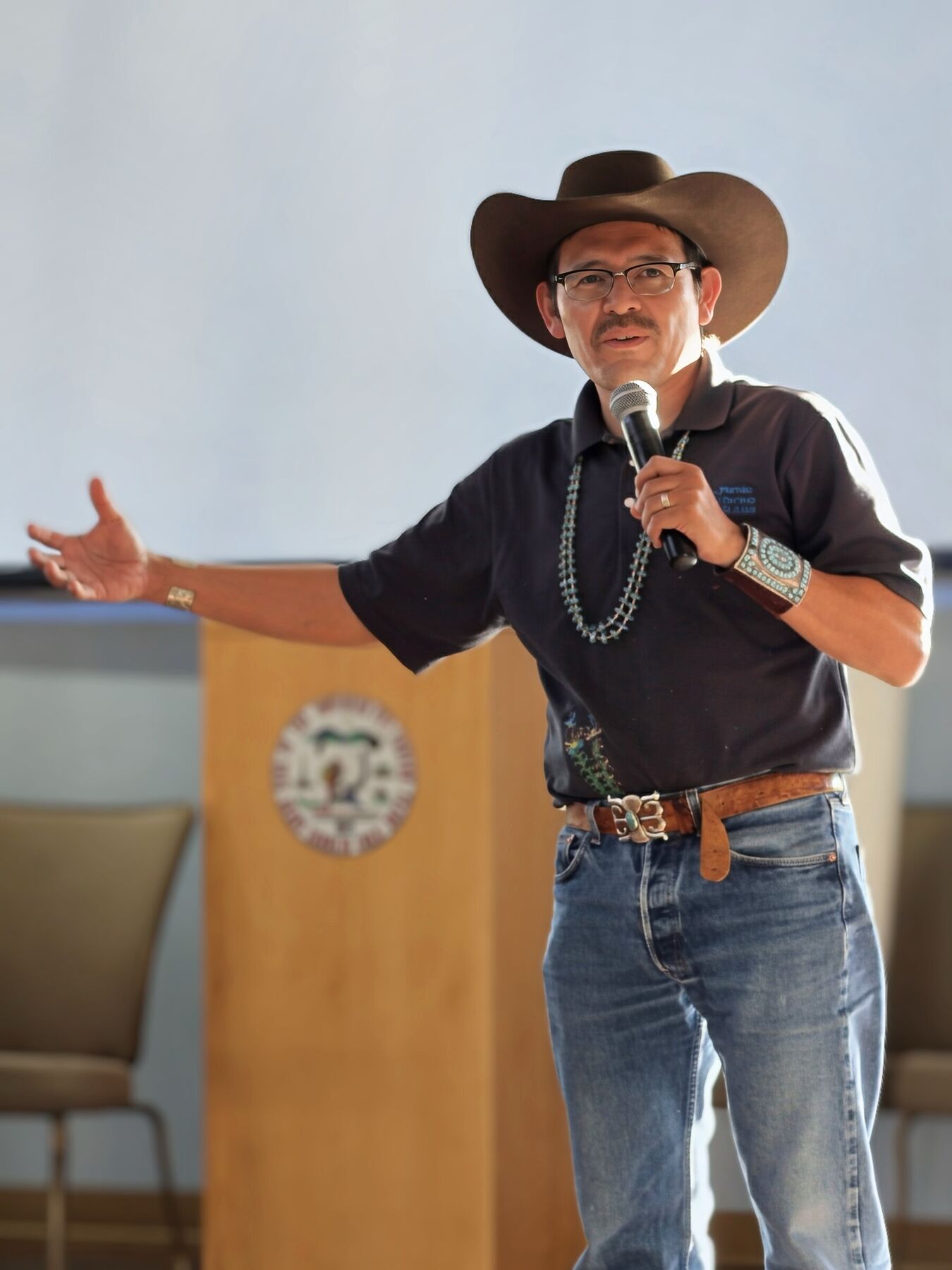
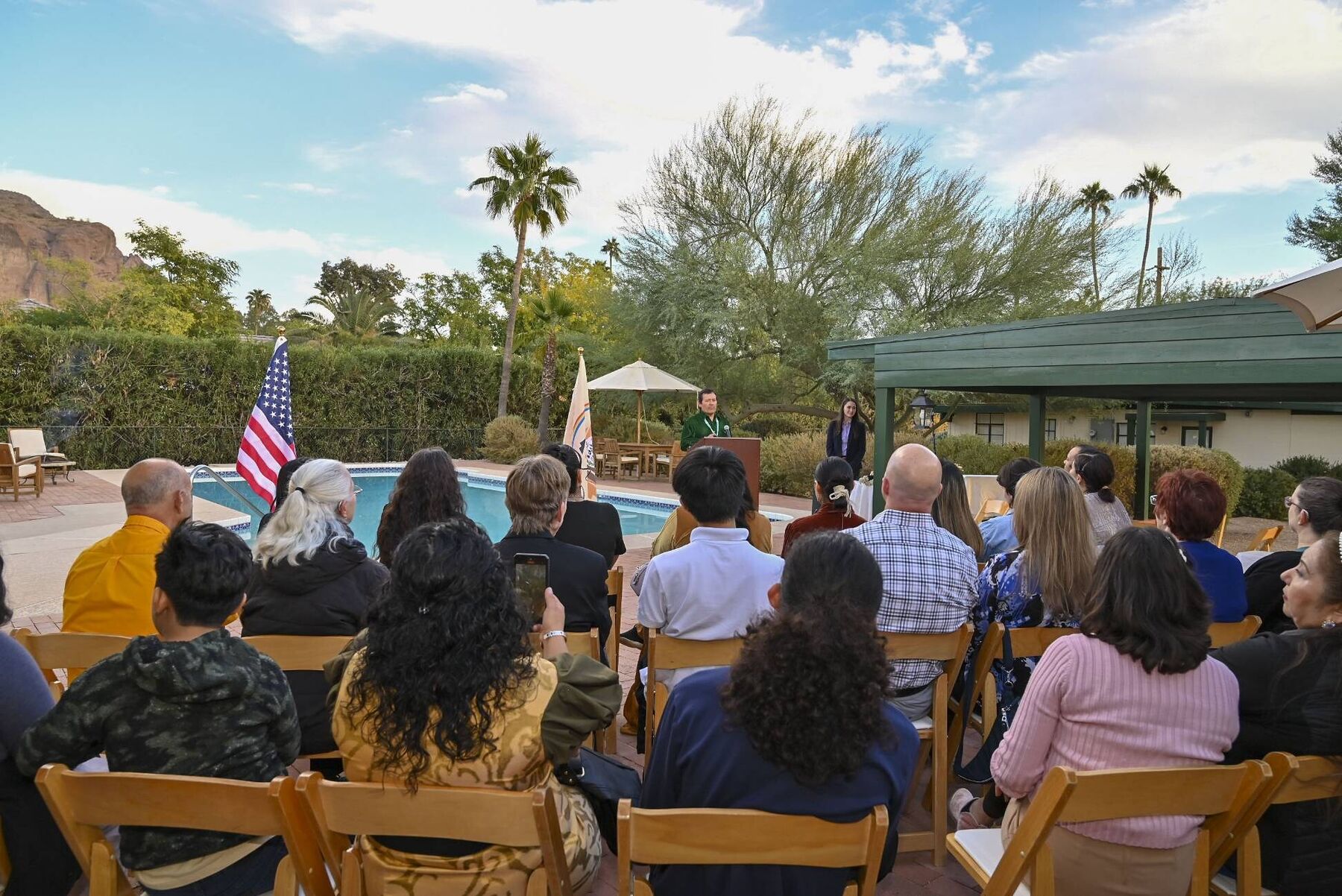
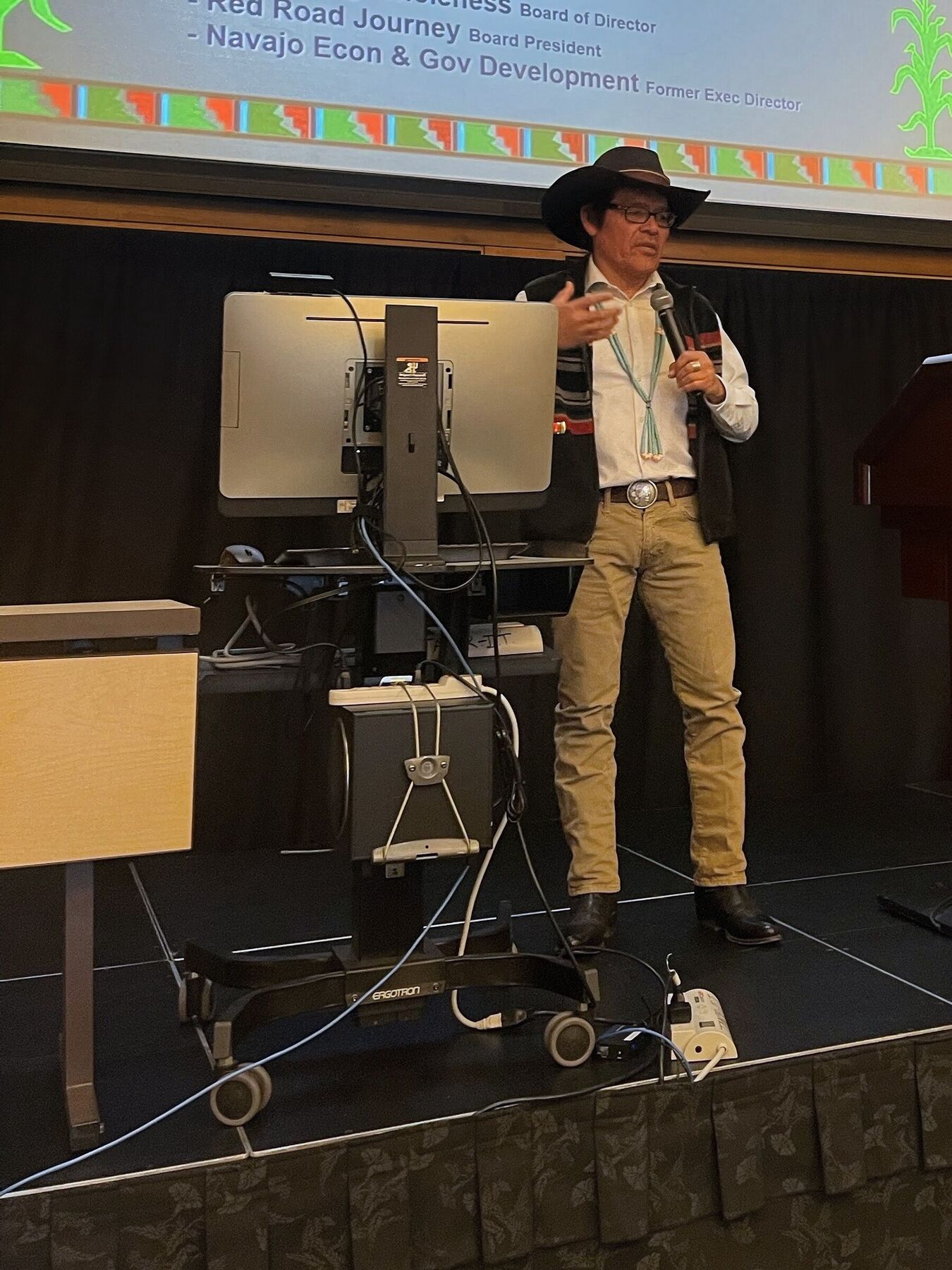
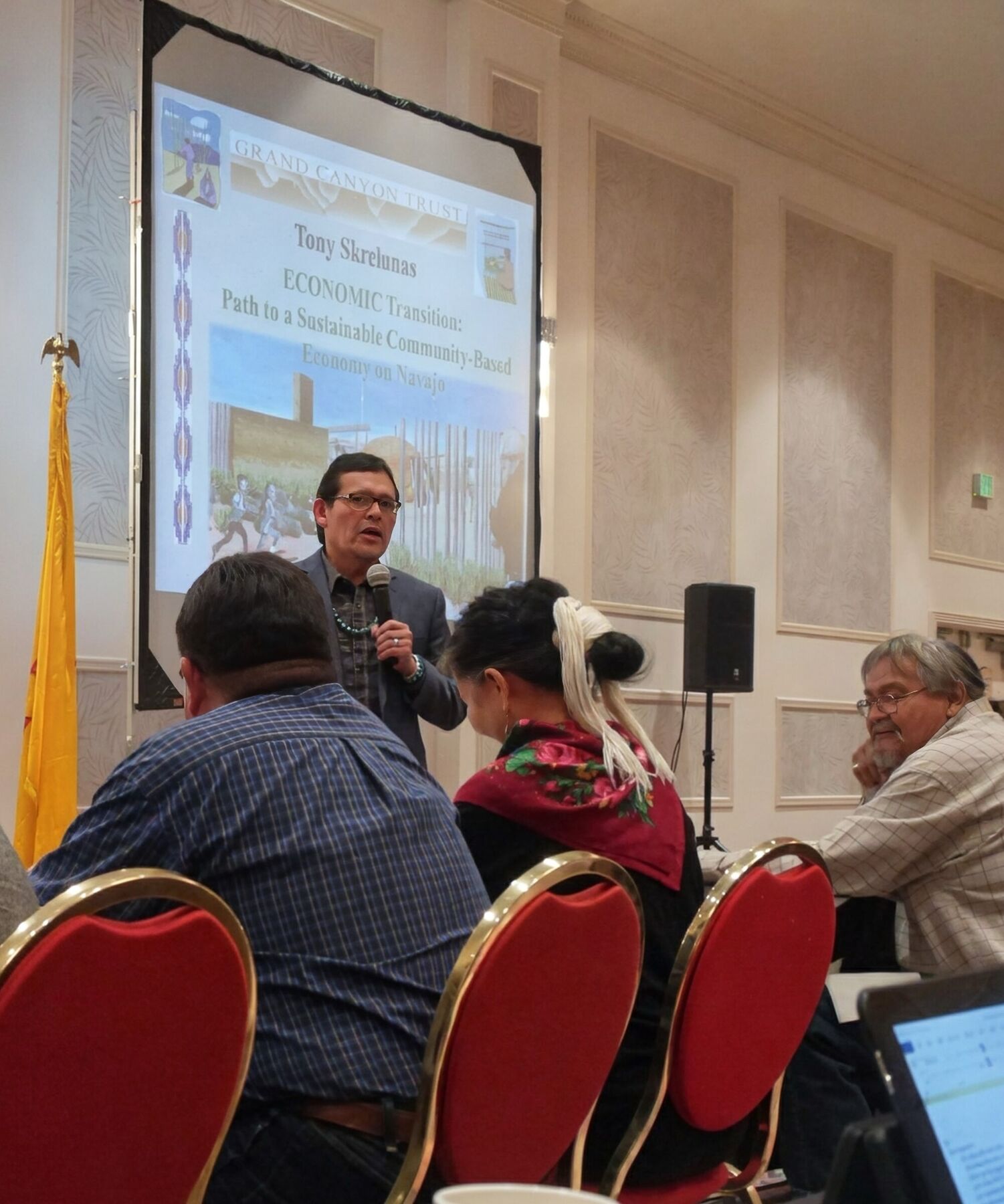
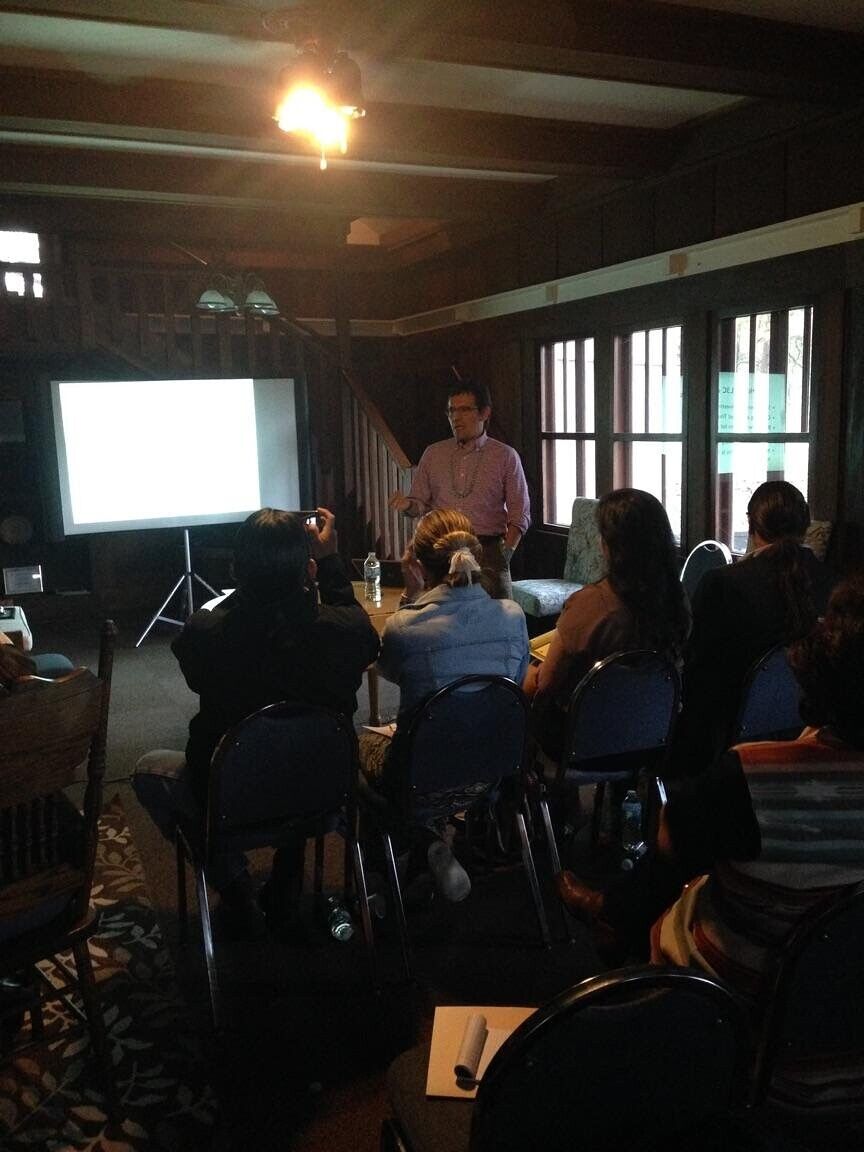
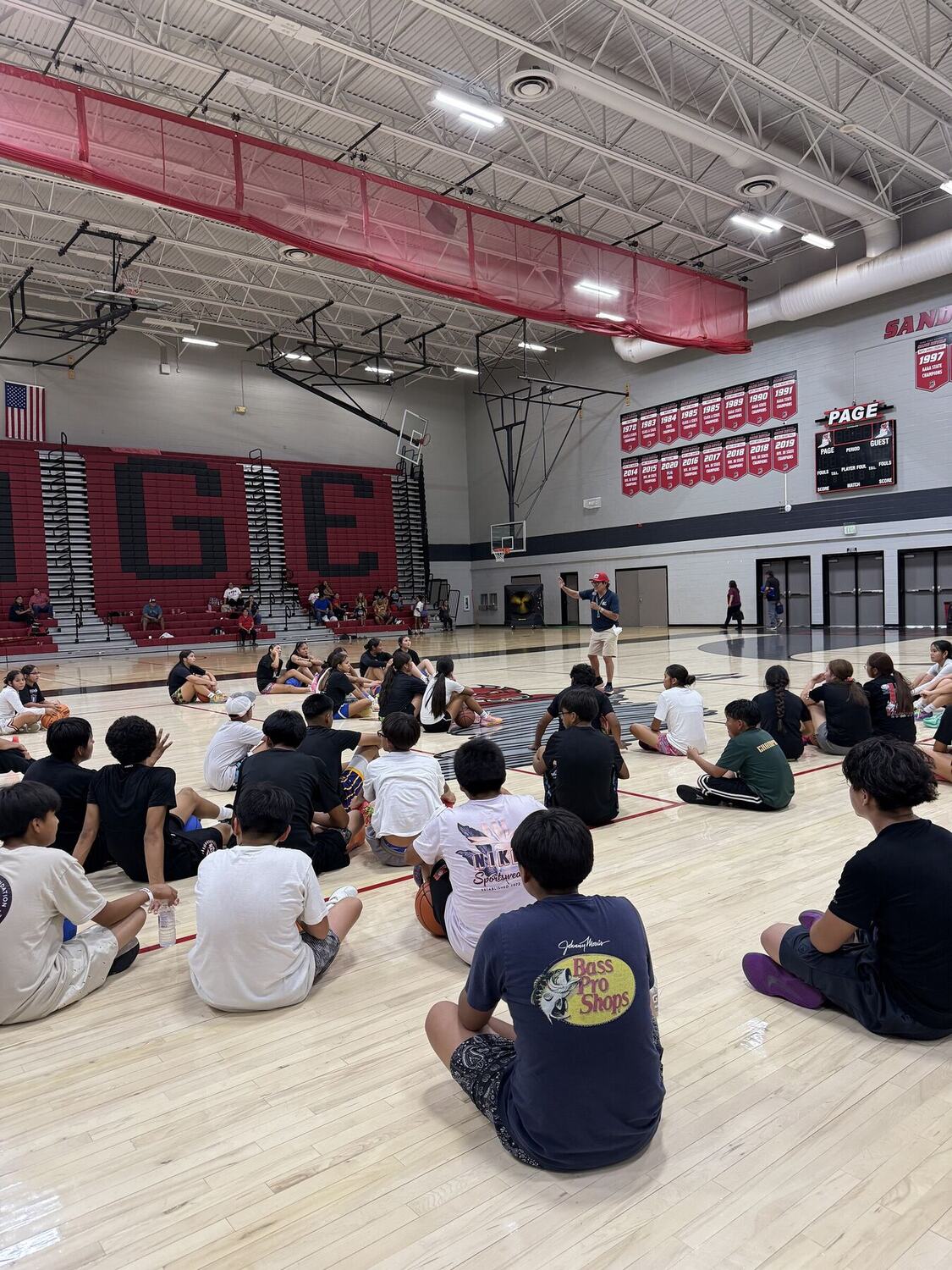
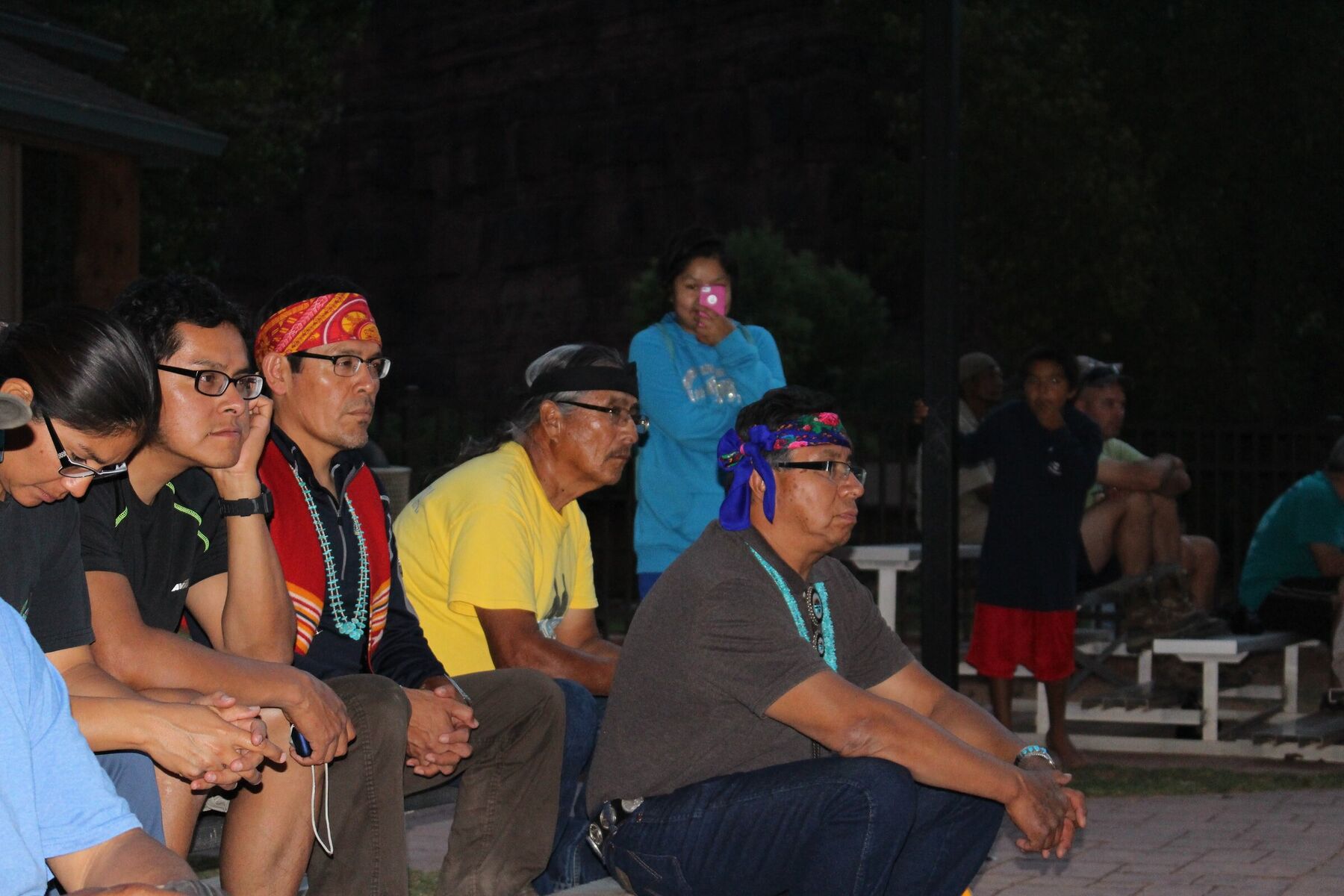
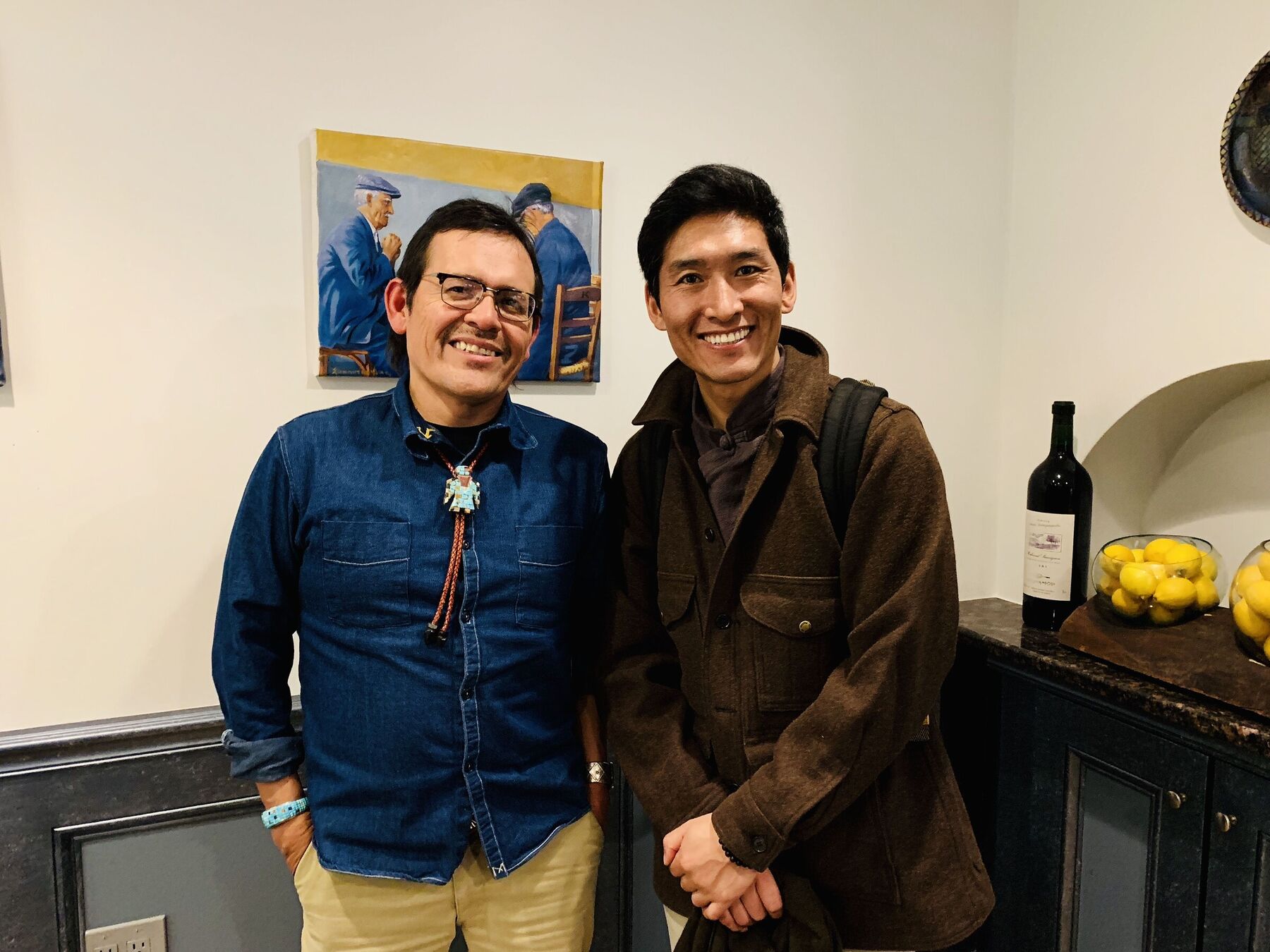
Where
The audiences have not looked alike.
Which is the point. The far messengers were not one people’s idea — every people on earth raised them, and every audience recognizes their own version of it within about four minutes.
- India
- Tibetan communities
- Mexico
- Canada
- Oxford
- New York
- San Francisco
- Las Vegas
- Universities
- School boards
- Physicians & psychologists
- Executive teams
- Tribal governments
- Wellness institutions
If you want one
Write and say what the room is.
Who is in it, what they are facing, and how long you have. I will tell you which of the four fits, or that none of them do.