Faculty · 1440 Multiversity
What I teach, and why it holds up.
I teach one subject from three directions: how a person, a team and a community build the capacity to carry something heavy across hard ground — and stay whole doing it.
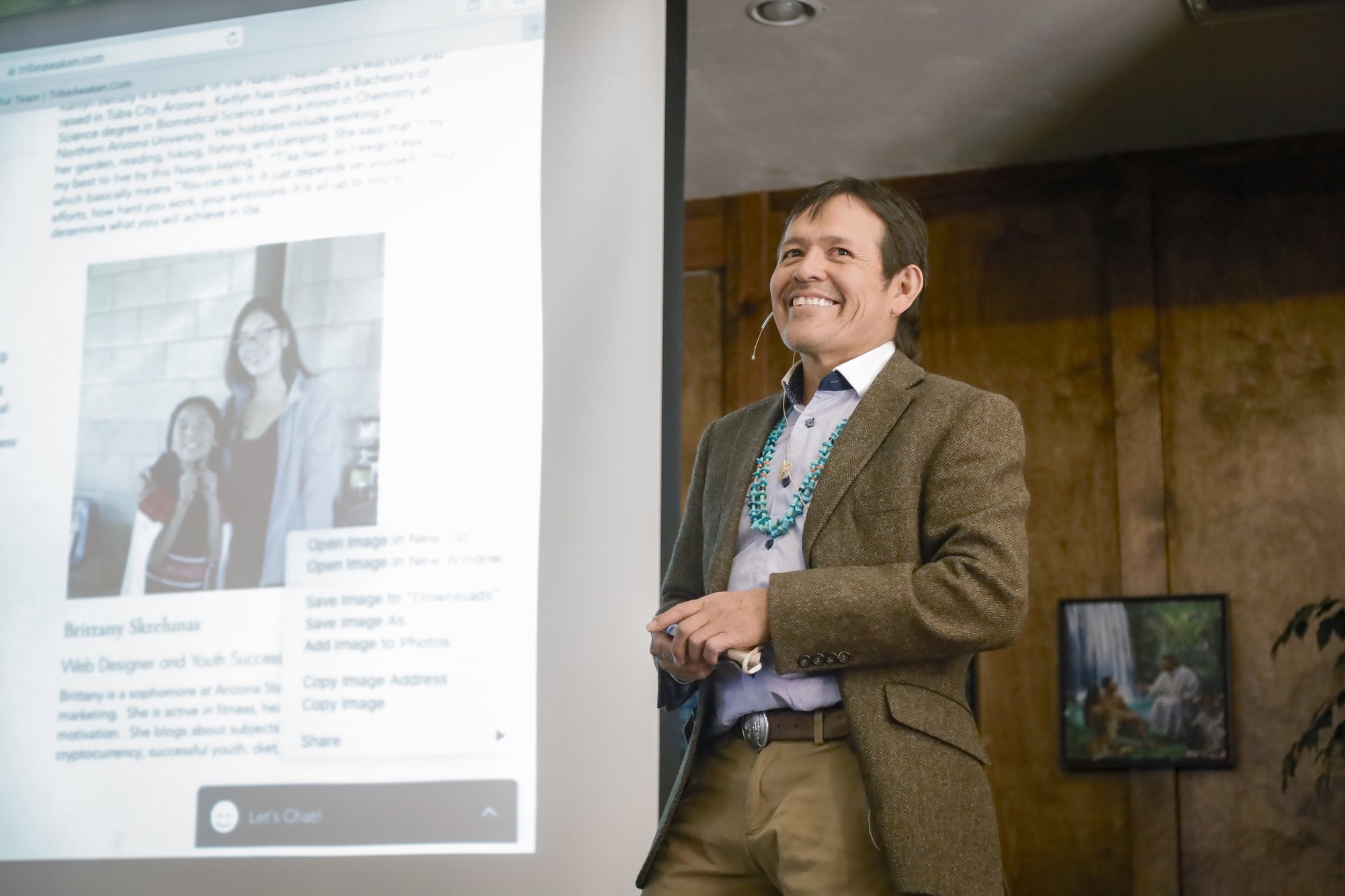
I hold a faculty appointment at 1440 Multiversity, and teaching is now the center of the work rather than something alongside it. The material is old — my great-grandmother taught it to me before I could read. The reason it holds up in a university room and a boardroom both is that the last forty years of research keeps arriving at the same place from the other side.
More courses are coming, tied directly to the doctoral research. That research enters dissertation stage early next year, and everything I build from here runs on the same spine: the practices, the evidence underneath them, and what an institution has to change to hold them.
The through-line
Three lenses on one question.
My doctoral research at Prescott College asks how three ancestral traditions each built their own technology for meeting the hardest days — and what a modern person, organization or nation can actually use from them. Not comparative religion. Applied performance.
- DinéThe dawn practice, corn pollen, the ordered morning. Naming what is real before the day names it for you. Running as prayer rather than exercise. Hózhó as an engineering standard, not a mood.
- LithuanianEndurance as an inherited technology. A people who were supposed to disappear four times and did not — the song, the forest, the book smugglers, the stubbornness that outlasted an empire. What a culture does with grief so it does not become despair.
- JapaneseRestraint, repair, and the discipline of finishing one thing before starting the next. The garden as a nervous-system instrument. Kintsugi as an argument about damage. Read at fourteen by kerosene lamp, studied ever since, and drawn on in practice — studied and incorporated, not inherited.
Three peoples who never met, arriving independently at the same practices. When that happens it usually means the thing is true rather than cultural.
The course · 1440 Multiversity
Ancestral Practice and Human Performance
Description
Three peoples who never met — Diné, Lithuanian, Japanese — each built a working technology for meeting the hardest days. This course teaches those practices, the evidence that has since grown up underneath them, and what a person or an institution has to change in order to hold them. It is not comparative religion and it is not history. It is applied performance, taught from inside the traditions rather than about them.
By the end you will be able to
- Run a breath practice that reliably moves your own state, and know why it works.
- Name what your family handed you, and what you are handing on.
- Build a day with the shape the long-lived peoples of the world actually keep.
- Dose difficulty on purpose — and recover from it, which is where the gain lives.
- Say what a far messenger is, and what a society owes the people it asks to carry things.
Sessions
- The nervous system comes first You do not make calm in the emergency. You retrieve it, and only if you put it there beforehand. The breath count, the long exhale, the dawn hour. Evidence: a longer exhale than inhale shifts autonomic balance toward the parasympathetic branch — the mechanism under the vagal-tone and heart-rate-variability literature. The old runners had the count ten thousand years before anyone named the nerve. Practice: the Stone Breath, taught properly and taken home.
- What travels down a family A nervous system is learned before language and handed on. So is a settled one. Evidence: the adverse childhood experience research, and the work on parental co-regulation, describe a transmission the old people simply called what a house feels like. The useful half: repair travels the same way, which makes this the most hopeful session in the course.
- Long life is a shape, not a supplement My grandfather reached a hundred and three, and it was once ordinary. Evidence: the Blue Zones work found the same day in five unrelated places — movement built into the day, mostly plants, a reason to get up, something that downshifts you daily, and people who have known you for decades. The Harvard Study of Adult Development, running since 1938, found the strongest predictor of a healthy old age was the quality of close relationships. Practice: build your own day, on paper, before you leave the room.
- Stress is a dose, not an enemy The body is built to be challenged and to recover, and the recovery is where the gain lives. Evidence: hormesis — the same principle under exercise adaptation, time-restricted eating, and heat and cold exposure. Sequence and dose are the whole discipline. The old form: the ceremonial year was a dosing schedule, and nobody called it that.
- You cannot do it alone, and that is not a weakness A nervous system settles in company and braces alone. Loneliness behaves in the data like a disease. Where it turns: this is the session where personal work becomes community work, which is why the two are taught together and not sold separately.
- The far messenger Every civilization raised people to carry what mattered across hard ground and arrive with it whole. What the role required, what it cost, what a society organized around raising them looked like, and what happens when it stops. This is the one that changes rooms.
Texts
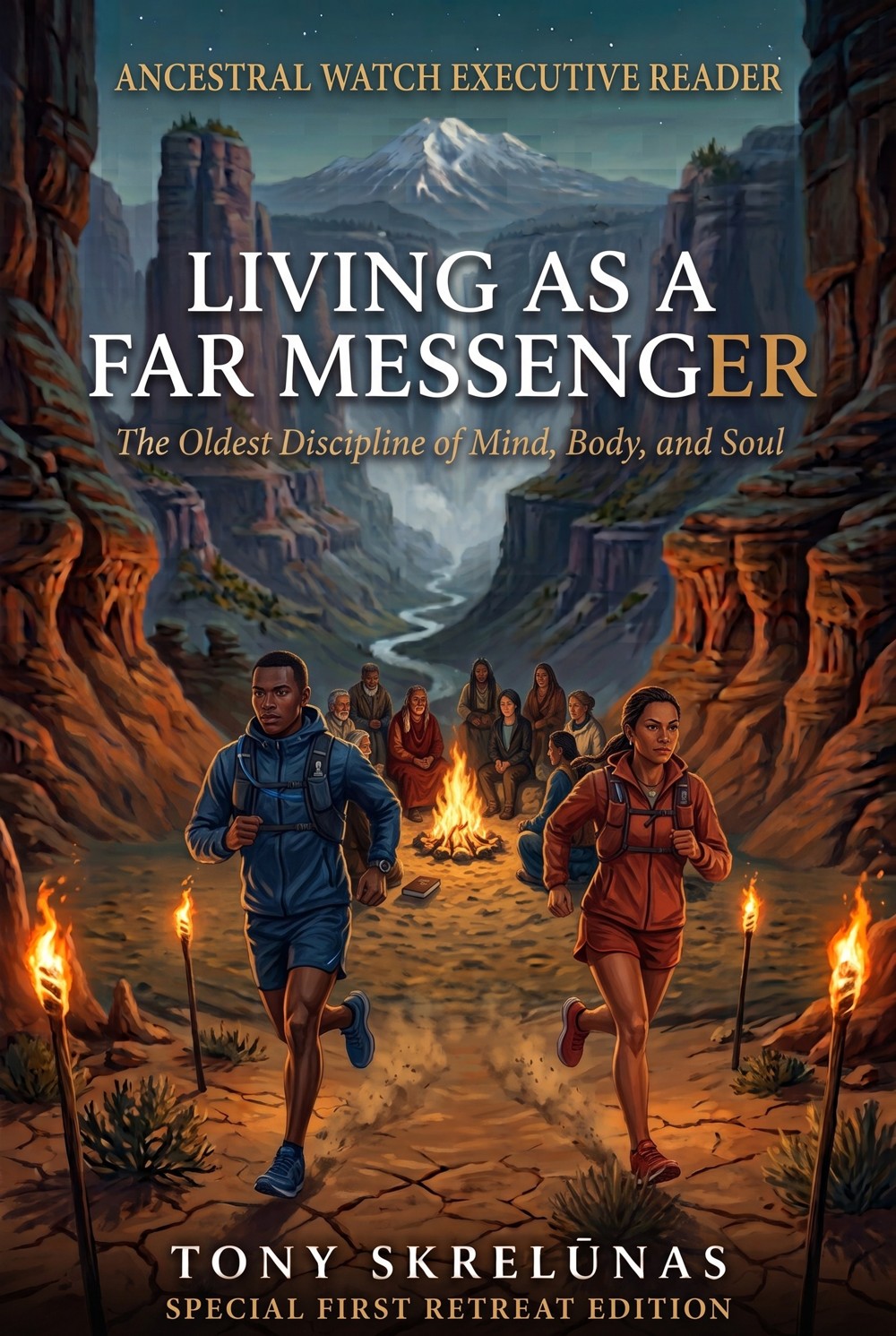
Living as a Far Messenger is the working reader for this course — the teaching in one sitting, then eleven write-in worksheets meant to be dated and returned to at solstices and birthdays. Read it in a sitting; write in it for a year.
 Living as a Far Messenger
The Oldest Discipline of Mind, Body, and Soul. The Executive Reader — seventy illustrated pages, the discipline distilled to what a person can begin tonight.
Living as a Far Messenger
The Oldest Discipline of Mind, Body, and Soul. The Executive Reader — seventy illustrated pages, the discipline distilled to what a person can begin tonight.
Alongside it, the novels: Stone Breath and The Council Fire — the practice and the argument, carried as story, which is how they were always carried. Everything else is on this site, free, with the sources: the Human Resilience and Community Resilience deep dives, and the journal.
More courses are coming, each taking one of these strands and teaching it properly rather than as a summary.
The research
Where the doctorate sits.
I am a PhD candidate at Prescott College, home to North America’s first doctoral program in sustainability education. My dissertation concerns human and organizational performance through those three ancestral lenses — how the practices work, why they transfer, and what an institution has to change to hold them.
I started it as an extension of my MBA more than twenty-five years ago and the work never slowed down enough to let me finish. I am well past halfway now.
The research enters dissertation stage early next year, and the courses follow it. Each one takes a single strand — the nervous system, the intergenerational question, long life, the far messenger — and teaches it properly rather than as a summary, with the evidence and the practice together.
Everything I teach is either in that research or in the novels. The deep dives on this site are where the argument is written out at length, with the sources.
- Human ResilienceThe person and the family. Intergenerational healing, long life, and the tools that stop the handing-down.→
- Community ResilienceGovernance, economies and institutions that fit the people who live inside them.→
- The writingEverything written down since 2019, grouped by the question it belongs to.→
- The Ancestral WatchFour novels. The same material, carried as story, which is how it was always carried.→
Where it happens
Rooms, and the shape of them.
- Keynotes and addressesConferences, universities, commencements, leadership gatherings. Forty-five to sixty minutes, told as a story, without slides.→
- Courses and team immersivesTwo to three days with a leadership team and the people underneath them. The material taught in sequence, with something to take home.→
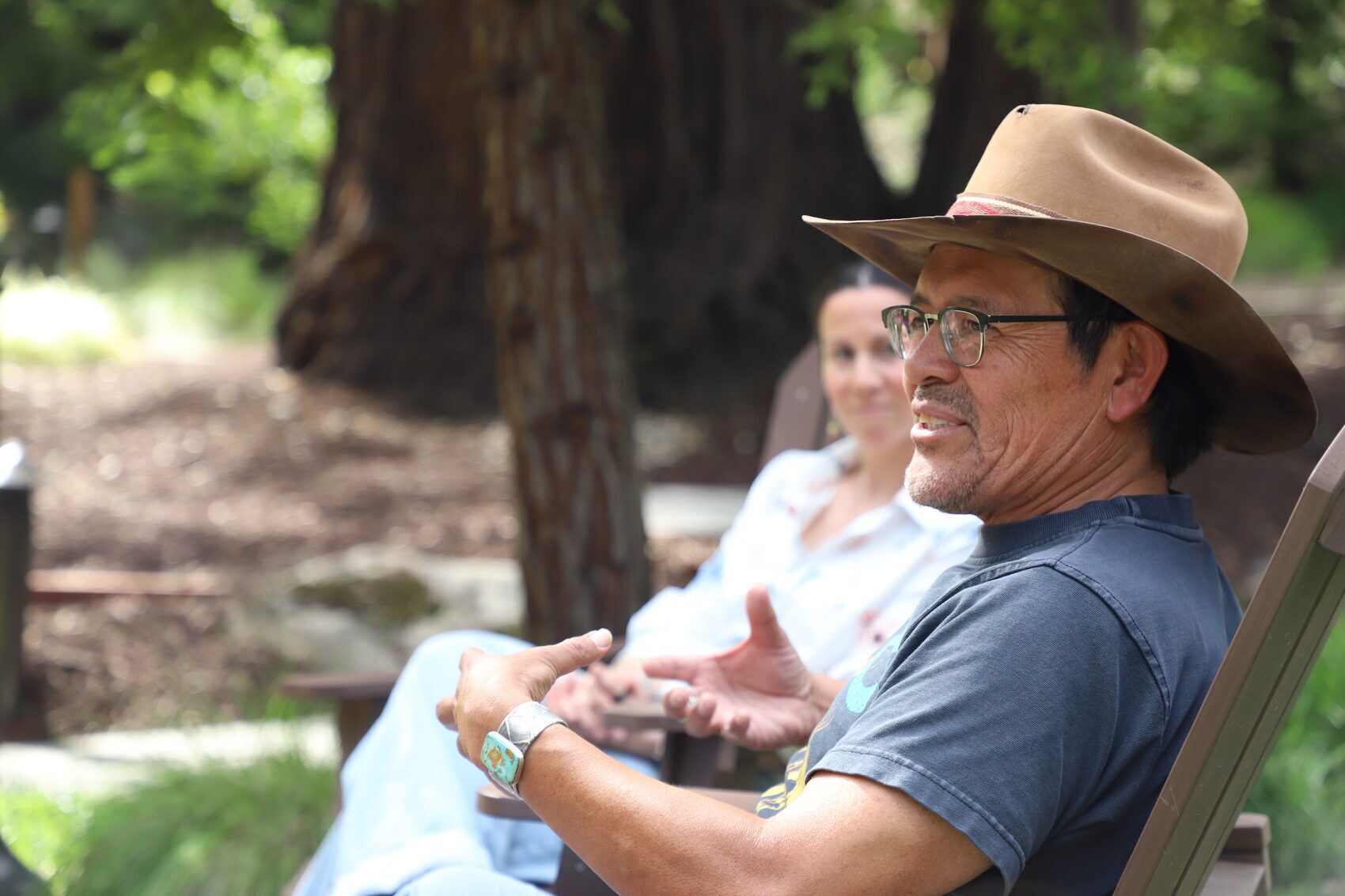
- 1440 MultiversityWhere I teach in the redwoods. The residential version of all of it.→
- Write to meIf you are putting a room together and any of this belongs in it.→
The one question
Will this ensure our future generations live in harmony and resilience with each other and Mother Earth?
It is the bottom line of The Council Fire, and it is the test I put on everything I teach. A practice that only steadies the person in the front row has not done its job.