A Commencement Address
30,000 Years, and a Formula That Still Works
To the Native American graduates of Northern Arizona University — on where we come from, and where we are going.
Good afternoon, honorable graduates.
How many of you have ever lived in a Hogan? How many of you have sheep? How many of you plant? How many of you grew up with no shower, no running water?
When I was a child, most of you would have raised your hand.
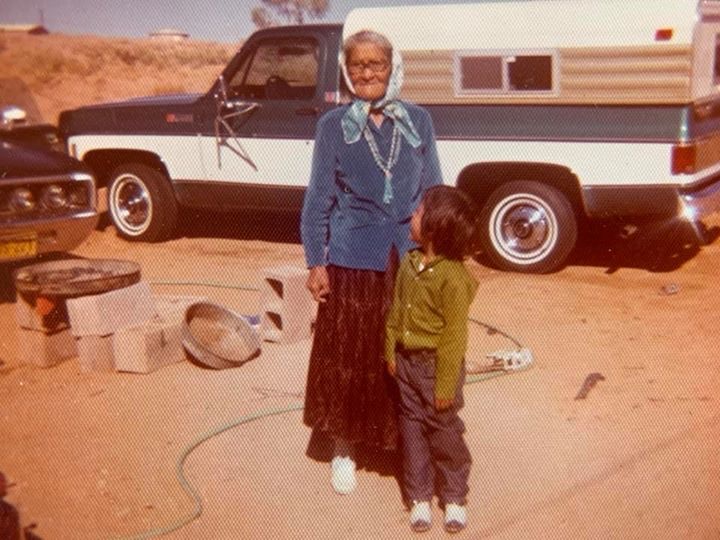
As a kid, I had two pairs of socks, two good pairs of pants, and one pair of shoes I wore for every occasion. No TV, no cell phone, no internet. I read by the light of a lantern. Our nicest piece of furniture was an all-wood kitchen table — and I was so proud of that table, especially when we had visitors.
Now let me ask: how many of you live in a house with your own bedroom, take a shower daily, own several sets of clothes in the style of the moment, maybe a 60-inch screen, wireless internet, an iPhone?
All over the world, this is happening to once-traditional peoples. Most nations have bought into the idea that this is the way to go — to do all we can to increase our incomes and improve our communities, so we too can live in constant comfort. I, like you, have chased that: bachelor's and master's degrees, a fulfilling career, achieving much.
Yet lately — with global warming, economic instability, rising prices — I have been thinking hard about the direction of our nations and how we build our economies. As Economic Director of our Nation, I felt the daily pressure to build a Western economy — to become like Phoenix or Flagstaff. "Reduce the red tape." "Build big shopping centers." "Marinas, casinos, hotels." I spent years working on exactly these. But through those years, I also noticed some real changes in our communities.
“Wherever you travel in the world, someone will want to know what makes you unique — of your land and your people. And you will proudly tell them.
I have asked our leaders to ponder this: there may come a time when we no longer have shepherds herding in the old way. A time when our people no longer wear the tsiiyeel, no longer speak or sing in the old language. If we lose the sheepherders and weavers and hogans — what would we even put in our tourism brochures? The economic system we are adopting from Western culture does not value our songs, our dances, our teachings, our hogan builders, our plant gatherers, our shepherds, our farmers who still hold the ancient knowledge.
As young, serious professionals, you are our future leaders. We have few role models for this — there is no modern road map to raise our standard of living and keep who we are and protect the earth, all at once. But perhaps there is a road map. Perhaps we can study the past.
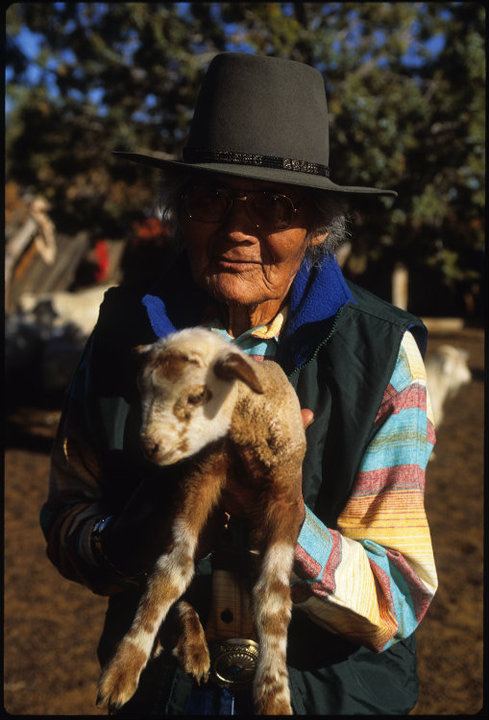
Growing up on Big Mountain, at a place called Łį́į́ Hadit'iinh — Horse Lookout — I would herd sheep and take breaks to climb every appealing hill in the area. (This may explain how I lost a sheep now and then.) On almost every hill I found pot shards, and I would wonder how many people had lived here, what the children back then did on these same hills. Wherever we moved the flock to rest the land, there were always more shards, and always new places to explore.
“On summer nights, my Chei and I would lay outside and watch the stars, and he would recite the stories of the civilizations that came before us.
In school, like most of you, I was taught the Western version of our history — where our story begins at the arrival of the European. But the evidence of strong, thriving civilizations is everywhere: knowledge of medicines, of the land and its water systems, of weather and the seasons, of agriculture, architecture, song, ceremony, and prayer.
Let me paint you a picture of how things were before 1492. There were between 90 and 100 million people living in the Americas — more than in Europe, over one-fifth of the world's population. Our ancestors have lived on these lands for more than 30,000 years. They settled the land, built families and communities, and discovered the best ways to live well here. These were the furthest thing from a wilderness waiting to be filled, and our people were the furthest thing from "nomadic savages" — savages do not create the world's most colorful languages, advanced medicine, and agriculture, or make sure that you, generations later, would still know the stories.
Our ancestors cultivated over 70% of the food the world now eats — beans, corn, tomatoes, peppers, potatoes. Popcorn, turkey, sweet potatoes, strawberries. Over 200 plants, tested by tribal scientists across thousands of years, entered the world's medicine only in the last hundred. The three-branch, checks-and-balances system of American government is built on tribal systems of democracy. Our astronomers could forecast eclipses and the movements of the stars.
“Our ancestors had figured out how to live sustainably — and built regional trade networks stretching from Alaska to the southern tip of South America.
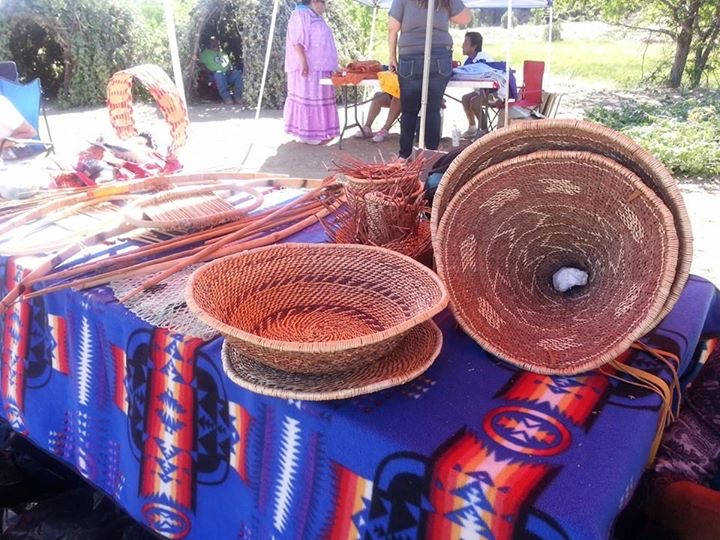
Each tribe developed a way of living in concert with its own place, taking advantage of local resources. Those differences produced varied cultures, religions, and materials. Every tribe had to know precisely which plants and animals were available and when — intimate knowledge of land, seasons, and community, essential for harvesting sustainably so that future generations, and all living things, would survive. Over thousands of years, the Inuit learned the social character of the caribou — the role of the elder in leading and calming the herd, and the need to hunt the young. That same depth of knowledge applied to grasslands, farmland, and plants.
This knowledge was so critical that it became woven into social structure, belief, and ceremony. Survival depended on right relationship between the five fingers — us — and nihimá, mother earth. Around that common thread, tribes built regional economies and trade networks. Some specialized in fishing; others in acorn or wild rice, in cotton and blankets, rugs, bowls, tobacco, tools, medicine, architecture, hides, feathers, minerals. The Shoshone hosted a great gathering in the Great Basin that drew tribes from the Plains and the Columbia River. For 1,200 years the Hohokam traded with central Mexico, the Plains, and California.
Consider the Navajo and Hopi. Some of us younger ones were taught our tribes never got along — but the elders tell of constant mingling at festivals and dances. Hopi elders miss when large groups of Diné would come with meat and camp below the villages, sharing songs and food into the night; the next day the Hopi would reciprocate. Hopi life is rooted in farming; Navajo life is intertwined with the animals. The difference made a symbiosis — meat and wool for corn, squash, and melon — a business connection and a social one.
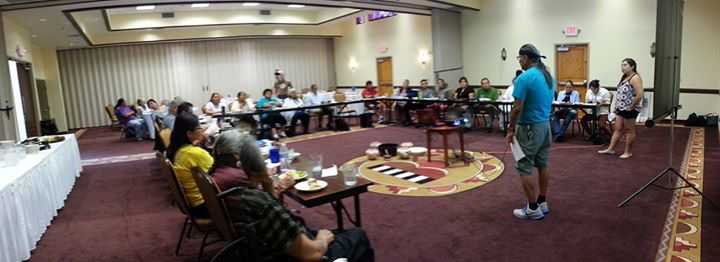
Recently, through a project close to my heart, we have begun bringing elders from Colorado Plateau tribes back together. We have watched this ancient sharing revive — song, dance, food, seeds, stories, prayer. It brings you to tears when the stories pour out of how our tribes used to be together, not separate.
As you embark on your careers, study the history and teachings of your own tribe. There are time-tested teachings that carried your ancestors well: pray in the morning, hold positive thought, debate with respect, build a life of meaning, raise an honorable family, think of your community, listen to your elders, know the land and the plants and the animals, feel the drumbeat of the earth. These will take you far — whether you become a lawyer, a teacher, or an engineer.
And most important: as you become our leaders, understand that development which reinforces culture — that ensures our societies, our teachings, and our ceremonies continue for many more generations; that keeps us physically, mentally, and spiritually strong; that keeps us living in concert with mother earth — should be the goal of our communities and our governments.
As it was 30,000 years ago, as it will be 30,000 years from now — this is a formula that works.
Tony Skrelūnas is Diné (Navajo) and Lithuanian. He writes The Ancestral Watch — Stone Breath, The Amber and the Stone, The Council Fire and The Far Messengers — and the working reader, Living as a Far Messenger. He is a PhD candidate; his dissertation looks at human and organizational performance through Diné and Lithuanian ancestral knowledge and the Japanese practices he has long studied. He holds a faculty appointment at 1440 Multiversity, where teaching is the center of the work now. He runs at dawn and hikes with a corgi named Roper.
Last reviewed August 2026.