
Deep dive one · Community Resilience
The meeting is a technology.
Most communities are running one that was designed to produce a loser in every cycle. In a place held together by kinship, that loser is at the funeral on Saturday — and the damage compounds for forty years.
The premise
Nobody thinks of a meeting as engineering. It is.
A meeting format is a machine for turning many minds into one decision. Like any machine, it has inputs it handles beautifully and inputs it destroys.
Give a community a format designed for a nineteenth-century deliberative assembly of strangers, and it will do exactly what it was built to do — to a room full of relatives.
I want to be fair to the machine first, because most criticism of parliamentary procedure is lazy. Robert’s Rules is an elegant solution to a genuinely hard problem: a large body of people with competing interests, no shared history, no reason to trust one another, needing a defensible outcome inside a bounded amount of time. For that problem it is superb. It is fast, it is auditable, it cannot be easily captured by whoever talks loudest, and everyone can see how the result was reached.
The mechanism is simple. A motion. A second. Debate through a chair. A count. And every single cycle terminates in a majority and a minority. Manufacturing a loser is not a side effect of the format. It is how the format closes.
In a room of strangers, that is fine. The loser goes home to a different neighborhood and the institution continues. In a community, the loser is your mother’s brother. His land borders yours. His children and your children will marry. He will be in the room again next month, and the month after, for the rest of both your lives. You have not resolved a question. You have opened an account, and the format will make a deposit into it every month, forever.
The four failures nobody counts
It rewards procedural literacy over knowledge. Whoever knows how to move to table has more power than whoever knows the flood history of the wash. Within two years the meeting belongs to the people who learned the rules, who are almost never the people who know the most.
It compresses. Three minutes at a microphone is not how anybody in a story-based culture has ever explained anything that mattered. So the explanation does not get given. It gets abbreviated into a position, and a position is the part of a thought that is easiest to argue with and hardest to learn from.
It requires you to contradict a person in public. In a great many cultures that is not a debating move, it is a serious social act with consequences that outlast the agenda item. So people do not do it. They go quiet. And a chair trained in the imported format reads silence as consent, writes down unanimous, and adjourns.
It produces decisions nobody implements. A fifty-one percent decision leaves forty-nine percent of the community with no reason on earth to make it work — and in a small place, forty-nine percent of the people is the entire implementation capacity. This is the failure that shows up in the evaluation report three years later, described as a lack of buy-in, as though buy-in were a mood rather than a structural output.
Every one of these is a design consequence. You cannot train your way out of them, and I have watched a great deal of money spent trying.
Council form
Story, teaching, song and art are not decoration. They are the medium.
People assume the cultural content of a council is the warm part around the real business. It is the other way round. The medium is doing the structural work that the imported format does with motions and counts.
-
01
Story places the decision in time. A story says: this has happened before, and here is what came of it. It also lets a person raise a hard objection without accusing anybody. You do not stand up and say the coordinator is enriching himself. You tell the one about the man who took more water than his share, and what the valley looked like afterwards. Every person in the room understands precisely what has been said. Nobody has been publicly shamed. And the decision changes.
-
02
Teaching puts knowledge in the room without turning it into advocacy. There is a difference between telling a group what to do and giving the group what it needs to decide. When the person who carries the flood history teaches it — not argues from it, teaches it — the ground everybody is standing on moves. No motion was made. No side was taken. The available options are simply different now than they were an hour ago.
-
03
Song changes the register of the room. This is the part people expect me to be mystical about and I am not going to be. A group that has sung together argues differently for the next two hours. Breathing synchronises, voices drop, the physiological state of contest comes down. You can watch it happen. Any facilitator who has ever taken a room outside for five minutes to break a deadlock already knows this; the old forms simply built it into the structure instead of improvising it in an emergency.
-
04
Art gives the group a third object to disagree with. A map drawn on the ground. A watershed sketched large enough for everyone to stand around. Something made together and placed in the middle. People will contradict an object with enormous freedom and contradict each other with almost none. Put the disagreement into the thing in the center and the room can be honest.
Who speaks
Whoever frames the question first has already decided it.
In an imported meeting the highest-status person in the room speaks first, and everything that follows is a response to their frame. The rest of the hour is spent inside a box that one person built in ninety seconds.
Council inverts the order. The people with the least positional power speak before the people with the most. Not out of courtesy — out of information. Once the person with authority has stated a view, the knowledge held by everyone junior to them becomes unavailable for the rest of the meeting. It does not disappear. It just stops being said out loud, which for governing purposes is the same thing.
And one rule underneath all of it: everyone speaks once before anyone speaks twice. That single sentence is worth more than most facilitation training on the market.

Consensus is not unanimity and it is not a vote. It is the exhaustion of standing objection.
On how agreement actually forms
How consensus actually forms
The circle keeps going round — and it is a circle, literally, which matters — until nobody with a legitimate stake still holds an objection they are willing to state. That is a higher bar than fifty-one percent and a considerably lower bar than everybody agreeing. It does not require anyone to change their mind. It requires that no one is left standing outside the decision.
Which is the whole point, because the person standing outside the decision is the person who will not implement it.
Is it slower? Yes. Materially slower, and I am not going to pretend otherwise to sell you the method. It is slower in the meeting and enormously faster in the implementation — and implementation is where a government either exists or does not. A community can hold three fast meetings a year and govern nothing, or two slow ones and actually build the road.
What the fire is for
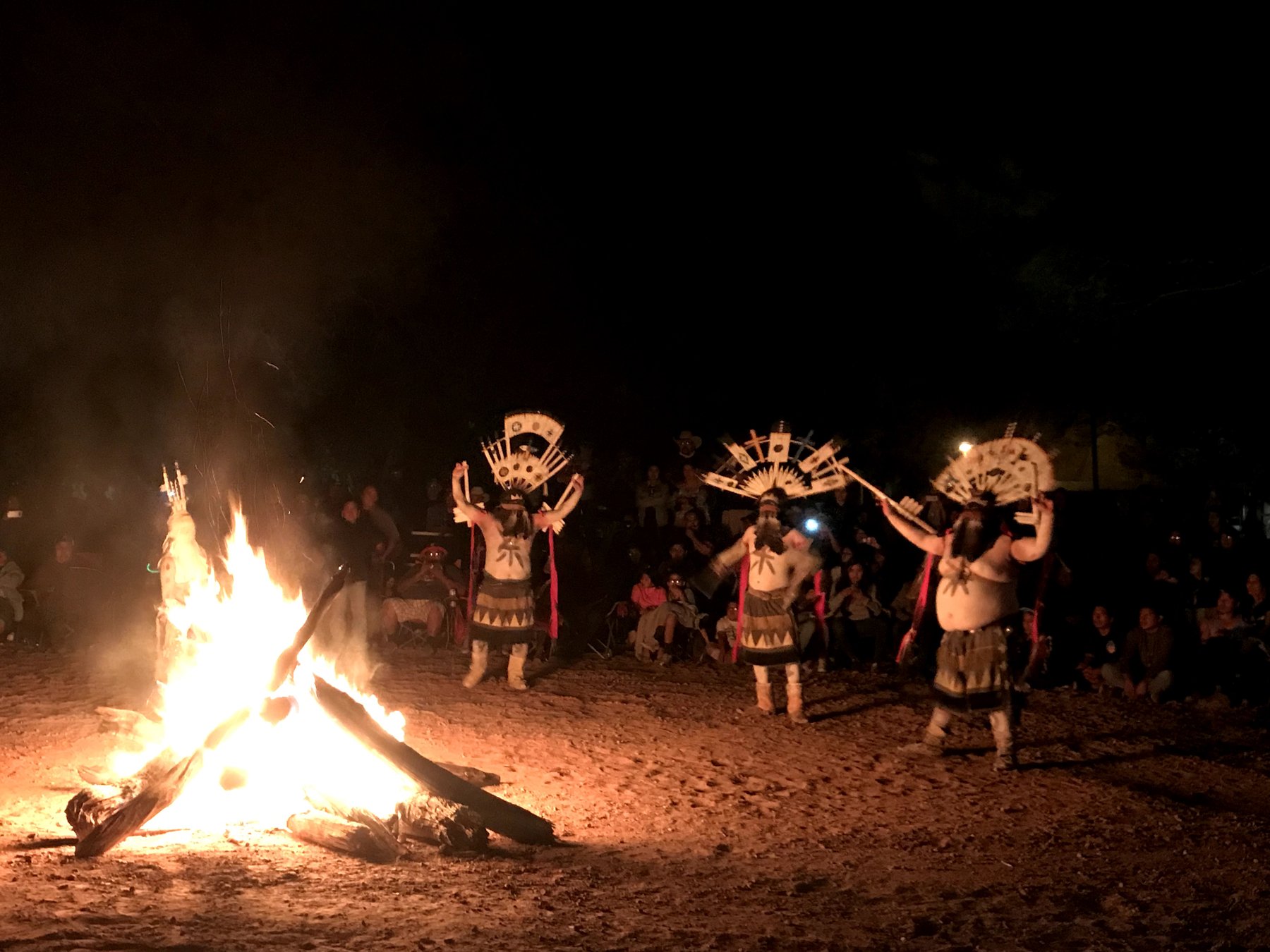
People assume the fire is ceremony. Some of it is. Most of it is function.
It gives the eyes somewhere to go. Sustained eye contact is pressure, and in a hard conversation pressure produces positions rather than information. A fire in the middle lets people speak difficult things while looking at something that is not another person’s face.
It sets an honest duration. A fire has a length. It does not need an agenda with times on it, and it cannot be extended by whoever wants to keep talking.
It puts a third thing at the center. A circle facing inward is structurally different from rows facing a podium. In one arrangement authority sits at the front of the room; in the other it sits in the middle, and no person is standing in it.
And it is old. Every people that ever had to decide something hard in the dark decided it this way. The form arrives carrying its own weight, and in a community that has been told for a century that its own ways are backward, that weight is not sentimental. It is the argument.
The evidence
Ten years of it, and what came out.
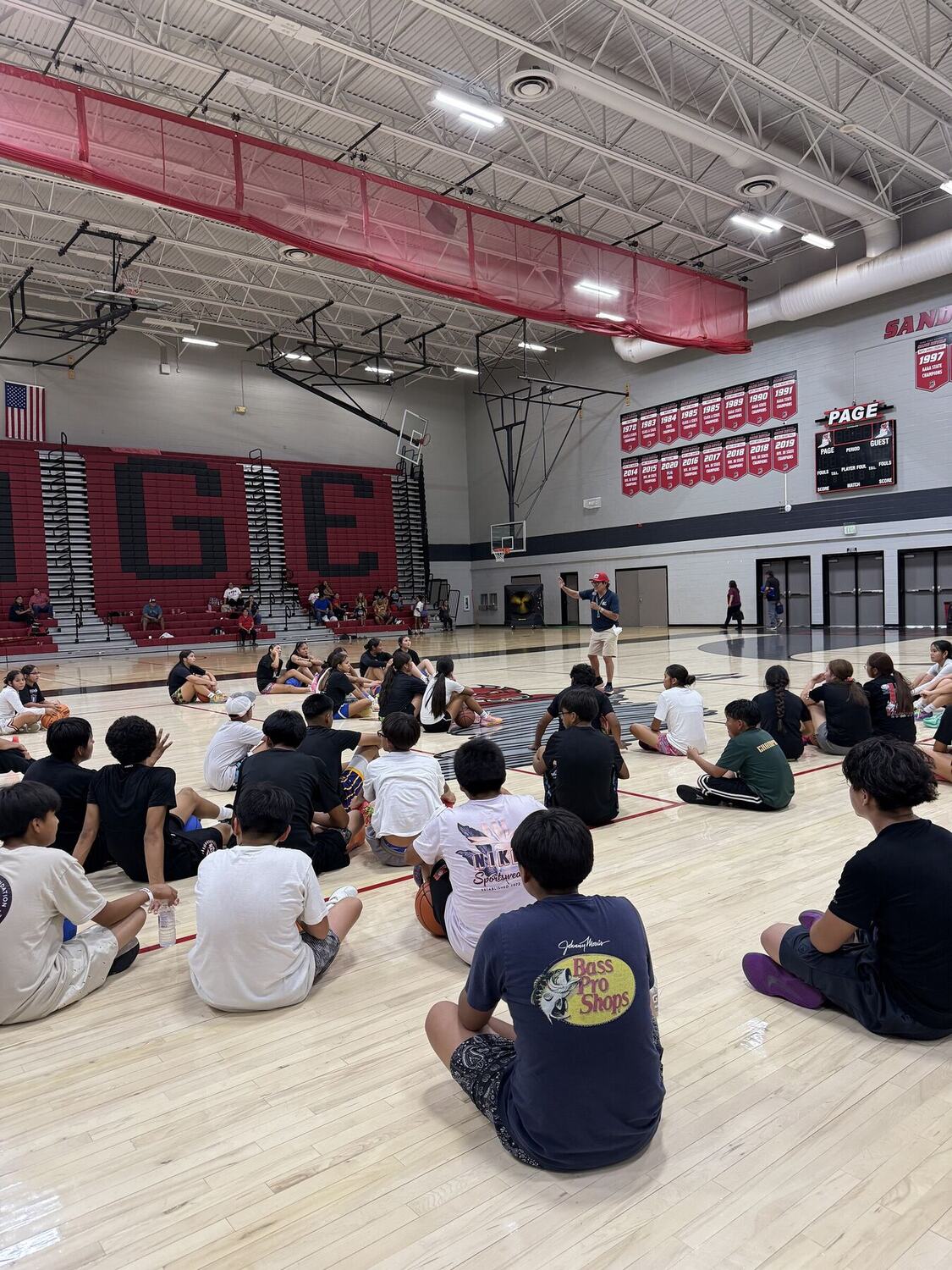
From 2009 to 2019 Tony convened gatherings held in traditional form — through story, teaching, song and art, in the way the ancestors of the region created their natural laws.
It began with ten nations. It grew to include Pueblo peoples, delegations from South America, and nations from Canada, with more than eighty people in the circle at its largest. Nobody presented slides. The medium was the medium.
And it worked, by the only test I trust. The circle raised its own funds and produced real projects — in water, in health, in the protection of sacred sites, and in cultural revival. Not communiqués. Not a framework. Funded work that exists.
A gathering that produces only goodwill is a party. There is nothing wrong with a party. But if you are being asked to believe that an old form can carry modern decisions, the burden of proof is money moved and things built, and that burden was met for ten consecutive years.
Beyond this point
The rest of this is done together.
What follows is the working method — the part that is actually a method.
- The sequence of the circle, opening to close
- The speaking order and how roles are assigned
- The opening and closing that set and release the room
- The disagreement protocol when objection has standing
- How the decision is recorded so it survives the night
- The design of the physical space, indoors and out
It is not a document, and I do not hand it over as one. It is carried into a community and adapted to that community’s own forms, because a council process that is not theirs will be performed once and quietly abandoned. That is the only way it holds.
Working together
What the work actually looks like.
Short, practical, and built to make itself unnecessary. If your people still need me in year two, I have done the job badly.
Find what is already working
Every community still runs its old form somewhere — in the funeral, the harvest, the family dispute. We locate it before we design anything.
Design and run the first cycles
The form is built for your people and your ground, and I hold the first meetings myself so the room can see it work before it is asked to believe in it.
Hand it over
Your own people are trained to run it, and the form is written into how the body formally does business. A process that depends on an outsider is not a process.
Who this is for. Community councils, tribal and Indigenous governments, regional assemblies, cooperatives, land trusts, and any organization whose members will still be in the room together in twenty years. Also boards and leadership teams who have noticed that their decisions keep failing at implementation and have stopped believing it is a communications problem.

The novel
The Council Fire
Every culture facing a breaking world kept a council fire — elders in the circle, the young in the circle, the children at the edges.
When the systems running the modern world reach their limits, the keepers of many peoples’ oldest knowledge are drawn to one fire to remember what actually lasts. The circle on this page is the one they sit in, and the book is where you watch it work.
Work together
Tell me what your circle keeps failing to decide.
Council design, facilitation, and training your own people to hold it. It comes straight to Tony.
Contact