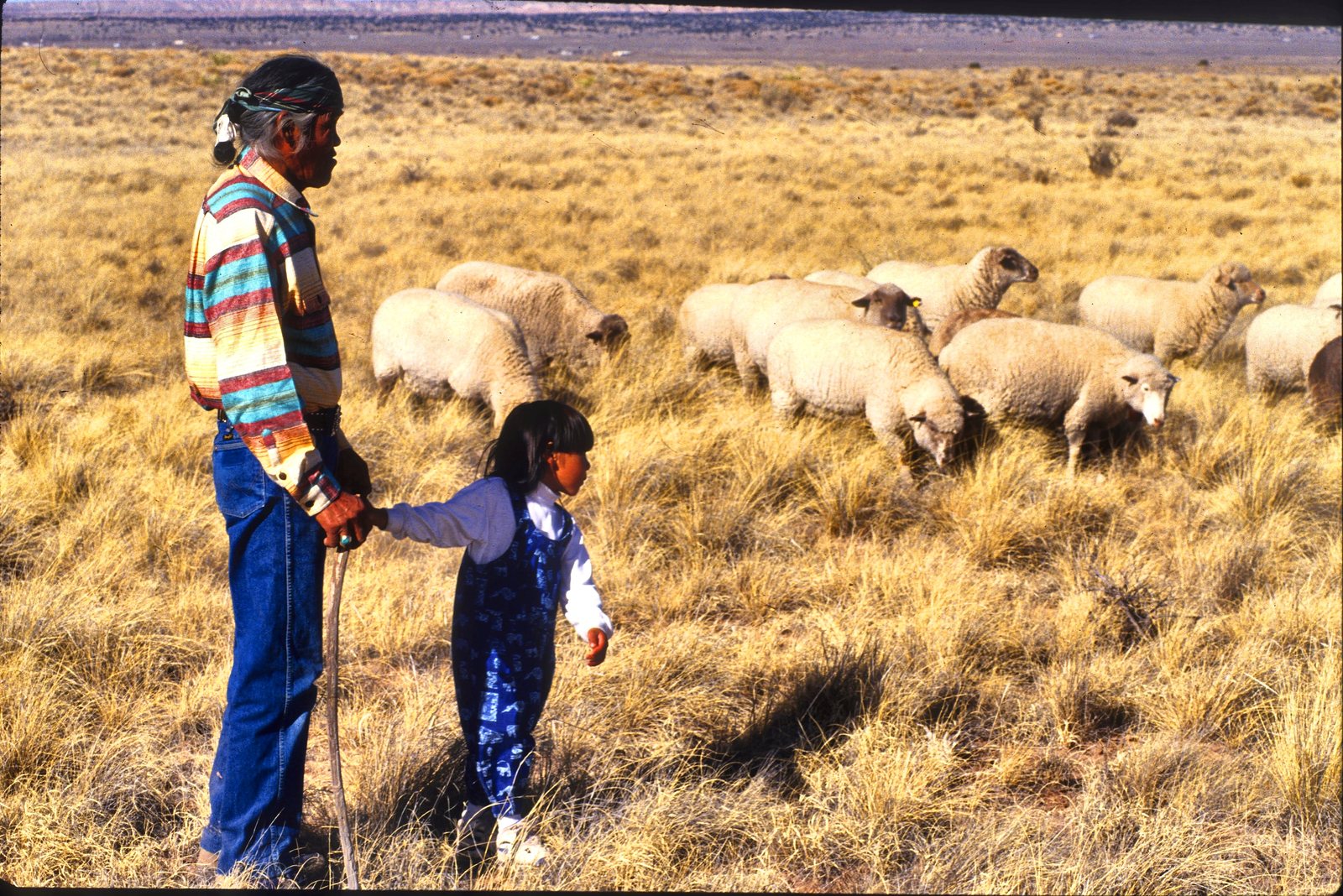
When I want a retreat, I go back to the family sheep camp and dig out the corral. My relatives and I work side by side, dust in the air and backs bent to the same job, telling stories and laughing in the old language while the pile grows beside us. It is hard, dirty, ordinary work. I call it my retreat and I mean it, though for a long time I never asked why the word fit so well.
It turns out somebody measured it, in hotel rooms rather than corrals. In 2007 two Harvard psychologists, Alia Crum and Ellen Langer, worked with 84 women who cleaned rooms in seven hotels, work that means walking, bending, pushing, lifting and carrying through an entire shift. The women in some of the hotels were told, with examples, that what they already did every day was good exercise and met the Surgeon General’s recommendations for an active lifestyle. The others were told nothing at all.
Four weeks later, measured against the women who had been told nothing, the informed group had come down in weight, blood pressure, body fat, waist-to-hip ratio and body mass index. On average they had lost two pounds and lowered their systolic blood pressure by ten points. They did not report exercising more. The work was the same work it had always been. What changed was the name it went by, and their bodies followed the name.
Let me say plainly how I hold that result. It was one study in seven hotels, and the authors wrote that the women may have changed habits nobody measured, eating a little better or working a little harder. I hold it as a strong signal rather than a law.
But it has company. Crum later gave 46 people the same 380-calorie milkshake on two different days, once labeled a 620-calorie indulgence and once a sensible 140-calorie shake, and their hunger hormone, ghrelin, fell far more steeply when they believed they were drinking the indulgence.
Then she took the question to stress itself, which is where it begins to matter for the people I care about most. With Peter Salovey of Yale and Shawn Achor, she showed several hundred employees of a large international financial firm three short videos over a single week, about three minutes each, describing stress either as something that sharpens people or as something that wears them down. Those who watched the sharpening version reported fewer psychological symptoms and better work afterward. The videos changed nothing about anyone’s job. They moved the frame.
In the same 2013 paper, students who already held the sharpening view were put under real pressure. They were told some of them would be picked to give a speech to the class on camera, judged by their peers and by a team from the business school. Their cortisol rose to a moderate level, neither flooding nor flat, and they asked for more feedback on how they had done. That last detail is the one I keep. A person who believes the pressure is building something wants to hear how it went.
The word was part of the inheritance
Here is what this has to do with the corral. In the families I come from, the elders did not only hand down the work. They handed down the word for the work. Children are taught to rise before the sun and run, and the story every child hears is that the early-morning Holy Ones come by each home to see how we tend ourselves, our house and our homestead. A run at dawn, told that way, is not a hardship to get through. It is being seen.
The herd, the corral and the hosting of the large gatherings were all carried the same way. Obligation was carried gladly, and gladly was never a mood somebody happened to wake up in. It was a frame set on the work by people who had carried it far longer than I have, and passed down on purpose, the way you would pass down a good tool.
Crum measured four weeks in seven hotels. My great-grandmother Masan held the same frame for a lifetime in a hogan on Big Mountain, without a word of the vocabulary and without needing one.
I want to be careful with the next step, because the studies do not take it for me. They measured weeks, not generations, so take this as what I have seen in practice rather than what the research has shown. The hardest things a family comes through get handed down twice, once as what happened and once as what it means. The first should never be softened or trimmed. The second is still being built, every time the story is told in front of a child.
That is where the canyon comes in. In Stone Breath, Tonas takes a circle of strangers down into a canyon before dawn and has them look up at walls cut by floods that must have felt like the end of the world when they came through.
He does not ask anyone to pretend the storm never came, which is what most of us spend years trying to do. He asks them to read the walls and put a different question to them. “The day you stop fighting your canyon is the day the marks stop looking like damage and start looking like formation.” That chapter is where Stone Breath begins.
Formed, not damaged
The marks are the fact. Damage or formation is the frame, and the frame is not a coat of paint laid over the fact. On the evidence from the hotels, the milkshakes and the speeches, it reaches into blood pressure, into hunger, into cortisol, and into whether a person wants to hear how they did. A family’s story about its own canyon is not commentary on the family. It is one of the materials the family is built from.
Here is how it looks in practice. Tell the young ones the whole fact, the hard years and the losses included, and do not trim it to protect anyone, because they will find the trimmed part later and wonder what else was left out. Then tell what it built, because that is just as true. Weathered, not ruined. Formed, not damaged. Those are not gentler words for the same thing. If the housekeepers are any guide, the body hears them as two different things.
The corral is still the corral. The work still bends the back and the dust still hangs in the air, and I still call it a retreat. The people who raised me handed me the frame along with the work, and of everything they handed down, it may be the part that lasts longest and weighs least to carry.
Tony Skrelūnas is Diné (Navajo) and Lithuanian. He writes The Ancestral Watch — Stone Breath, The Amber and the Stone, The Council Fire and The Far Messengers — and the working reader, Living as a Far Messenger. He is a PhD candidate; his dissertation looks at human and organizational performance through Diné and Lithuanian ancestral knowledge and the Japanese practices he has long studied. He holds a faculty appointment at 1440 Multiversity, where teaching is the center of the work now. He runs at dawn and hikes with a corgi named Roper.
Last reviewed October 2026.