 Tribe
This summer, while I was building the exercises for a retreat, I kept circling one feeling that I think almost everybody carries now. You go somewhere quiet. You settle your mind and really focus on your own area, your land, your family, the one thing in front of you. And a voice starts up that says you are missing out. Worse, it says the world is missing out on you. There is a room somewhere you should be in, a stage or a city where people would notice.
I understand that voice. A year before that summer I made a big change. I left an executive job to work on a PhD, to write books, and to advise at a different level, and I chose to take the positive route with it. But the voice is not harmless. Say you are building something that could change everything for your family, a working ranch fifty miles out in the country, a small business, a garden that will feed your grandchildren. That is life-changing work. And still the voice tells you the real action is somewhere you would be seen.
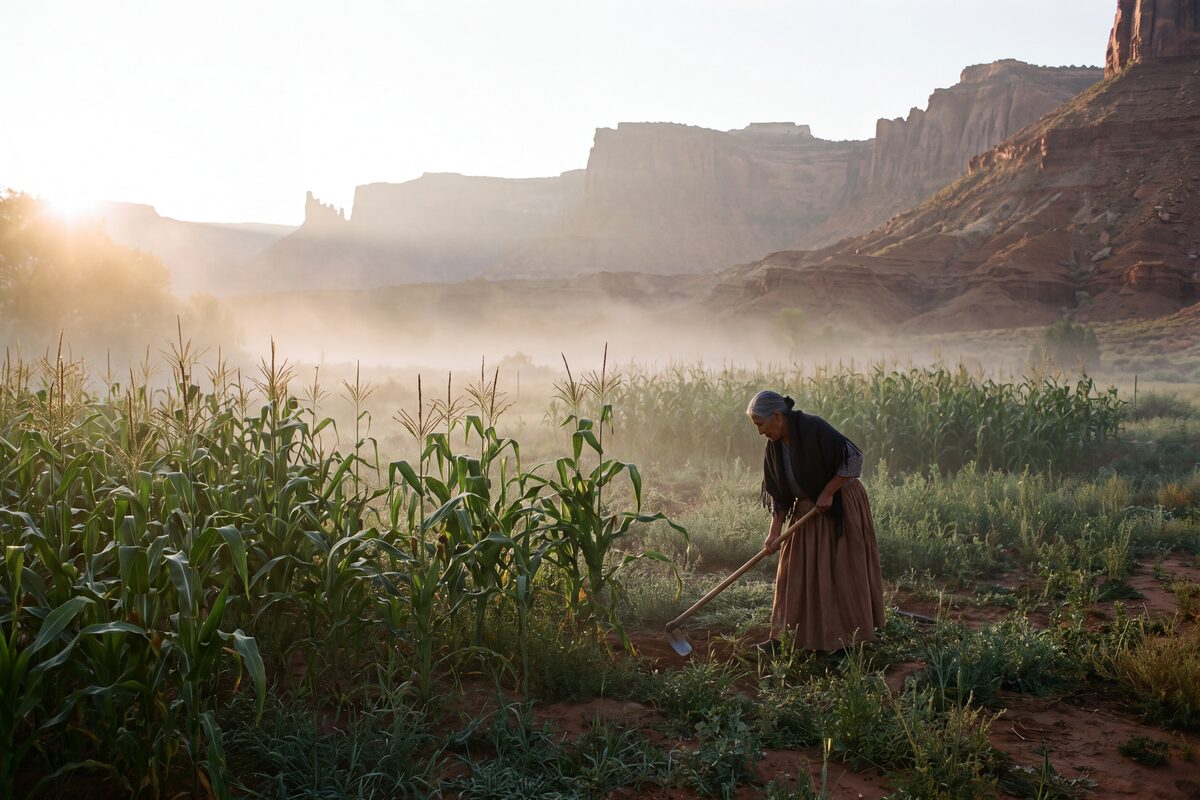
Here is the thing I keep coming back to. Most of our ancestors did their work for us, and almost nobody saw it. In some cases only your grandmother knew about it. Only your uncle knew, or your aunt. The world does not remember those years of labor, and it was never going to. My own great-grandparents were what we call settled, which means working without stopping, with hundreds of sheep, cornfields, horses to train and ceremonies to sing. Nobody wrote about any of it. Every one of us who came after is standing on it.
That changes the question. The voice asks, who will notice? The older question is, who will this hold up? A cornfield does not need an audience. A rug woven the old way does not get better because a crowd watched the loom. What it needs is a person present enough to do it right, day after day, for people who may not be born yet. That is what intergenerational healing looks like from the inside. Most of it is quiet, and most of it goes unnoticed while it is being done.
A cornfield does not need an audience.
I have come to think the missing-out feeling is mostly the ego asking to be fed. We spend a lot of energy staying close to it. We keep the news on, we keep checking the screen, we stay near the noise, all so we can feel close to where the attention is. It feels like staying informed. A lot of the time it is the very thing holding us back, because the energy we spend there never reaches the work in front of us.
There is a body side to this too, and it is plain. When you are always scanning for the next thing, your nervous system never fully stands down. It stays a little on alert, the way it would if something were chasing you. In that state you can get through the day, but you cannot really set a new goal or change an old belief. You are only surviving. The quiet work, the slow work, needs a body that has been told it is safe.
There is one more piece, and it is the one I care about most. When we are born, we have power and no trauma. Then life happens, and some of what happened to our families before us gets handed down too. The trauma teaches us limits we never really had. I’m too old. I’m not good with money. I don’t have the education. The hunger to be noticed often grows right out of that ground, a hope that if enough people see us, we will finally believe we are enough. Quiet work, done well and done for others, answers that wound better than any audience can.
So the ones who came before us were not missing out. They were doing the one thing that lasts. They planted for a child they might never meet, and they did it without anyone keeping score. When I think about my great-grandparents in the cornfield, I do not picture people waiting to be discovered. I picture people who knew exactly where they were and exactly who they were working for.
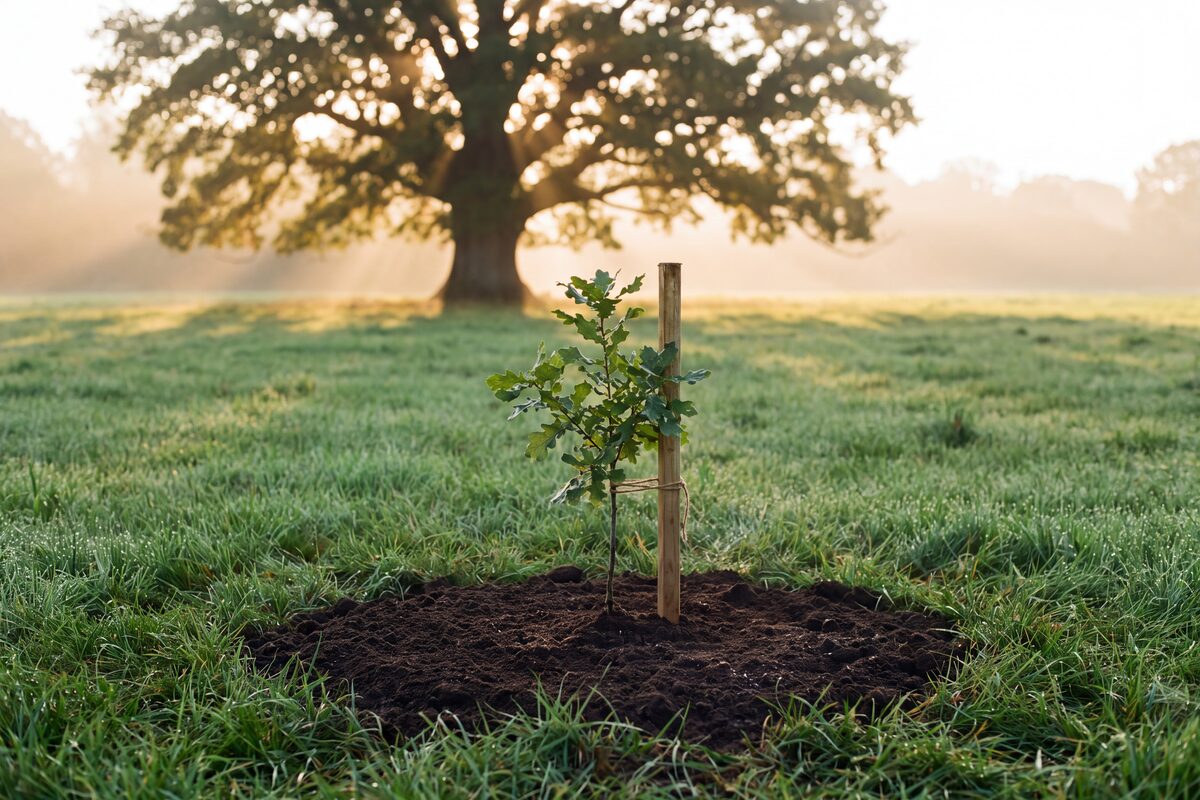
I wrote that feeling into Stone Breath. Tonas has been asked to bring a book home, and he was never told where. Austėja remembers an oak his great-grandfather planted when a child was born, and she offers to give up a whole day to help him find it. When he asks if she would really do that, she tells him, “I’m not doing this for you. I’m doing it for them.” Nobody plants an oak for applause. You plant it for someone who will stand in its shade long after you are gone. The book is here.
Here is something you can do with this the next time the voice shows up. Stop, and name one person who did quiet work for you that the world does not remember. Say their name out loud. Then go back to your own ground and give one hour to your own quiet work, for someone who comes after you. It helps to keep a short list of the things that settle you, a walk, a few slow breaths, a stretch, a page in a journal. When you catch yourself scrolling, go to the list and do one, and see if you still want the screen.
The world may not remember what you build out there. That was never the point. Your grandchildren will be standing on it.
Tony Skrelūnas is Diné (Navajo) and Lithuanian. He writes The Ancestral Watch — Stone Breath, The Amber and the Stone, The Council Fire and The Far Messengers — and the working reader, Living as a Far Messenger. He is a PhD candidate; his dissertation looks at human and organizational performance through Diné and Lithuanian ancestral knowledge and the Japanese practices he has long studied. He holds a faculty appointment at 1440 Multiversity, where teaching is the center of the work now. He runs at dawn and hikes with a corgi named Roper.
Last reviewed November 2026.