I woke up right before five on Labor Day morning and lay there listening. I could hear coyotes first, and then the roosters started in. A little after seven I was sitting at breakfast with a cup of coffee, looking at our sacred San Francisco Peaks, with a dog walking around me while I sat. Families had been camped at a gathering near Flagstaff since Thursday, and this was the last morning of it.
The day before, I had run a 5K. I have been running one every weekend, and I meant this one as a training run, but my competitiveness came out and I finished about fifth overall and first in my age group, right behind the top runners, all of them thirty-two and younger. I felt really good about that. So I sat with my coffee, facing the mountain, and recorded a morning meditation.
It starts with gratitude, because there is so much to be grateful for, and I named what came to me. Your health. The wisdom you carry because you grew up around elders. The songs you know, the prayers, the education you worked hard for. Maybe you cook so well that people talk about it, or you have humor, or a strong home, or you raised your family well. Everybody has a certain blessing.
Maybe you are known for your craft. You make jewelry, or you work leather, or you weave. Maybe you know livestock and sheep, which for us Navajo people is a big deal. And then there is the place itself: the mountain, the air, a breeze, the clouds, birds, grass, flowers, shrubs, the smell of early coffee. The birds are migrating now, and you can already feel the weather starting to change.
The trail markers
Then the meditation becomes a journey. You hear people singing far to the east, ancient songs for moisture and for plentiful harvests. They still get up very early. They still teach their kids how to read the skies, the winds, the animals and the earth, and how to make a living in the desert, the mountains or the canyons. And you feel called to carry a blessing to them, to share your wisdom and to learn theirs.
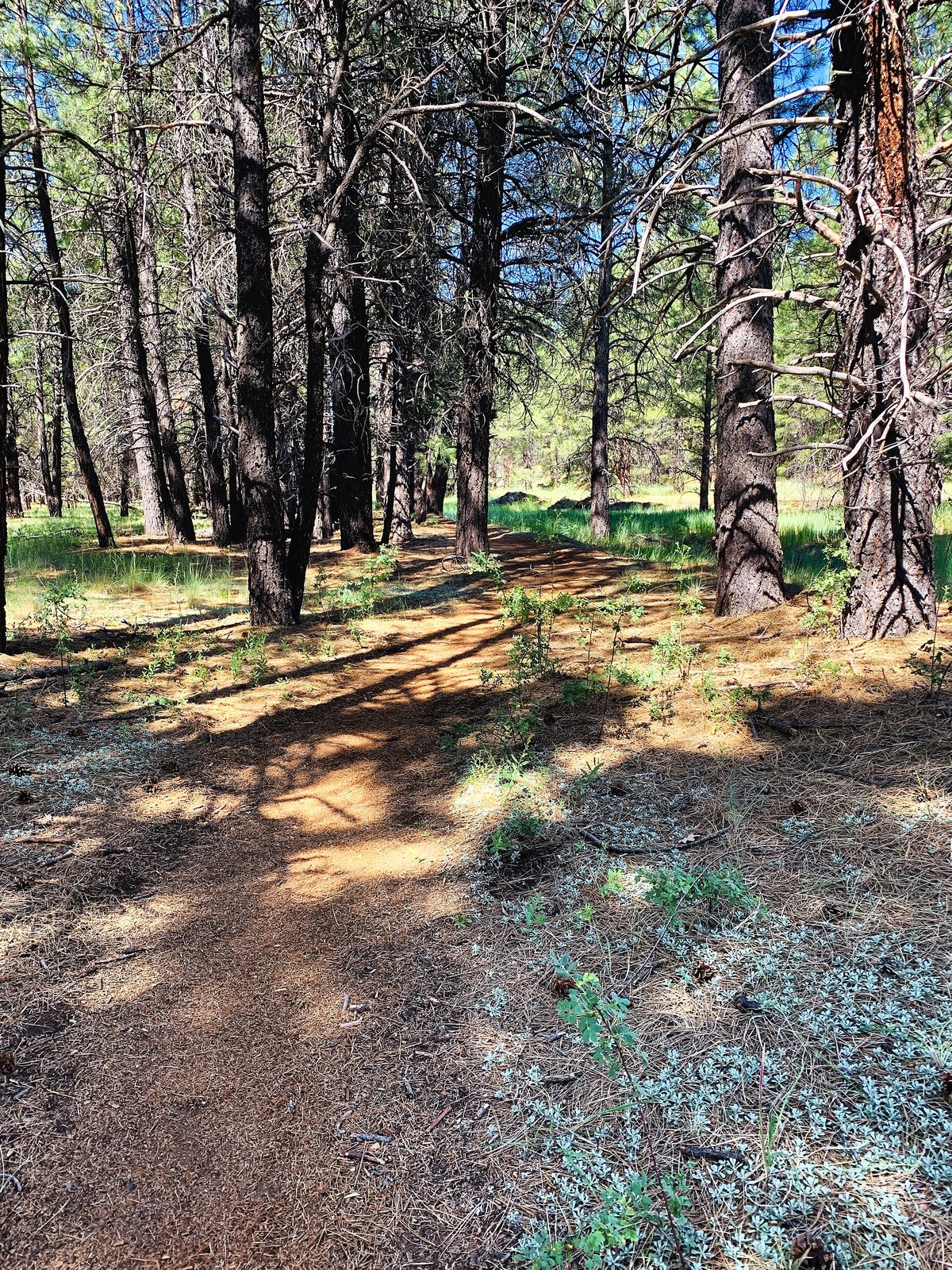
Along the way you start making out an ancient trail. In the recording it came out like this: trail markings, little piles of rock, a little cleared path, artwork that shares the journeys of thousands and thousands of years before you. Each of those markers was set there by somebody who walked the trail first and wanted the next person through to make it. They never knew who that next person would be.
After that comes the part of the recording that holds the rest of it together. All of a sudden, intuition. You know where the springs are. It is like it was always in you, this knowledge, always in your energy force. You know where the foods are and which plants are edible. The animals make themselves available to you. Nature is helping you on the journey, and you rest and express gratitude.
I think that is what intergenerational healing feels like from the inside, and it is close to the opposite of what people expect. They expect to be handed something new from outside themselves. What actually comes is recognition. What your great-grandparents carried across hard ground did not go anywhere. It came forward in the way you were raised, in the songs you half remember, and in work your hands already know how to do.
Some of us grew up right beside the elders and some of us grew up a long way from them. Let me say plainly that it does not change this. The markers are still on the trail, and they are still in you. In the recording I said it this way: “That’s always been inherent. The inherent knowledge has always been there. The energy force has always been there. But now it’s awakened.”
It’s been a long time
There is one line in the middle of that recording that carries the whole teaching for me. As you walk, the birds and the animals come closer, curious, greeting you and giving their blessings, and you give yours back. And they say to you, “It’s been a long time since we heard your happiness, your gratefulness.”
Notice what they do not say. They do not ask where you have been or why it took so long. The greeting is the old one our relatives use: good morning, my daughter, good morning, my son, it’s good to see you again. That is how the land meets anyone coming back to it, and it is how I want to meet myself and anyone I teach. No shame at the trailhead. Only welcome.
So if the knowledge was always there, what keeps it asleep? In my experience it is not a lack of anything. It is state. A person who is clenched and running cannot hear where the springs are. That is why the meditation takes its time getting you ready before the journey even starts: relax your face, relax your jaws, don’t try to control your mind, just relax it.
Then comes what I call the stone breath. It is a breath that was carried on by my great-grandfather, something he did to get in state, and it is counted: in for four, hold for four, out for six, hold for four. I said it more than once that morning because it matters that much. You have to always be in state. What you carry does not wake up in a body that is running.
And when it does wake, you feel it in your posture. On the recording you hold your shoulders back a little further, proud, like a young chief just learning this knowledge, this beautiful way of life that has always been there. You know where the honorable path is. Nothing new was added to you on that trail. Something that was already yours woke up and remembered the way.
A song keeper named Rasa says it in her own words in The Far Messengers. A broadcast host asks how she reaches the women in her line when she is in trouble, and she describes the same order I teach: go still, the stone and the breath, ask plainly, then wait without reaching. She does not argue about how it works. She says, “Call it a hundred generations of pattern stored in one body.”
I ended that Monday recording the way it began, with gratitude, and with a sentence I meant: it’s going to be a beautiful day, it’s going to be a beautiful journey. The little piles of rock were set out long before any of us got here, by people who never knew our names and stacked them anyway. All that morning asked of me was to get quiet enough to see them.
Tony Skrelūnas is Diné (Navajo) and Lithuanian. He writes The Ancestral Watch — Stone Breath, The Amber and the Stone, The Council Fire and The Far Messengers — and the working reader, Living as a Far Messenger. He is a PhD candidate; his dissertation looks at human and organizational performance through Diné and Lithuanian ancestral knowledge and the Japanese practices he has long studied. He holds a faculty appointment at 1440 Multiversity, where teaching is the center of the work now. He runs at dawn and hikes with a corgi named Roper.
Last reviewed October 2026.