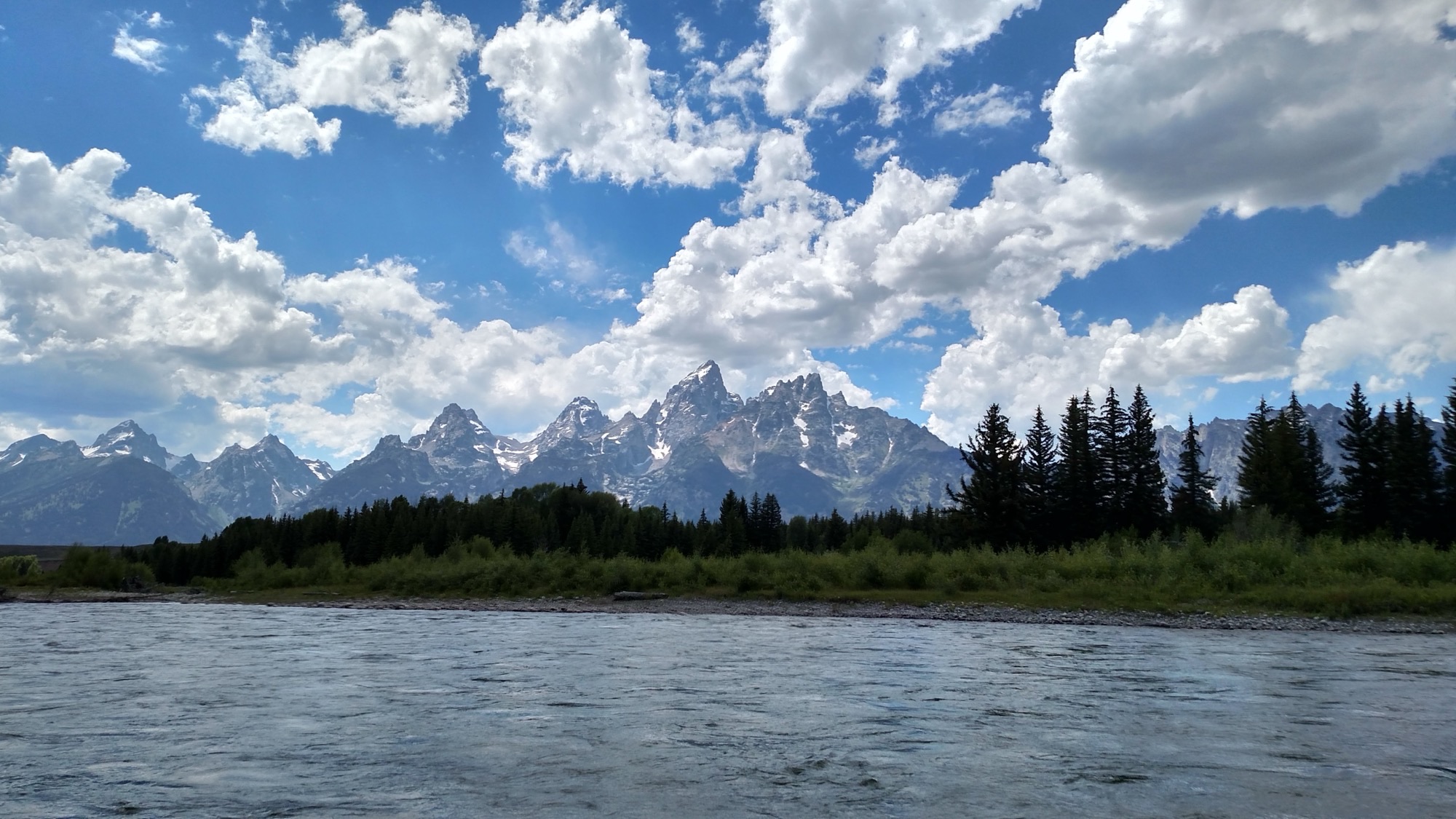
In the vastness of the natural world — where the earth meets the sky and water mirrors the soul — there is a connection that outlasts every empire and every era. Standing before the sacred waters of the Grand Teton, I found myself drawn back into the stories my ancestors carried, and something in me had to answer. What came was a poem, and beneath the poem, a teaching I believe belongs to every people on earth.
My grandfather — my chei — once stood upon that same vista, wrapped in the sacredness of the lake. And there he felt the call to chant an old song and to pray an old prayer, a practice handed down through generations far older than his own name. That moment, thick with memory and reverence, became the heart of what I wrote:
As my chei looked upon the vista of the Grand Teton lake in all its sacredness,
my chei was called to chant an old song and to pray an old prayer.
>
He remembered the ancestors telling of
how they journeyed with positive hope —
when they encountered this water, they made offering, song, ceremony,
shared language, and clanship.
>
The water remembers. The soul of it is activated.
It has a memory — to nourish, to bring life.
>
The songs, the old language, the greeting of water,
is medicine. Water is life.
>
So we must teach all our wise peoples to carry on the songs, the prayer, the mindset,
to ensure water will always nourish life.
>
To'ei'iina — water is life.
I have come to believe this is not one people's inheritance but the whole world's. Long before pipelines and property lines, human beings everywhere met water the same way my grandfather did — with an offering, a song, a name spoken aloud. On every continent, our great-grandparents understood that a river or a lake was not a resource to be drained but a relative to be greeted. That memory is not lost. It is only sleeping, waiting for us to activate it again.
Here is the question the poem asks of us, and the one I keep returning to in all my work: will the way we treat these waters make our great-grandchildren whole, or hollow them out? An extractive world takes from the water and gives nothing back, and the memory is broken in a single generation. A nurturing world greets the water, keeps the songs, and hands both down — so that the wealth and the wisdom stay home, close to the land and the people who love it.
This is the same through-line I trace across my books — the songs kept by lamplight, the fire the council still gathers around, the long breath of stone that holds a people's memory when nothing else will. The task of our time is the same everywhere: to help communities move from systems that extract to systems that nourish, and to carry the old knowing forward instead of letting it be paved over.
So teach the children the songs. Speak to the water. Keep the old language alive on your own tongue, in whatever language your ancestors spoke it. If you feel the memory stirring in you as you read this, that is not nostalgia — that is your inheritance waking up. You are not alone in this; the circle still holds. It is not too late. The fire is still lit.
And the one who carries the song forward — that is you.