
Yá'át'ééh. Sveiki. Konnichiwa. Bienvenidos. Welcome — however you name it in the tongue your grandmothers carried.
A word before we begin
I write as a man raised at the meeting place of two survivals: the high desert of a people who refused to be erased, and a small Baltic nation that sang itself back into existence when it was forbidden to exist at all. My work has lived on the ground between them — protecting land and living culture on a great plateau, guiding a just economic transition for communities moving off extraction, and researching, in the slow patient way of a lifetime, how peoples everywhere can build systems that nourish rather than consume.
Here is the conviction that runs through all of it, and through every book I've written: the path forward is not about inventing something new, but about reintegrating something very old. The instructions we need were never lost. They were set down and stepped over. Our task — yours and mine — is to guide the world toward a new paradigm built on three words the ancestors would recognize anywhere on Earth: Regeneration. Reciprocity. Relationship.
The unseen crisis crippling our world
We are a species that counts. We track every barrel of oil, every ton of ore, every dollar to the second decimal place. We have built exquisite instruments to measure the movement of capital across the planet in milliseconds.
And all the while, we let the one truly irreplaceable resource evaporate into the air, unmeasured and unmourned.
Our systems are astonishingly good at spotting one narrow kind of talent — the kind that fits a form, sits in the right postal code, speaks in the accepted grammar. But beyond that thin coastline, vast, silent continents of genius remain unexplored. And the cost is not abstract. It is the cures never discovered, the art never created, the peace never brokered, and the sustainable systems never implemented — because the minds that carried them were never seen.
This is the anatomy of a global silent theft. From India to the Americas, from the Amazon to Seoul, it operates in the same quiet, efficient way. Let me show you its face, because it always wears a face.
The global anatomy of wasted potential
Jerry
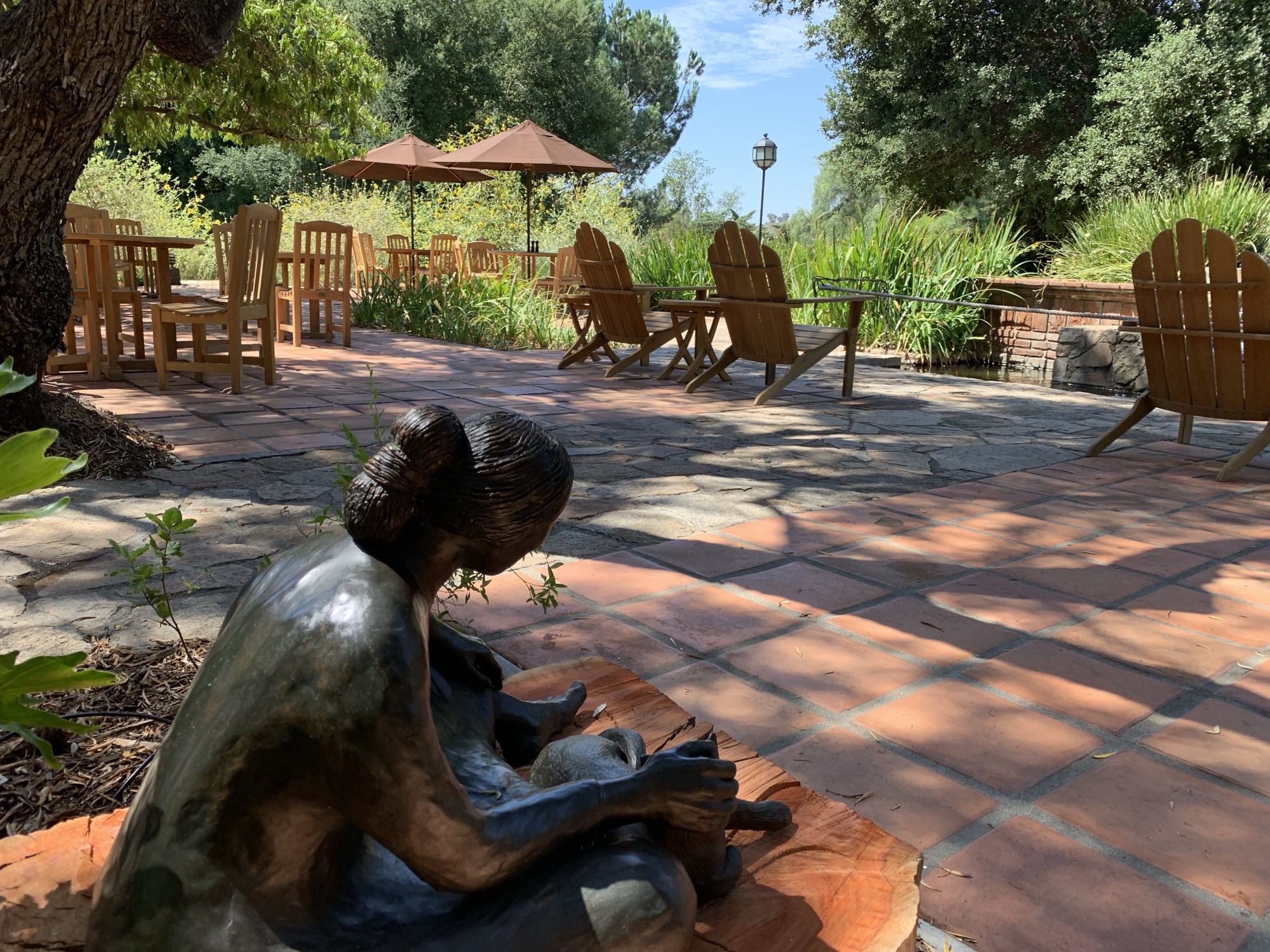
Jerry grew up in the high desert, raised in part by a grandfather who was a healer. From that old man he learned a science that no university teaches. "The juniper tree tells you which limb is ready for harvesting," his grandfather would say. "It offers itself. You don't just take."
He learned that humility severs no connections. He learned that clay, water, and wind are not raw material but living relations — that the neighboring farmers who coaxed corn from bone-dry ground did it as ceremony, not as industry. He carried an entire operating system for living in balance.
Today Jerry frames houses on a construction site in a sprawling desert city. His foreman sees a strong back and a good pair of hands, and nothing else. His humility is read as a lack of ambition, and quietly exploited. His loyalty — a sacred value where he comes from — is spent as free overtime, paid for in promises of promotions that never arrive. When he suggests, gently, that the houses could be turned a few degrees to catch the winter sun and shed the summer heat, he is told: "That's not in the spec. Stop dreaming and get back to the plan."
He is being paid to forget everything he knows.
Day by day, the system sands away his thoughtfulness, his reverence, his understanding of balance, until the light of quiet pride in his eyes goes out. This is the dishonorable harvest of human potential. It is not a passive oversight; it is an active, extractive process. They clear-cut his labor, and clear-cut his spirit along with it.
Maya
Twenty years ago, in a laboratory in Bangalore, Maya was a rising star. She modeled the impossible folding of proteins, the origami of molecules that new medicines are built upon. Her colleagues spoke of her leaps of intuition, her gift for seeing the pattern before the data resolved.
Then the cascade came, the way it comes for so many: a family illness, a financial strain, a visa chained to an employer who understood her desperation. Depression settled in without family near enough to hold it back. A missed rent. Then another. Then eviction.
Today Maya sleeps in an alcove of a subway station in a great city that does not know her name. She still reads philosophy in the underground light, holding whole systems in her mind. She still speaks three languages. She carries the profound empathy that only a survivor earns. The system sees a statistic — not a healer, not a thinker, not a resilient heart.
She is a library of knowledge that we have allowed to go up in flames. And the path back for her is a labyrinth — bureaucracy, stigma, and the sheer exhausting arithmetic of surviving one more day.
Jerry and Maya are not exceptions. They are the rule, wearing two of its ten thousand faces.
The erased operating system
The theft does not stop at individuals. We have set about erasing entire operating systems for living — whole libraries of instruction, accumulated over millennia, deleted because they did not fit the ledger.
Consider the great Song and Dance Celebrations of the Baltic — Lithuania, Latvia, Estonia. Under occupation, when nationhood itself was forbidden, tens of thousands of people gathered and sang it back into being, dancing a political identity into existence with synchronized voices. UNESCO named this tradition, in 2003, a Masterpiece of the Oral and Intangible Heritage of Humanity. It was not entertainment. It was strategy — the same insight that let code talkers turn an unwritten language into an unbreakable weapon of war. In both cases, the deepest knowledge of a people — their language, their art, their bond to place — proved to be not a weakness but a profound and often overlooked source of strength.
This pattern is written across every continent, and we keep failing to read it:
- The political blueprint. The founders of the United States — Benjamin Franklin among them — studied the Haudenosaunee Confederacy and borrowed from it: the federal balance, the grand council, the architecture of shared power. The plans for a modern government were drawn, in part, from a sophisticated Indigenous political science.
- Global food security. As the historian Jack Weatherford documented in Indian Givers, roughly 60% of the food crops the world now eats were first cultivated in the Americas — the potato, maize, the tomato, beans, squash, the peanut, chocolate, vanilla. Not lucky discoveries, but the fruit of millennia of agricultural science, including the "Three Sisters," a companion-planting method more elegant than most of what we call modern.
- Unbreakable codes and ancient medicines. Language that won wars. Willow bark that became aspirin. Cinchona that became quinine and turned back malaria. Again and again, Indigenous genius has been the bedrock beneath modern security and health.
- Living libraries. Languages carried today by peoples reclaiming them encode understandings of time, of relationship, of the natural world that our vocabularies cannot hold. The ceremonial songs passed hand to hand across generations are potent medicine for a wholeness we have nearly forgotten how to name.
Where the Indigenous mind holds time as a circle, space as a web of relationship, and knowledge as something a community keeps together, the modern West runs one relentless straight line it calls progress. That older worldview is not a quaint tradition. It is the core code for a viable human future on this planet — and our linear pursuit of progress is systematically deleting it from our collective hard drive.
The greatest theft is not of land or resources. It is of the wisdom on how to live upon the land without destroying it.
The corporate awakening: from empty extraction to fulfilling reciprocity
Now I want to speak to the ones who hold the levers — the leaders of enterprises, large and small.
You feel it, don't you? A quiet emptiness beneath the quarterly reports. Your company is efficient, but is it alive? It is profitable, but is it purposeful? That emptiness is not weakness. It is a signal — the recognition, arriving in the honest hours, that the old model of business, built on extraction, exploitation, and ego, is a dead end for the human spirit.
There is another way, and it does not require you to abandon enterprise. It asks you to change your posture within it — from taker to partner, from stranger to relative.
First: diagnose the dishonorable harvest
Before you build, look honestly in the mirror. This is not a financial audit. It is an audit of relationship, and it has three questions.
- The extraction audit. Where are we simply taking? Mining our people for labor, as they mined Jerry. Mining our customers for data with nothing returned. Mining the living world with no thought of renewal.
- The exploitation audit. Where do we leverage an imbalance of power? Poverty wages buried deep in the supply chain. Contracts that lock partners into disadvantage. Talents used while the deeper human being — the Maya — is ignored.
- The ego audit. Where is our identity built on being the first, the biggest, the only? Do we prize the loud voice over the quiet wisdom? Do we claim every answer while remaining blind to the knowledge held in the communities we touch?
Ask the courageous question: In our daily operations, are we contributing to the silent theft of human and planetary potential?
Then: integrate the new code — four pillars of regenerative enterprise
1. A council of all relations. Keep your formal board — and then declare it insufficient. Convene an elder council or community advisory circle with real power, and seat them before the major decisions, not after. Picture a technology company building agricultural AI that seats dry-land farmers and traditional rice growers at that table. Ancestral knowledge stops being decoration and becomes a core research asset — and the tone-deaf, context-blind mistakes never get made in the first place.
2. Seventh-generation metrics. Stop managing only what is easy to count. Set the great-grandchildren's filter over every KPI — will this decision make them whole, or hollow them out? — and then measure it. A cultural vitality metric: has our presence helped a local language or tradition live, or die? A relational wealth metric: how healthy, honestly, are our bonds with the communities we depend on? A potential-activated metric: how many Jerrys and Mayas did we find, mentor, and lift — inside our walls and all along our supply chain?
3. Honorable harvest in the supply chain. Trade the transactional contract for the relational covenant. Take only what is given. Imagine a chocolate maker who, for every ton of cocoa purchased, returns a fixed share of revenue into a fund the growing community itself governs — for reforestation, clean water, scholarships. The bean stops being a commodity and becomes a token in a cycle of reciprocity. The buyer stops being an extractor and becomes a partner in the flourishing of the source.
4. A sanctuary for genius. The ideas that change everything almost always look, at first, like daydreaming. So protect it. Fund it. Make a room without screens and without an ROI attached, and let people think. Offer an "ancestral futures" grant — paid time for your own people to study how older economies worked and propose what the next paradigm might be. The idea that saves your company will not be born in a frantic brainstorm. It will be born in the quiet you had the courage to protect.
Your company as a healing force
This is not corporate social responsibility. This is corporate spiritual responsibility. A business is not a machine set apart from the world; it is a living organism inside it, and its health is bound to the health of the systems it inhabits. The choice before you is to move from being a source of the wound to being a conduit for the healing — from taker to relative.
The most successful company of the coming era will not be the one with the most patents. It will be the one with the most sacred and reciprocal relationships. That is not sentiment. That is the strategy the next century will reward.
A call for an honorable harvest
Let me say plainly what this all comes to. Wasting human talent is a moral failure and a strategic blunder of the highest order. It is a theft from our collective destiny — and we commit it every single day.
The awakening required is simple, and radical: to see the potential in every person. The mind that ends a plague or writes the poem our grandchildren need may not be sitting in a celebrated incubator. It may be on a scaffold in a desert city, or in a subway alcove, or in a village, a housing project, a small nation the maps forget. Our systems have taught us to walk past it. We can teach ourselves to stop.
So stop mining human beings for labor, and start cultivating them for their genius. Keep the wealth home. Keep the wisdom home. Turn extraction into ownership, and ownership into care.
And if you are one of the overlooked — one of the Jerrys, one of the Mayas — hear this: you are not alone. The circle holds. It is not too late. The fire is still lit. And the one who tends it next is you.
The world is waiting for a business, and a people, that are not only profitable, but alive.
Let's continue the conversation. How have you seen talent wasted — or nurtured — in your own community?