Early 1900s. A man leaves his homeland.
Not because he wants to. Because an empire has banned his language, his alphabet, his songs. In Lithuania, under the Tsar, the punishment for speaking your mother tongue in public is exile to Siberia. The punishment for teaching a child to read it is prison.
So he walks through forests at night. He carries books hidden under hay in a wagon. He crosses borders that do not want him. He boards a ship in the dark.
He arrives in America with nothing. Maybe twenty dollars. Maybe less.
He settles in Michigan. Foundries. Rail lines. Work that breaks bodies. He saves. He sends for a wife. They raise six children in a house on 14th Street, blocks from the immigrants who will become their in-laws.
He does not speak of the old country.
He does not have to. He carries it in his hands.
A son is born
1913. A son arrives. His name is Alphonse.
The father — my great-grandfather — is still a foreign citizen when the boy comes. The census marks him "Al," for Alien. He will not naturalize until the 1920s.
But the boy does not know that. He grows up in Michigan, in the roar of industry, in the smell of grease and gasoline. He watches his father work. He learns the oldest lesson there is: a person's hands can build anything.
He becomes a master machinist.
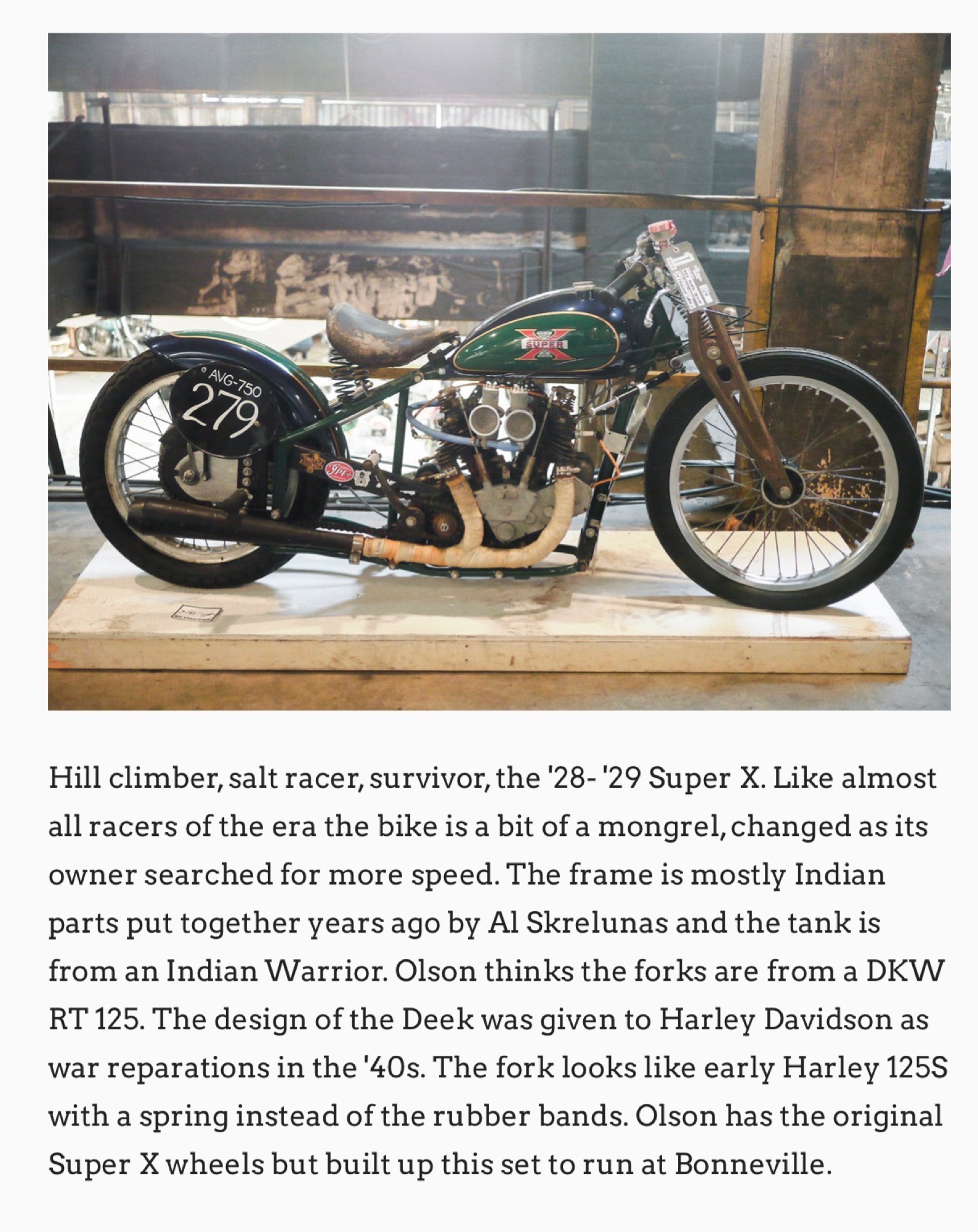
He builds custom motorcycles from nothing. He stretches frames, welds swingarms, modifies engines to hold torque that would tear an ordinary machine apart. And then he races those machines straight up near-vertical hills — hill climbing, one of the most dangerous sports in America.
He does this into his 70s.
Not because he has to. Because he is made of something that does not stop.
His bikes become legendary. He sells them around the world. Today, authentic vintage hill climbers built by men like Alphonse routinely sell for over $100,000 at elite auctions. They are not motorcycles. They are functional art — the mechanical signature of a man who would not quit.
He plays golf, too. Avid. Relentless. The same focus he brought to everything.
This is the part the longevity studies keep circling and never quite name. We measure it in diet and heart rate, in the blue zones and the daily walk. All of that is true. But watch a man who lasts, and you see something underneath the biology: a reason to get up, a thing to build, a hill worth climbing. Vitality is not the absence of age. It is the presence of purpose — engine still turning over long after the world has told you to park it.
What the catalogs don't tell you
But here is what the auction catalogs leave out.
Through my whole childhood, he gets in his car and drives.
From Oregon to the high desert, again and again. A Lithuanian man in his 60s and 70s, sitting in a sheep camp on a mountain, watching a boy herd sheep under a sky that looks nothing like the forests his own father left behind.
The boy is me.
He does not speak my grandmother's language. He does not know the names of the plants or the ways of the mesa. But he eats mutton stew and frybread. He drinks coffee strong enough to wake the ancestors. He listens to my great-grandmother Masan tell stories — though he does not understand a single word.
He does not say much.
He just shows up.
That is the teaching. The same teaching the book smugglers knew. The same teaching the song keepers knew. The same teaching Masan gave me when she raised me.
"The dog hears what we miss," she said. "And you listened."
Showing up is listening. Listening is surviving. Surviving is keeping what is ours.
What they carried
The book smugglers — the knygnešiai — walked through forests at night with forbidden books under their coats. The Tsar's police hunted them. Some were executed. Still they kept walking. Because a book in your own language is not just paper and ink. It is a declaration that your people still exist.
The song keepers — the grandmothers — sang the old dainos in kitchens and fields, under the noses of occupying soldiers. You cannot ban a melody that lives in a throat. You cannot confiscate a rhythm that passes from mother to daughter while the corn is ground.
My great-grandfather left home with nothing but work in his hands.
My grandfather built machines that now sell for six figures, and he never once forgot that the real machine is the one that shows up.
Same thing. Different words.
What I honored in Stone Breath
Not their names — though I know them. Not their biographies — though I could tell you every one.
What they carried.
The weight of leaving. The courage of keeping. The quiet, stubborn, relentless power of showing up when it would have been so much easier to stay home.
The book smugglers carried paper across borders. The song keepers carried melodies across generations. My grandfather carried himself across a continent to sit beside a boy who needed to know he was not alone.
That is the thread. Three cultures — one on the Baltic, one on the high desert, one across the Pacific. Same teaching.
The stone in your pocket. The breath in your chest. The showing up.
That is what ancestors do. And it turns out to be the same thing that keeps a body alive past every reasonable expectation: not the perfect regimen, but the refusal to stop — a purpose you race toward, and people you keep showing up for.
So if you are wondering whether it is too late to build the thing, to climb the hill, to drive the long road to the ones who need you — it is not too late. The fire is still lit. The engine still turns. You are not alone; the circle holds. And the question that outlasts all of us is the only one worth asking of any life we build: will this make the great-grandchildren whole, or hollow them out?
Race the hill anyway.
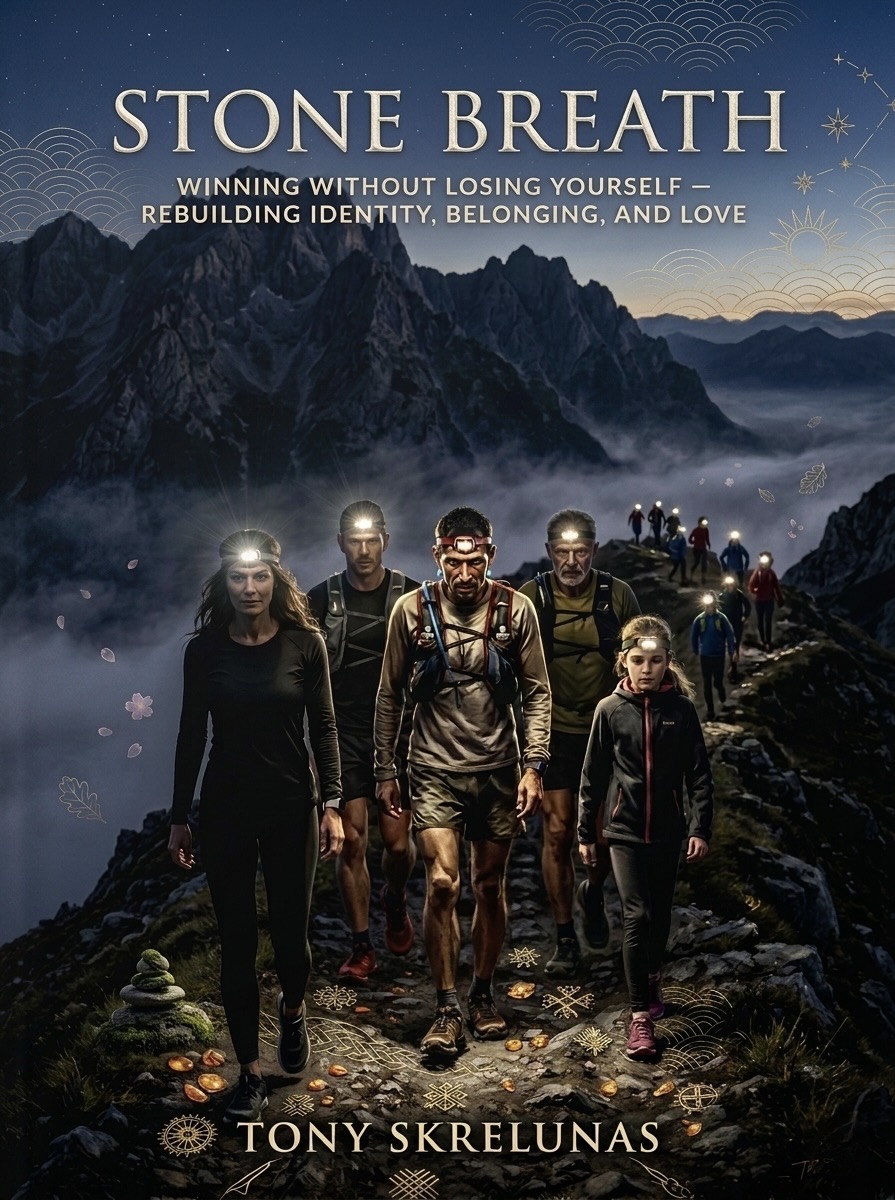
Read more in Stone Breath — a novel about a man who forgot how to breathe, a woman who stayed when everyone left, and the tools that brought him home. The book is currently being published.
For the book smugglers. For the song keepers. For the grandfather who never stopped showing up.