The Dream of the Protocol
It begins with a dream. Not a gentle wish, but a solemn, recurring vision that arrives with the weight of prophecy.
In it, I walk through a world both familiar and shattered by the legacy of a single, flawed operating system: an economics of extraction and a technology of domination. And yet, out of the silence, a new council fire is lit.
I am led to a great, round room beneath a vast, starry sky. I take my seat among ancestors from every corner of the earth — dry farmers and reindeer herders, healers and ocean navigators, the keepers of deserts and forests and steppes. Scientists and engineers sit among us as humble listeners. We are the Final Council. Our charge is to stand at the threshold of a new beginning, and to weigh every new economic model and every new technology against one devastating question:
"Will this system repeat the cycles of collapse, or does it honor the covenant of the generations not yet born?"
Our purpose is not to reject progress, but to shape it. To ensure that the very logic of our new tools — from AI to quantum computing to new financial systems — is encoded with reciprocity from the start, so they become instruments of regeneration rather than a second, more efficient wave of ruin.
The Spark in San Francisco: A Warning from the Old World
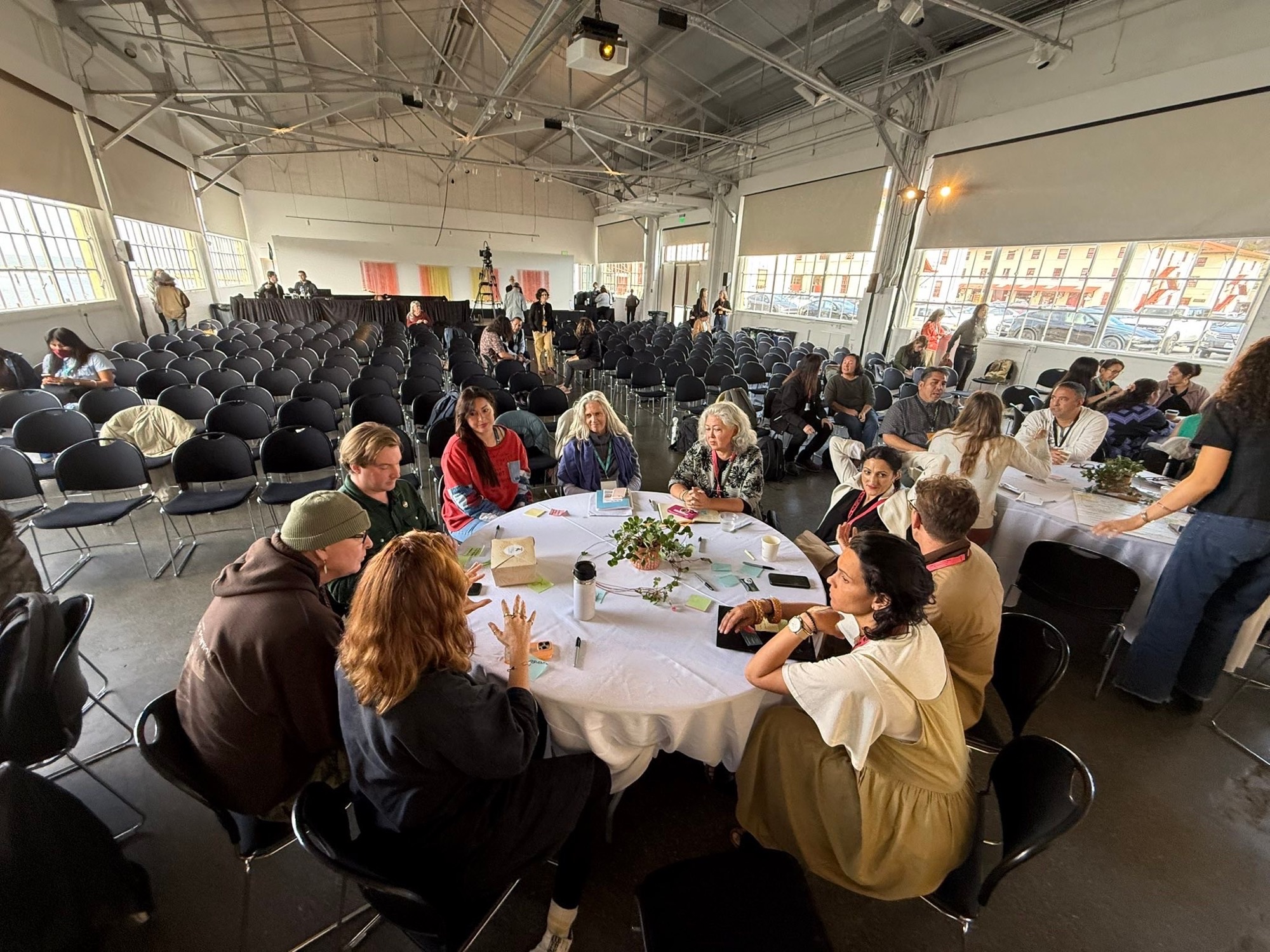
Years later, in a room in San Francisco, the dream met reality. I shared the vision with a circle that included a former Wall Street CEO, data and blockchain engineers, a Lakota elder, and a scholar from Aboriginal Australia. The former CEO's warning was a cold splash of truth: "The system I come from is an ecosystem of extraction. It is engineered to co-opt and commodify everything, even your spirituality. If you build this council, you must build it to be immune to that virus."
Her words became our sacred charge. We were not merely dreaming; we were designing an immune system for civilization's next iteration. This was the birth of the Protectors of the Next Generations — a council designed to vet the future before it is built.
The Scholar's Path: Living the Integration
This dream demanded a rigorous path. It is why I am now pursuing a PhD in Sustainable Development, where the research is not a theoretical exercise but a lived practice, centered in a powerful, real-world intersection.
My fieldwork is a deliberate weaving of three strands. It begins at home — time with my own family and community, listening to the stories and to the silence, keeping this work grounded in the relationships it is meant to serve. From that foundation, I step into two seemingly opposite worlds.
On one hand, I advise an organization whose sole purpose is to save endangered Indigenous cultures, helping build the ethical foundation for any future technological intervention. On the other, I sit at the table with an advanced robotics and AI company, engaging the raw frontier of technological capability.
I sit at that precise intersection. My research turns this unique vantage point into a tangible blueprint, built around a critical trifecta:
1. AI as a Cultural Sanctuary. Most endangered languages carry an older form — richer, more descriptive, closer to the land — that a newer, acculturated form has quietly lost. Imagine a "Linguistic Time Machine" that does not merely archive words but teaches the context and cosmology behind them. A child a century from now may want to raise a family, hold a ceremony, or heal a loved one in the old way, and find that no elder remains to guide them. They will need an immersion — a conversation, the stories, the songs and prayers, the cultivation of the right plants, the proper setting. These are not hypotheticals; some communities live inside them already.
2. Navigating the Modern Migration. As the climate shifts, whole communities are being displaced. Picture AI systems that serve as "modern migration scouts" — trained on both climate data and traditional knowledge — evaluating new land for its soil, its water, its plants, its alignment with ancestral story. Tools that turn traumatic displacement into a purposeful pilgrimage, and help a people find new ways of living as community.
3. Robotics as Restorative Tools. Reframe advanced robotics not as a replacement for human labor but as an extension of the protector's hands: machines programmed for reforestation, land healing, fighting the fires grown too dangerous for us, and building in a way that honors the original instructions of the honorable harvest — active participants in the healing of ecosystems.
This doctoral work is the engine room where the vision becomes testable models and deployable strategies. It supplies the rigor behind the protocols the Council will uphold — born directly from the dialogue between the deepest traditions and the most advanced innovations.
The Convergence: A Partnership Forged in Protector Consciousness
A vision of this scale cannot be built alone. My path has converged with powerful allies who provide the spiritual and intellectual foundations.
My work is now in direct partnership with Arkan Lushwala, an Indigenous guide from Peru whose vision provides the moral architecture for the council. Arkan's book, _Time of the Black Jaguar_, is a prophetic text for our era. He names this pivotal moment as a necessary initiation — a turn from a "predator consciousness" of taking and domination toward a "protector consciousness" founded on sacred relationship, reverence, and reciprocity. He names the qualities we must cultivate to become the stewards the future demands: deep humility, a courageous heart, attentive listening. His vision is of a conscious evolution into a future where humanity takes its place as a responsible, generative part of the cosmic order.
Complementing that spiritual framework is the intellectual toolkit of Tyson Yunkaporta, an Aboriginal scholar from Australia. In his book _Sand Talk: How Indigenous Thinking Can Save the World_, Tyson lays out a systems-based way of thinking that is relational, cyclical, and practical. He deconstructs the unsustainability of linear, reductionist thought, arguing it can only produce "complicated" systems, never the "complex" adaptive systems that mirror living reality. Tyson gives us the _how_ — a tangible methodology for thinking, designing, and creating in a way that naturally generates regenerative, balanced systems.
This year, Arkan and I will convene the first council of elders and wisdom keepers to draft the charter for this new era — the crucial link between the academic blueprint, the spiritual vision, and the actionable protocols of the Protectors of the Next Generations.
We Are the Ancestors We've Been Waiting For
The old world is ending. You can feel it in the parched earth, see it in the receding forests, hear it in the silence where our grandparents' languages once flourished. The system that taught us to take without asking — to see the world as a resource instead of a relative — is crumbling under the weight of its own hunger.
But our peoples have been here before. Nearly every culture on earth carries an emergence story: a memory of journeying through worlds, learning through each transition, carrying hard-earned wisdom from one age into the next. Now we stand at the doorway again. The signs are clear. It is time to build the world that comes next.
The Original Instructions for What Comes Next
Many traditions hold a single word for the whole of it. In one I carry, that word is Hózhó — walking in beauty, balance, and right relationship with all of creation. It is not aesthetics; it is a sacred way of being. Marry it to the old Greek root for the management of a household — the root beneath the word _economics_ — and you arrive at something simple and enormous: managing our world so that we walk in beauty. It is the instruction manual we were always meant to use, and its cousins live in wisdom traditions on every continent.
The Three Sacred Protocols
#### 1. The Governance Protocol: Wisdom Councils and the Sacred Veto
In earlier ages, our peoples learned that decisions made without wisdom lead to collapse. When a generation stops listening to its elders, the waters rise.
_The way forward:_ we restore the sacred circle. A Council of Grandmothers and Grandfathers sits at the heart of every venture — not executives, but memory-keepers, chosen by the old ways, who carry the long story of a people in their bones. They hold the Sacred Veto. Before any new technology touches the land, before any ground is broken, they ask: "Does this choice lead us toward balance? Does it honor the generations yet to come?" If the answer is no, their word is final. This is not a delay. It is a return to a sacred pace.
#### 2. The Technology Protocol: Ceremonial Sanctity with AI and Robotics
Across our journey through the worlds, we have seen how tools can either connect us to creation or sever us from it. The way forward is technology that remembers its ceremony:
The Dry-Farming Steward — a solar-powered partner to farmers everywhere, from desert mesas to the African savannah. Its sensors do not merely measure soil moisture; they read the "soil breath," the web of life beneath the surface. It whispers to the farmer: "The earth two hand-lengths down remembers the last rain. It dreams of millet today." Or: "The wind speaks of coming dryness. The old way is to build stone terraces here to catch the morning dew, just as your grandmother taught."
The Herder Companion — for the shepherd and the pastoralist alike, a guardian of the ancient bond between caretaker and herd. It reads the flock's health through subtle changes in behavior, detecting illness days before the human eye can, and studies weather and terrain to suggest migratory paths that honor both the animals' needs and the grassland's recovery — so this sacred relationship continues for seven more generations.
The Fire-Going Steward — as forests face infernos too great for human firefighters, robotic partners walk courageously into the flames. They do not seek to conquer fire but to work alongside cultural burn practices, using targeted oxygen displacement to protect ancient trees and sacred sites while letting beneficial fire cleanse the land. They are the brave hands where the heat is too great for human bodies.
The Beauty Algorithm — the sacred logic beneath every one of these tools. Constrained by our principles, it is programmed to ask not "What is most efficient?" but "Does this decision increase beauty and balance? Does it honor the water and the animals? Does it leave the land more whole for the generations to come?"
#### 3. The Economic Protocol: Generative Reciprocity
The old economy is a one-way river, drawing life from land and people and leaving all of us poorer. The way forward makes the river circular again. This is Generative Reciprocity.
The Seven Generations Fund — a community-controlled fund into which a share of all value created by new enterprises flows automatically back to language programs, seed banks, and land restoration. Not charity: the economy remembering its duty to the sources of its own life.
Sovereignty Licenses — when corporations want to use traditional knowledge, from the healing properties of desert plants to ancient dry-farming techniques, they must negotiate terms that return benefit to the source communities in perpetuity. Ancestral wisdom is no longer a free resource to be strip-mined, but the most valuable capital a people possesses.
The Generative Capital Fund — an investment vehicle that supports only businesses chartered as Sovereign Stewardship Corporations: enterprises legally bound to honor cultural values and ecological balance.
This is the through-line of everything I build — helping people and nations move from extraction to ownership, keeping wealth and wisdom at home. It is the same fire I tend in my books _The Council Fire_ and _Stone Breath_: how a community steps into a more nurturing system as the whole globe shifts beneath us.
The First Council Fire: Planting the Seeds
Before we can ask the wisdom keepers to share their knowledge, we must build a vessel strong enough to hold these dreams. This season, in the shadow of sacred mountains, a small group will gather — not for a conference, but for a foundation-laying council.
We will bring just enough voices to begin the pattern: elders who carry the long memory, technologists who understand systems, entrepreneurs who build new structures, and storytellers who can weave vision into something the heart can hold. Around this fire, we will shape three sacred vessels:
- The Vessel of Purpose — Why does this work exist?
- The Vessel of Protocols — How do we ensure technology serves life?
- The Vessel of Relationship — How do we grow this circle with integrity?
This is not the founding of an organization. It is the lighting of a sacred fire. And from a single flame, we will light countless others.
Kee's Story: The Future We Are Building
One hundred years from now, a boy named Kee will ask his grandfather to teach him the old language. Because of the systems we build today, his grandfather will not have to say, "I wish I could, but I never learned."
Instead he will smile and bring out a smooth river stone that seems to hold the warmth of countless hands. The stone will speak in the rich, melodic form of a language nearly lost: "My name is Kee," it will begin. "I will tell you about the mountain that has watched over our family since the beginning."
The stone's voice will carry the tones and rhythms that hold an entire worldview — the patience of the desert, the resilience of the old trees, the laughter that survives generations. It will know these things because we designed technologies that treated cultural preservation as sacred work, funded by economies that valued a living language as precious capital.
Kee will not be learning words from a dictionary. He will be learning his place in the world, from the accumulated wisdom of his people, through tools designed with reverence rather than extraction. Every child, in every tradition, deserves that inheritance.
The Call: We Are the Bridge Between Worlds
We stand at a moment of profound global transformation. Across every continent, communities are navigating the journey from ancient lifeways into modern society, and facing a question that belongs to all of us: how do we honor deep cultural knowledge while building economic systems that let people thrive?
My work has been to explore this delicate balance worldwide — how we might protect languages, healing traditions, and ancestral farming knowledge while creating real opportunity for communities everywhere. From the high deserts to the halls of global innovation, I have been studying how to build systems that serve both cultural continuity and our collective future.
This is not yet a formal council. It is a worldwide gathering of curious minds, asking essential questions about how we move forward together as one human family. Here is where your perspective is needed:
To the systems thinkers and researchers worldwide: help us study how traditional communities across the planet are walking this path. What models exist for preserving ancient wisdom while building economic resilience?
To the technologists and documentarians: join us in exploring tools that preserve knowledge with proper protocols — that document living traditions while respecting what is sacred in them, and never exploit.
To the economic innovators everywhere: help us imagine models that value cultural preservation. Help us redesign the plumbing of the global economy so that prosperity and our connection to the land grow together. Help us build the models for Generative Reciprocity.
To the engineers: code the protocols of Ceremonial Sanctity and Deep Consent into the foundational layer of the next internet.
To the wisdom keepers: your knowledge is the blueprint. Guide this council with the original instructions for a sustainable human presence on Earth.
To the learners and listeners: bring an open mind and the willingness to sit with complexity. This is not about having answers. It is about asking better questions together, across all cultures.
Ask yourself the one question that outlives us all: _will the world we are building make our great-grandchildren whole, or hollow them out?_ Let that be the filter for every tool, every policy, every dollar.
The dream of the council is both a warning and a gift. We have a brief window to install a new operating system for civilization — one that will not crash.
You are not alone in this. The circle holds. It is not too late; the fire is still lit — and it is you. Come, bring your expertise. Let us build a world our grandchildren will not have to fix, and explore together how cultural knowledge and shared prosperity might walk hand in hand for all of humanity.
In gratitude and solidarity,
Tony Skrelunas