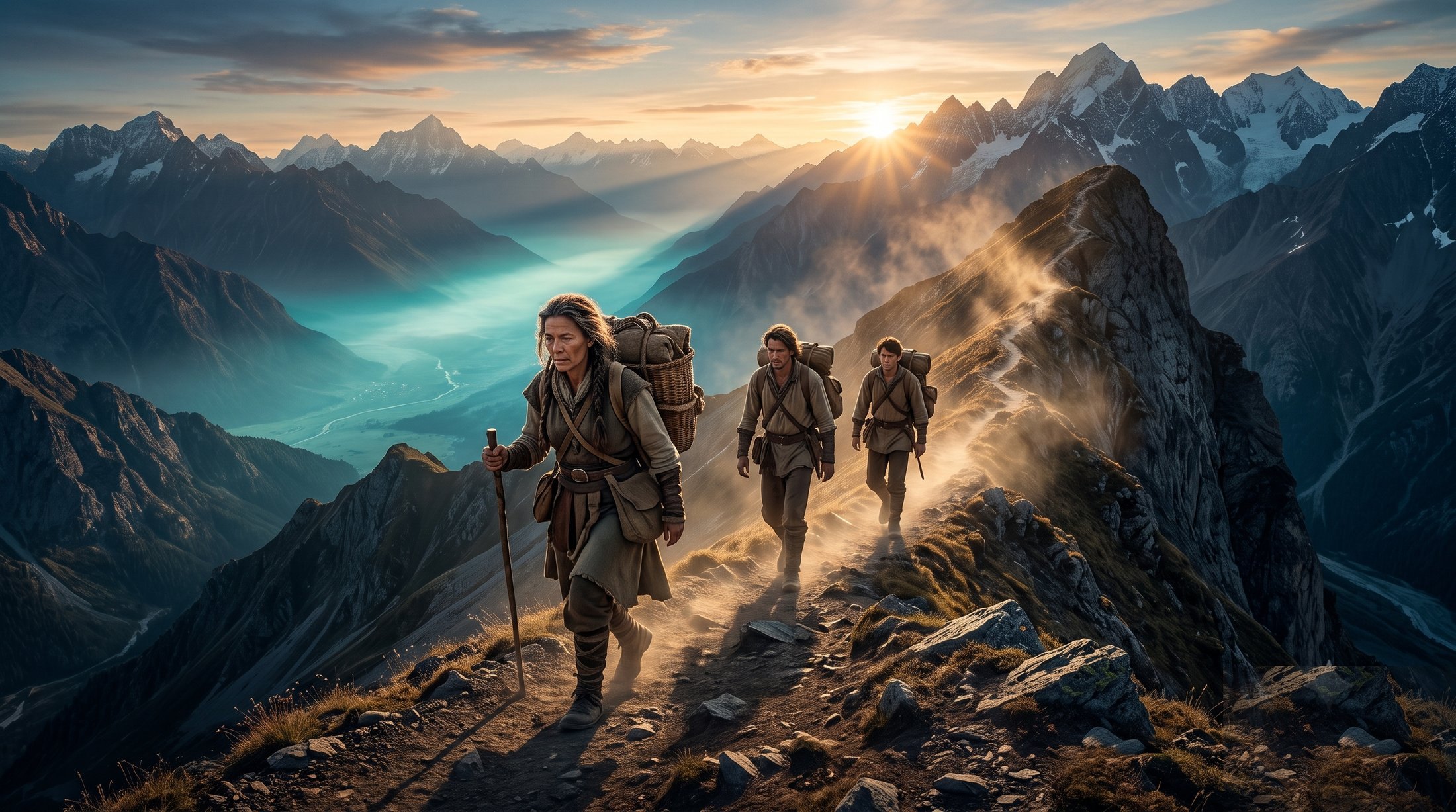
We were made to move. Long before there were treadmills, our ancestors ran the ridgelines, carried water, planted and harvested, danced through the night at the fire. The body was never meant to sit still. When it does, something slowly goes out of us — not all at once, but like a fire left untended, ember by ember.
Movement is one of the oldest medicines we have. The research only confirms what the body already knows: daily exercise sharpens the mind, steadies the spirit, and can add years — real years — to a life. Our bodies are built for honest food and honest effort, not for the processed sugars and trans fats that settle into us and stay for months, even years, when we stop moving. And it does not stop at the flesh. When the body slows, the mind follows — weight, then the shadow of anxiety and depression, then the slow erosion of the will to care for oneself at all. Sickness and stillness walk hand in hand.
The numbers are stark. In the recent years of pandemic, regular exercisers carried a 44% lower risk of serious disease, a 36% lower chance of hospitalization, and a striking 43% lower risk of death. Another study found that older people who stayed fit carried the hearts, lungs, and muscles of those thirty years younger — and lived, on average, nine years longer than those who sat. This is not vanity. This is survival, written into the body.
The missing infrastructure
Here is the hard truth that Indigenous, rural, and transitioning communities the world over already know in their bones: in most of our places, there is nowhere to move.
Walk into any major city and you will find a 24-hour fitness center on nearly every corner — state-of-the-art machines, cardio equipment, pools, saunas, classes, all for a low monthly rate, all driven by private investment that flows freely there. Then travel home, to the reservation, to the village, to the small transitioning town, and you find either nothing at all, or one modest gym that opens with hope and closes within the year.
This is not an accident of willpower. It is an absence of infrastructure. The private sector that pours into off-reservation cities has never seen a reason to invest in ours. And so our people are left carrying the heaviest burden — obesity, diabetes, weakened immune systems — in exactly the places with the fewest tools to fight back. Call it what it is: a quadruple crisis, layered on top of one another. Pandemic. Obesity and chronic illness. Scarce healthy food. And almost no quality places to exercise — no gyms, no safe trails, no parks where a family can walk without fear.
Government alone cannot fix this. Governments can only do so much. What is needed is a bridge between what our communities lack and what the outside world takes for granted.
Building the bridge
To shift the health of a whole people, we need innovation across the board — and, above all, we need to make it possible for entrepreneurs to build fitness businesses in the places that have none.
That means our nations and our community governments becoming architects of incentive: financial support to lower the risk, investment backing, real business and technical mentoring that walks alongside an owner for years, not weeks. It means solving the hidden problem of cost — a single community cannot afford top equipment, but a cooperative structure can buy in bulk and pass the savings down, so a local owner in a place far from any city can outfit a real gym at a price they can actually bear.
This is the deeper pattern I return to again and again: the movement from extraction to ownership, from wealth that leaves to wealth that stays home. A gym owned by one of our own people is not just a place to lift weights. It is a business that keeps money circulating in the community, a job, a gathering place, a small act of self-determination. This is the same logic behind a nation's local governance movement — the kind now adopted by a hundred communities and more — where the tools of prosperity are placed back into local hands rather than held far away.
One piece of a larger whole
Let me be honest: a gym is only one piece of the health puzzle. The fuller answer is older and wider than any single building. It runs through the return of traditional foods, the sharing of plant-based nourishment, the healing of the mind through prayer and meditation, the whole storehouse of wisdom our cultures have carried for a thousand generations. This is the work TribeAwaken exists to lift up — to place these tools, ancient and modern together, back into the hands of the people who need them.
So here is the question I would ask of any community weighing whether this investment is worth it — the only question that has ever mattered to me: Will this make our great-grandchildren whole, or hollow them out? A people who can move are a people who can endure. A place with somewhere to walk, to lift, to sweat, to gather, is a place preparing itself for a long future.
It is not too late. The fire is still lit. And if you are reading this and wondering whether your community, your village, your town could ever build such a thing — you are not alone. The circle holds. The tools are here. The builder is you.
Ahéhee'. Thank you.