
Deep dive · A business with soul
Nobody is calm in a hard season. They are only prepared, or they are not.
A sanctuary is not a room with cushions in it. It is what a company or a community already built before the year turned — and you do not make the calm, you retrieve it. A place retrieves from whatever it put away.
The argument
Under load, nothing rises to its values. It falls to what it already built.
The same claim this whole site makes about a person, made about a company, a village, a department, a family business — anything with more than one person in it and a season coming.
An organization has a nervous system. It is made of exactly the same material as everybody else's, because it is made of the people in it, and it behaves the same way. Hand it a threat it has not prepared for and it does not get wiser. It narrows.
Narrowing is not a mood and it is not a management failing. It is a set of predictable, mechanical things that happen to groups under pressure, in roughly the same order, in a warehouse and in a village and on a board. I have watched it in places run by serious people who cared a great deal, and afterwards every one of them described it as a leadership problem, because that is the only language available for it.
It is not a leadership problem. It is an untrained system meeting a load it was never trained for. And a system can be trained — but not while it is under load. The building work is only ever available on the ordinary days, which is exactly when it feels least necessary and gets postponed. That is the whole difficulty of this subject in one sentence, and everything below is downstream of it.
So this page is not about how to lead in a crisis. There is a great deal written about that and most of it arrives too late to be used. This is about the year before.
The narrowing
Six things that happen to a place in a hard season, in about this order.
Read these as weather rather than as anybody's fault. Every one of them is what a group does when it has nothing built underneath it.
-
01
The horizon shortens to the week. Anything whose payoff sits past the quarter becomes the easiest thing to cut, because it is the only thing with no invoice arriving from outside. The apprenticeship. The maintenance. The language class. The slow relationship with the neighbor that has not produced anything yet. All of them are still there on the morning of the decision. None of them are there by the end of the year, and no single person decided that.
-
02
Information goes quiet. Bad news becomes expensive to carry, so it arrives late and slightly rounded. By the time a number reaches the person who could still act on it, it has passed through four people who each softened it a little and not one of whom lied. The most dangerous version of this is not concealment. It is honest people rounding in the same direction.
-
03
Deciding collapses upward. The people closest to the problem stop deciding, because in a hard season being wrong is remembered and being cautious is not. Everything queues at one desk. Then the queue itself becomes the emergency, and the person at that desk starts working nights on questions they are the least qualified in the building to answer.
-
04
Trust converts into process. Requests become approvals, approvals become forms, and the place gets slower at precisely the moment it needed to be faster. This is the one that lasts longest. The season ends; the forms do not. Ten years on somebody is still filling in a control that was invented in a frightened month nobody remembers.
-
05
The steady ones leave first. Not the disengaged — the disengaged stay. The ones who go are the people with options and judgement, who can read a room without being briefed, and who are quietly the reason things have held together so far. They leave early and they leave politely, and the exit interview says something about a new opportunity.
-
06
One person starts making every decision. Usually the founder or the director. Usually well. Almost always out of love, and always described afterwards as having stepped up. Meanwhile the place learns, in about six weeks, not to decide anything — and that lesson outlives the crisis by years, because nothing ever comes along to teach the opposite.
Panic is not a personality. It is an unpaid bill from the calm years.
On preparation
The structure
Nine things a place builds beforehand, and not one of them is a room.
All of it is ordinary and most of it is dull. That is not a flaw in the list. Dull is what survives a bad March.
-
A reserve with a rule on it Not a target — a rule. How much, held where, released by whom, on what named condition, and rebuilt on what schedule afterwards. A reserve that can be argued into is a current account with an ambitious name. Write the release condition while nobody needs the money, because the argument for spending it is always excellent and is always made by tired people.
-
Income that does not all fail at once One customer, one grant, one commodity, one season, one road. The shape of the risk matters more than the size of it, and the question is never how many income lines there are. It is how many separate reasons there are for them to stop. Two lines that fail for the same reason are one line drawn twice.
-
The order of cuts, decided in a good year and signed This is the most useful thing on this page. While everyone is steady, write down what gets cut first, second and third; what gets reduced proportionally across the whole place; and what is not available to be cut at all. Have the people who will be affected in the room while it is written — not consulted afterwards, in the room. Nobody makes that list well in the season, and if it exists, nobody has to.
-
A pay rule that runs downward from the top If pay has to fall, it falls first and furthest at the top, by a stated ratio, automatically, without anyone having to be brave about it. Written in advance, it is a structure and it holds a place together. Announced in the season, it is a gesture, and every single person can tell the difference between the two.
-
A floor that has been named out loud What this place will not do in order to survive. The contract it will not take. The corner it will not cut. The thing it will not sell. Say it in a good year and write it where people can find it, because in the hard season every one of those will come back dressed as necessity, carrying a reasonable argument and a deadline.
-
More than one pair of hands for every job Cross-training gets filed under efficiency, and it is not efficiency — it is insurance, and it costs like insurance. The question is not whether someone is good at the job. It is what happens the week they are ill or grieving or simply gone, and in a hard season somebody always is.
-
A rhythm that is older than the trouble The Monday meeting. The seasonal gathering. The accounts read out loud once a year in a room where people can ask. Pressure destroys rhythm first, and a rhythm invented during a crisis is one more thing for people to be suspicious of. One that has been running for six years is a floor people can stand on without being told to stand on it.
-
Somewhere to put the grief Places have losses. A death, a closure, people let go, a season that simply failed. If there is no practice and no place for it, it does not evaporate — it goes into the work sideways and stays there for years, coming out as suspicion, as absence, as a meeting that turns strange for no reason anybody can name. Every culture that lasted a long time had a form for this. Most organizations have an email.
-
Somebody who has been through one before The most underused thing in almost every organization is the person who was there the last time. Usually older. Frequently no longer in the central role. Almost never asked. They are not there to be wise in general. They are there because they know the shape of the thing and can say out loud, with authority, that this particular part passes — which is information, not comfort, and there is no other source for it.
Who it is for
Steadiness that stops at the top floor is not steadiness. It is a parachute.
This is the failure mode, and it is worth saying plainly because it is almost never said by the people it happens to.
Most of what gets built under the name of resilience gets built for the leadership team. The offsite is for them. The coaching is for them. The information, the context, the sense of what is coming next — all of it concentrates at the top, and it does genuinely work up there. The executive floor comes through the season steady, clear-headed and rightly proud of how it handled things.
And two floors down, nobody knew anything until it was announced.
A place can be entirely calm at the top and shaking everywhere else, and it will show up in the accounts as a good year. That is the whole problem. The measure never catches it. The people who could name it are the people with the least standing to name it, and by the time it shows up in the numbers it arrives disguised as turnover, or as a culture problem, or as a generation that supposedly does not want to work.
So the test for anything on this page is who it reaches. Not whether the leadership is steady — leadership is steady in most places, because leadership has information and options and a horizon. The test is the person on the floor at the loud end of the building, the manager who has to deliver a decision they had no part in making, the crew who find out from a notice, and the households in the town who will still be there long after the company has finished having its season.
Every item in the list above can be built for the top only, and each one is cheaper that way. A reserve that protects the salaries at the top. A cut order that starts at the bottom. A rhythm that only exists for the people in head office. Built like that, all nine of them still work, and none of them are a sanctuary. They are a lifeboat with assigned seating.
Which is the same question the founding document asks in a different accent: who does this thing answer to, on the worst day it will ever have? The charter version of this question
At community scale
The same design, with a village in place of a company.
The community version of this is older than the company version, better understood, and mostly lost in the places that need it. It is the same list translated.
- Food and fuel that do not arrive on one road The question is never how much is stored. It is how many genuinely separate ways there are for it to get here, and whether any of them work when the main one does not.
- Water and power that fail separately Two systems that go down in the same storm are one system with two invoices. The pump that needs the grid is part of the grid, whatever the plan on the wall says.
- A building everybody already knows Warm without the grid, with a working kitchen, with the key held by more than one household — and used for something ordinary every week of the year. The night you need it is not the night to be learning where it is.
- A list of who checks on whom Written down, kept current, deeply boring. Every place that came through something well had one, either formally or inside somebody's head. Formally is better, because heads move away and die.
- Money that can move without a bank The rotating fund is the oldest banking on earth and it works for one reason: it was already running. Nobody can invent trust during an emergency. The full account →
- Skills held in more than one pair of hands Who can deliver a baby, run the pump, weld, butcher, splice a line, translate at the hospital. If the answer to any of those is a single name, that is not a community skill. It is a dependency with a face on it.
- Mutual aid practised in ordinary years Help invented during an emergency is a rumour. Help that has been running quietly for a decade — the woodpile, the meals, the ride into town — is infrastructure, and on the day it does not need to be organized by anybody.
- The young already in the room Not in a program for the young. In the room, for years, watching how it is done, so that the generation who will run the next hard season has already sat through one from a chair near the back.

What it is not
Three things bought instead, and none of the three hold.
The wellness program. Often real and sometimes genuinely good. Also structurally the first line cut, because it is a cost with no invoice arriving from outside to defend it. Anything that disappears in the first hard quarter was a benefit, not a sanctuary, and the people who relied on it now have evidence about where they stood.
The plan nobody has read. A continuity document in a shared drive is a hypothesis. It has never been run, so nobody knows which of its assumptions is wrong, and on the day nobody will open it — they will do what they always do, only faster and with less sleep.
The steady leader. The most common answer and by a distance the most fragile. A place whose calm lives inside one person's temperament has borrowed that calm, and the loan is called in the week that person is ill, grieving, furious or simply out of the country. Calm that is not in the structure is not in the organization. It is in a person, and people are weather too.
Rehearsal
A plan that has never been run is a guess with formatting.
Once a year, take a day. Run the bad year on paper: revenue down by a third, the largest customer gone, the grant not renewed, the road closed. Then walk the cut list in the order it was written and find out which line does not survive contact — because one of them never does, and finding out on the rehearsal day costs a day.
Then run the other one, which almost nobody runs. The founder or the director is gone for a month, without notice, unreachable. Who signs. Who decides. What stops immediately. Most places discover something inside the first hour, and the discovery is always cheaper in a room where nothing is at stake.
The point of the rehearsal is not the plan. Plans are wrong; that is what plans are for. The point is that a group of people find out in advance that they can do it — and that memory is the thing they will reach for later, because in the season itself there is nothing else within reach.
Do it with everybody, not with the leadership team. A rehearsal that only the top floor attends teaches the top floor that it can cope and teaches everybody else that they are not in the room. Both of those lessons hold.
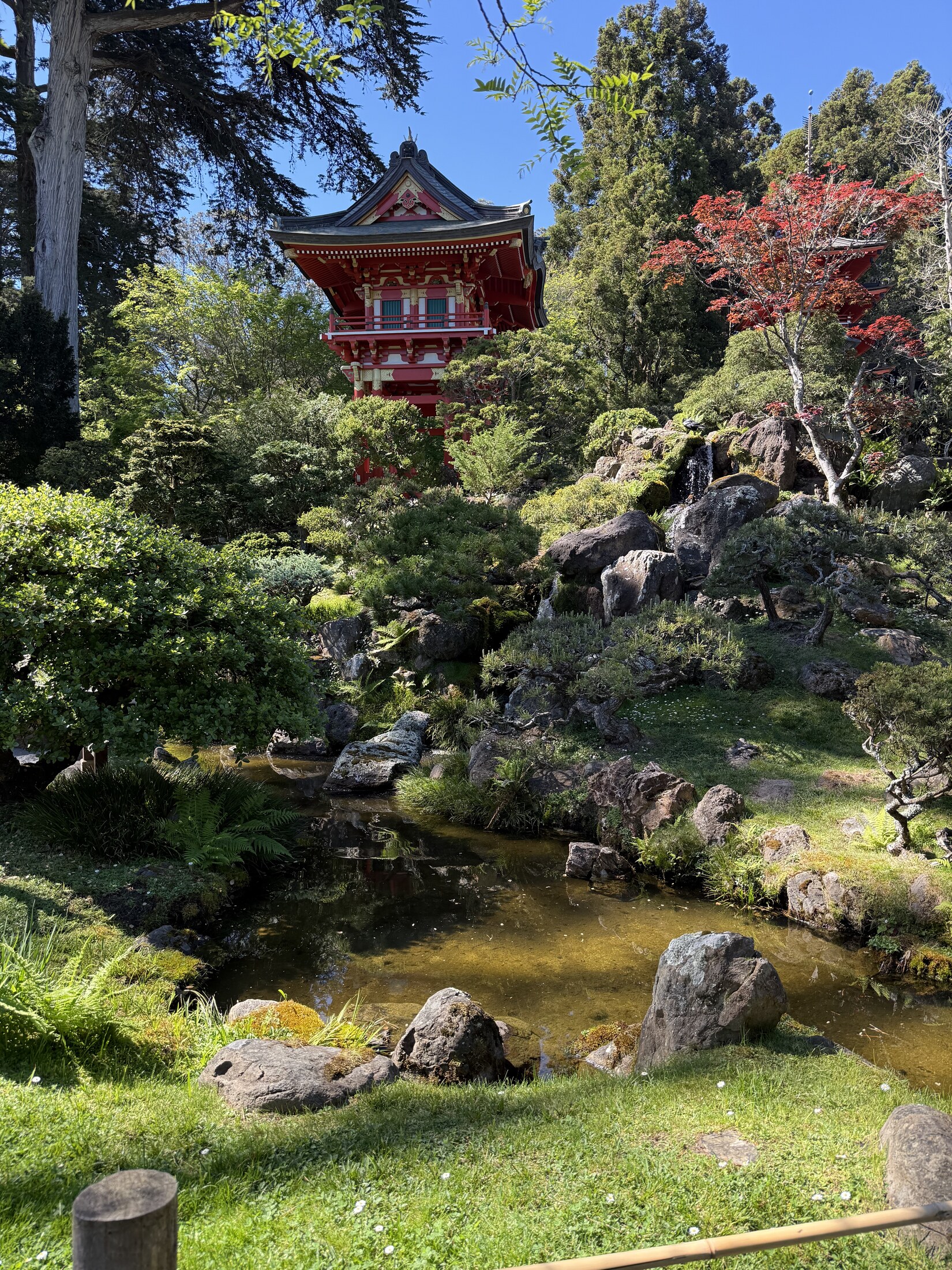
You do not make the calm. You retrieve it.
That line belongs to a person crossing hard ground on foot, and it holds exactly the same for a company or a village, because it was never a claim about mood. It is a claim about storage. In the moment there is nothing to make calm out of. There is only what is already there.
Which means every ordinary week is either a deposit or it is not. The rehearsal nobody wanted to spend a day on. The reserve that was dull to fund and duller to leave alone. The meeting that kept happening in the months when there was nothing to discuss. The cut list written by people who felt slightly foolish writing it, on an afternoon when the numbers were fine.
None of that feels like steadiness while you are doing it, and that is the entire difficulty. Resilience only looks like resilience afterwards. At the time it looks like overhead — and it gets cut, by reasonable people, for reasons that are good on the day.
And the reason to build it is not survival. Survival is a low bar and plenty of unpleasant places clear it. The reason is that a place with something underneath it can make a decision in a hard season that it is still proud of ten years later. It can tell people the truth early. It can carry the ones who cannot carry themselves that month. It can decline the thing it said it would decline. None of that is available to a place that is improvising, no matter how good the people are — and the people are almost always good.
That is the difference between coming through something and merely getting past it. It is decided years in advance, by nobody in particular, on days when nothing was happening.
The provisions that make this survive a change of leadership
The one question
Will this ensure our future generations live in harmony and resilience with each other and Mother Earth?
That is the bottom line of The Council Fire, and it is the last thing asked before a decision is made. Every provision, every account, every council on this page exists to make that question answerable by somebody other than the person who wants the answer to be yes.
The novel
The Council Fire
When the systems running the modern world reach their limits, the keepers of many peoples’ oldest knowledge are drawn to one fire to remember what actually lasts.
Every people on earth built a sanctuary before they needed one. The book is what that looked like, and what it cost the ones who did not.