Everything you know reached you because somebody carried it.
Every story your grandmother told you. Every song, every remedy, every way of doing a thing right. None of it grew where you found it.
Before anything else
What is a far messenger?
Somebody crossed the largest sand desert on earth on foot. Somebody lay in the hull of a canoe at night, reading the swells through the wood with their own body. They did that so you could know anything at all.
Those were the far messengers. Every people on earth raised them — the ones trained to carry what mattered across hard ground and arrive with it whole. Not the strongest. The steadiest.
The skill we are losing is not the stories. It is the carrying.
You do not make the calm. You retrieve it. The crossing is never made out on the sand. It is made beforehand, on the ordinary days when nothing is wrong and the practice feels pointless. Panic is not a mood. It is a failure of preparation, and you cannot build the container while the house is burning.
No messenger ever stood alone. Each one sat at the top of a whole civilisation organised around raising honoured people — the weather-reader, the seed-keeper, the one who knew which root fed you and which lied. In that world you rose by mastering something and serving your people with it. Your rising was not a threat. Your rising was your family’s glory.
We are in that kind of crossing now. And nobody is being raised for it.
Two hundred years from now, somebody will be sitting in the dark.
They will need exactly what we are holding right now. Where will their stories come from? From us, or from nowhere.
We are the far messengers now.
Two of them
Two scenes. One is the crossing. One is the stage.
The first is a messenger at the moment the water runs out. The second is what it looks like when somebody carries that training into a hall full of ministers and founders. Press either one.
On the fourth day, the well was dry. The Far Messengers · the opening · about six minutes
On the fourth day, the well was dry.
He came down off the last dune to the place the water should have been, and the seep was cracked mud, pale, and there was nothing.
I want to stay in that moment longer than the story wants me to, because everything I have to say is inside it.
A frightened man does one thing here, and it is always the same thing. His heart bolts. He gets up and moves — fast, in some direction, because moving feels like doing. And they find him the next morning a few hours’ walk away with the panic still on his face, and the well he needed sitting half a day north of where he died.
This man did not do that.
He sat down.
I have thought about that for eleven years. Not the courage of it. Anyone can be brave once. It is the trainedness of it — that at the worst moment of a crossing, with everything in his body screaming, the thing he reached for was a practice he had rehearsed a thousand times on days when nothing was wrong.
He softened his eyes to the whole horizon — not to search it, to widen it, because a narrowed eye is a frightened eye and a frightened eye reads nothing. He closed his fist around a small river-worn stone he had carried since the first morning and pictured it resting on his tongue, cool and smooth, which brings water back into a dry mouth by itself; I have done this and it works and I still do not entirely understand why. And he counted his breath the way he had been taught as a boy, to a rhythm like a slow drum: in for four, hold for four, out for six, hold for four.
He let the fear stand there beside him and gave it no chair to sit in.
That is the line I could not get out of my head. It is not mine — it is how his descendants tell it, and I heard it from a woman whose family has kept the telling. The fear is not the enemy. The fear is a guest who will stay as long as you keep offering it somewhere to sit.
And then his heart came down. And when it did, his quiet mind did the thing his racing mind could never have done.
It remembered.
A seep, half a day north, in a place no sensible person would look for water — which his grandfather had mentioned to him once, in passing, years before.
He got up. He went north. It was there.
And here is the part I love, the part that convinced me these were my people even though they are not my people: he laughed. Standing over a miserable brown trickle in the middle of the largest emptiness on earth, he laughed out loud, alone, with two days still to walk. Because among the ones who trained this way, the laughter was never the opposite of the calm.
It was the calm, arriving.
From The Far Messengers — Book Four of The Ancestral Watch
“Labas vakaras, Vilnius.” By Lamplight · The Scarf · about five minutes
The black Mercedes sedan moved like a silent thought through the waking streets of Vilnius.
Inside, Tonas Yazzie existed in the calm eye of his own storm. On the seat beside him, a tablet glowed with the final slides of his keynote for the Vilnius Global Futures Forum. The title was sleek, modern: “Regenerative Systems for a Fractured World.”
He was the headline speaker. The boy from the mesa had arrived, in every sense the world measured.
That morning, in his suite at the Hotel Pacai, he had performed the old code. Move: a run along the frozen Neris River, his breath marking the dark. Order: his room an oasis of calm, notes sorted. Align: a silent prayer at the window, facing the direction of the sun’s return.
He was prepared. He was, as his assistant’s messages confirmed, “on brand.”
The car turned onto the cobblestone approach to the university. Students flowed through the gates, a river of scarves and backpacks against the Baltic cold. And then, the river parted.
There, on the sidewalk, a senelė was kneeling before her grandson. The boy, maybe seven, was a bundle of wool. The grandmother wore a scarf of deep forest green and maroon, its geometric patterns unmistakably ancient, hand-woven, real.
Her hands, red from the cold, were not just tying his scarf. They were arranging it. She pulled the wool snug around his neck, tucked a strand of hair under his hat, and said something into his ear. Her touch was not fussy; it was deliberate. It was the touch that installs armor.
The boy listened, his face grave, then stood a little taller, his small shoulders squaring as if bearing an invisible, honorable weight.
For Tonas, the world did not slow. It cracked open.
The Mercedes, the Italian wool of his suit, the keynote title — all of it evaporated into a silent, white flash.
He was not here. He was on a dusty bus, the vibrations a constant song in his bones. Masan sat beside him, her presence a mountain range of calm. Her hands, just as deliberate, were straightening the velvet collar of his shirt, her fingers brushing a piece of lint from his shoulder.
“They will see you,” she had said, her voice the only true north. “Let them see us.”
The car door opened. The cold air was a slap of reality. The senelė and the boy moved on, absorbed by the crowd. Tonas stood on the cobblestones, unmoored. The prepared speech in his pocket felt like a shell — accurate but hollow.
He walked into the vaulted hallway, toward the murmuring auditorium. An attendant gestured to the stage. “They’re ready for you, Mr. Yazzie.”
He entered the side stage darkness, the buzz of a thousand conversations washing over him like static. Then the introduction — his accomplishments a litany that felt suddenly like it belonged to someone else.
A path cleared for him. He walked to the podium, the lights warm and blinding. He placed his hands on the smooth wood, feeling the grain like a lifeline. He did not reach for his notes.
He looked out at the sea of expectant faces — ministers, thinkers, founders, students — and saw not an audience, but a council. He saw his children. He saw Masan.
He leaned into the microphone.
“Labas vakaras, Vilnius,” he said, his voice calm, clearing a space in the quiet. “Before we begin, I have a question for you.”
He paused, letting the shift settle.
“By a show of hands, how many of you feel that the systems we live by — our economies, our workplaces, even our personal lives — are somehow fundamentally broken? That they create efficiency but drain meaning. Generate wealth but erode health. Connect us digitally but leave us spiritually alone?”
A hesitant ripple, then a wave of hands rising.
“What if the future is not a place we invent? What if it’s a place we remember?”
The hall was utterly still.
From By Lamplight — Book Two of The Ancestral Watch
Free · no email, no signup
Take a Stone Breath.
The count the messenger used.
Before a hard conversation, a big meeting, or a race — pause and breathe the way he did on the fourth day. In four, hold four, out six, hold four. Five unhurried rounds.
Hold a small stone in your hand, or picture one. Feel the ages it took to come smooth. Give thanks to the water that carried it. Then begin.
The tools were never lost. They were set down.
Picked back up, they still work — in a body, in a family, in a company, in a nation.
The writings
The wisdom, carried as story.
Four novels. Ancient operating systems for a world that forgot it had them — told through people, not lectures.
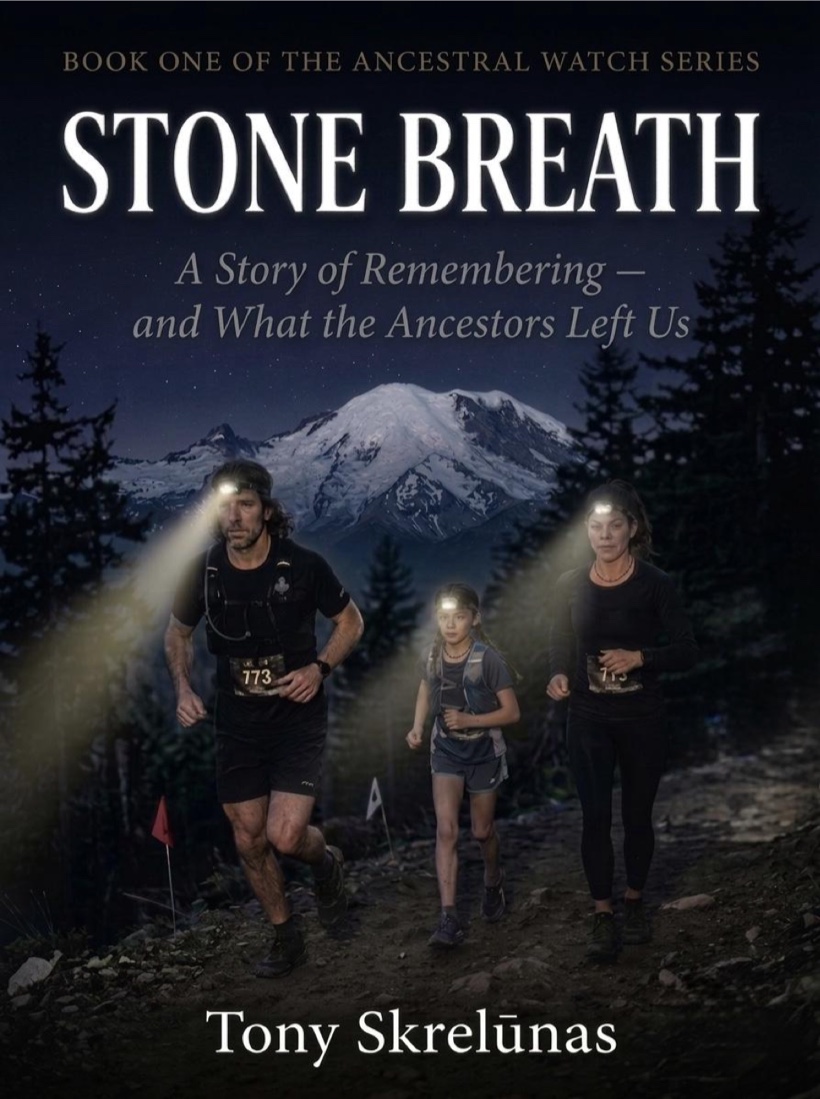 Book One · out now
Stone Breath
A man carries his grandfather’s songs back to the old country and meets a woman who is already whole.
Book One · out now
Stone Breath
A man carries his grandfather’s songs back to the old country and meets a woman who is already whole.
 Book Two
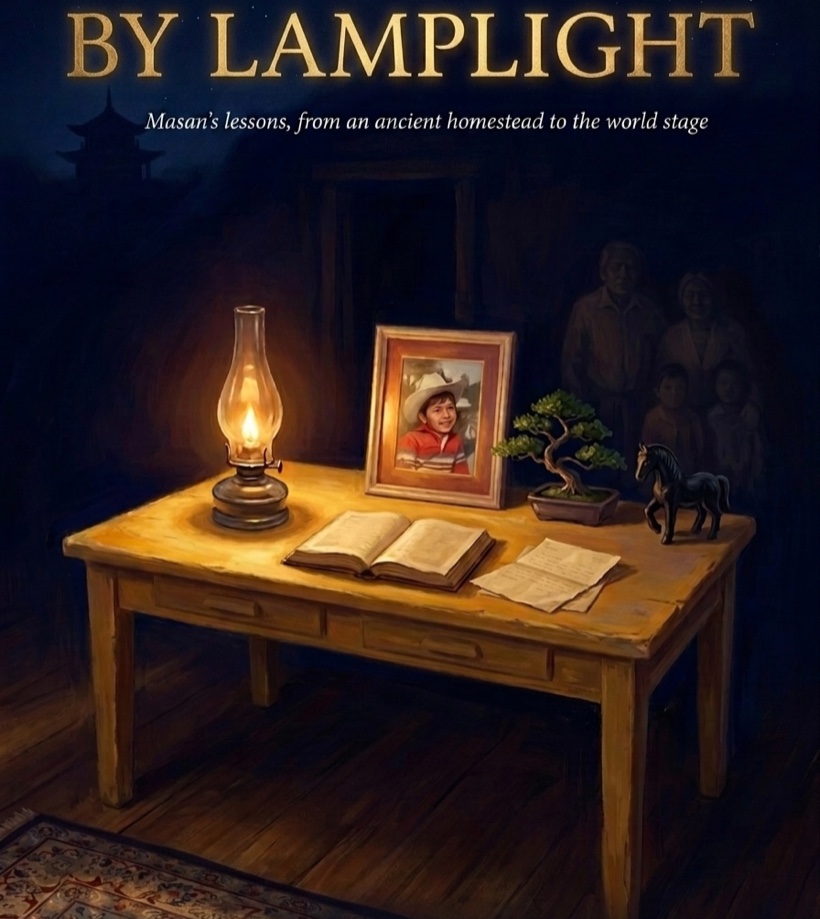
By Lamplight
Masan’s lessons, from an ancient homestead to the world stage. The boy on the bus becomes the man at the podium.
Book Two
By Lamplight
Masan’s lessons, from an ancient homestead to the world stage. The boy on the bus becomes the man at the podium.
 Book Three · out now
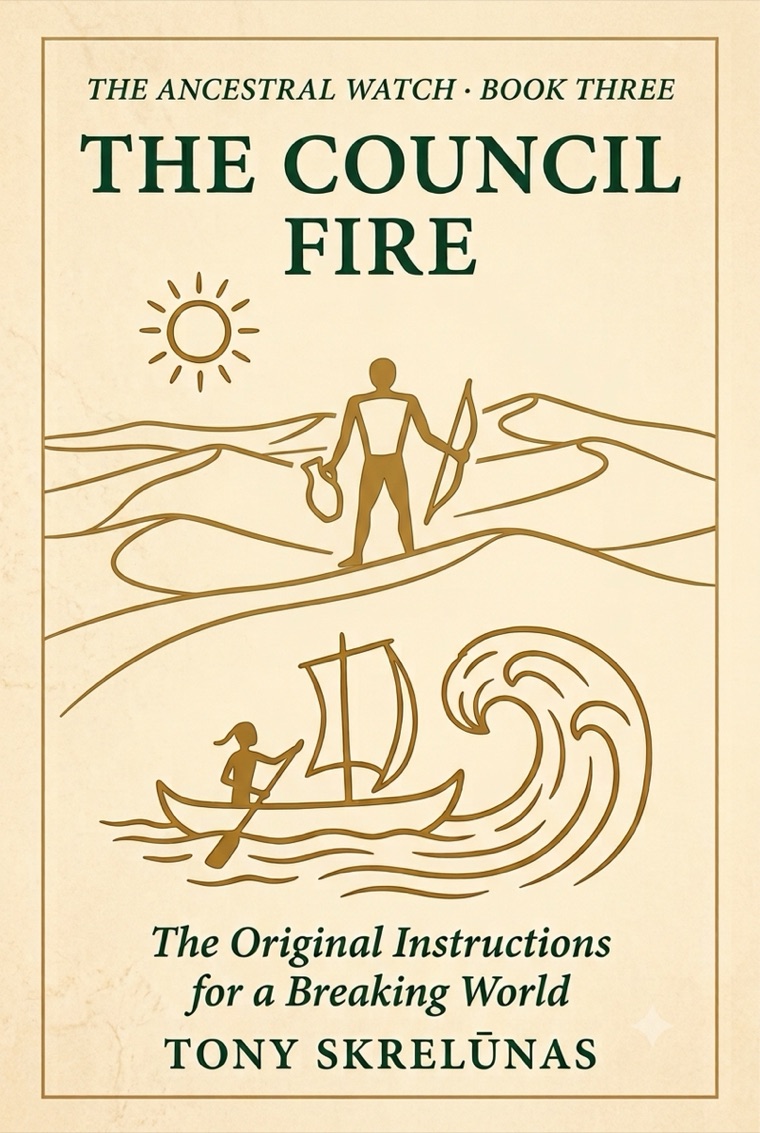
The Council Fire
When the systems reach their limits, keepers from many peoples sit at one fire and remember what lasts.
The Far Messengers
Book Four · in the writing
The Far Messengers
Seven days at a congress on human continuity. The scene above is its opening.
Book Three · out now
The Council Fire
When the systems reach their limits, keepers from many peoples sit at one fire and remember what lasts.
The Far Messengers
Book Four · in the writing
The Far Messengers
Seven days at a congress on human continuity. The scene above is its opening.
The vision, worked all the way down
What the old tools do at the scale of a company or a nation.
Not theory. Each of these is a long piece you can study, argue with, and take into a room.
- How a governing form actually changedThe Local Governance Act of 1998 — written, tabled, rewritten, signed. Forty-five communities certified since. The story, and seven lessons that travel.→
- Cultural match — the form has to fit the peopleTen things every working form has, and ten field-tested forms a community can choose from. There is no universal council.→
- The self-sufficient communityGovernance and economy are one subject. The circle, the council of sent voices, and building the middle rather than the top.→
- A business with soulChartered by the community that lives with the consequences. Worker and land ownership, elders on the board, surplus in three directions.→
- Four capitals, and the transition off fossil fuelsFinancial, relational, cultural, ecological. What it means to keep the wealth home as the ground shifts underneath.→
- Intergenerational healingThe hundred-year path from The Council Fire — structural, not therapeutic. Naming, grief, return, laughter, the raising of children.→

You cannot build the container while the house is burning.
Which is why the work is done on the ordinary days, before anyone needs it.
Two ways this comes to you
The talk, and the sanctuary.
- The talkConferences, corporate retreats, leadership gatherings, universities. The far messengers — what they were, what we lost when we stopped raising them, and what it means for what comes next. Told as a story, in the room, without slides.→
- The sanctuaryDesigning a company or community sanctuary that holds resilience while the world stays uncertain. Slower work, fewer at a time — the charter, the ownership, the governance, and the practices that keep people steady inside it.→
Who is carrying it
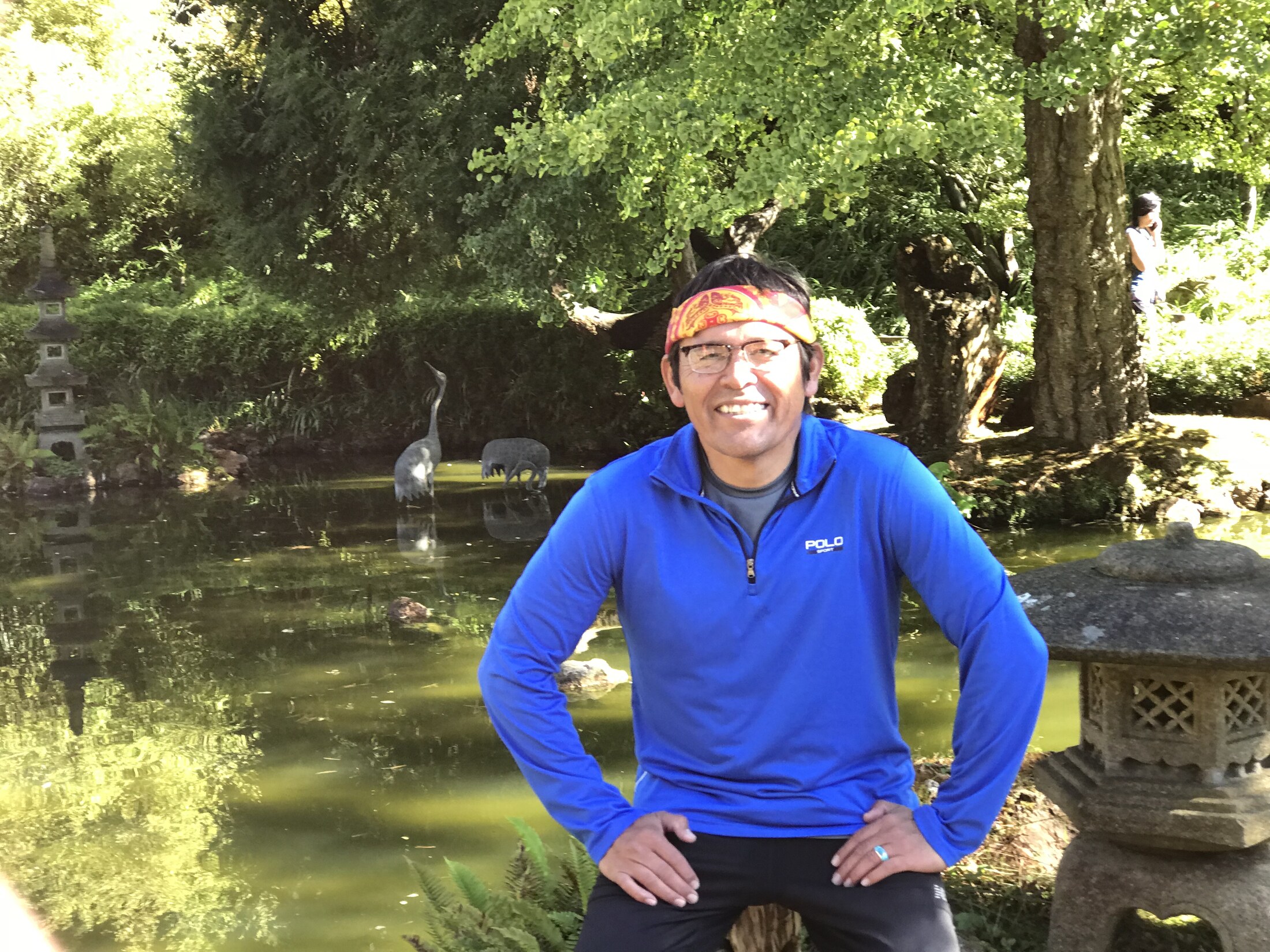
Tony Skrelūnas
Raised by his great-grandmother on Black Mesa — no electricity, four hundred sheep, a ceremony every dawn. He learned to read by kerosene lamp, and by that same lamp read the philosophy of Japan, a body of practice he has studied ever since and drawn on in his own work. Diné and Lithuanian by blood. Japanese by long study.
He writes The Ancestral Watch. He runs at dawn. He is finishing a doctorate on how three ancestral traditions each built their own technology for meeting the hardest days.
Keh Yazh → Masan → Ada → Tony → You